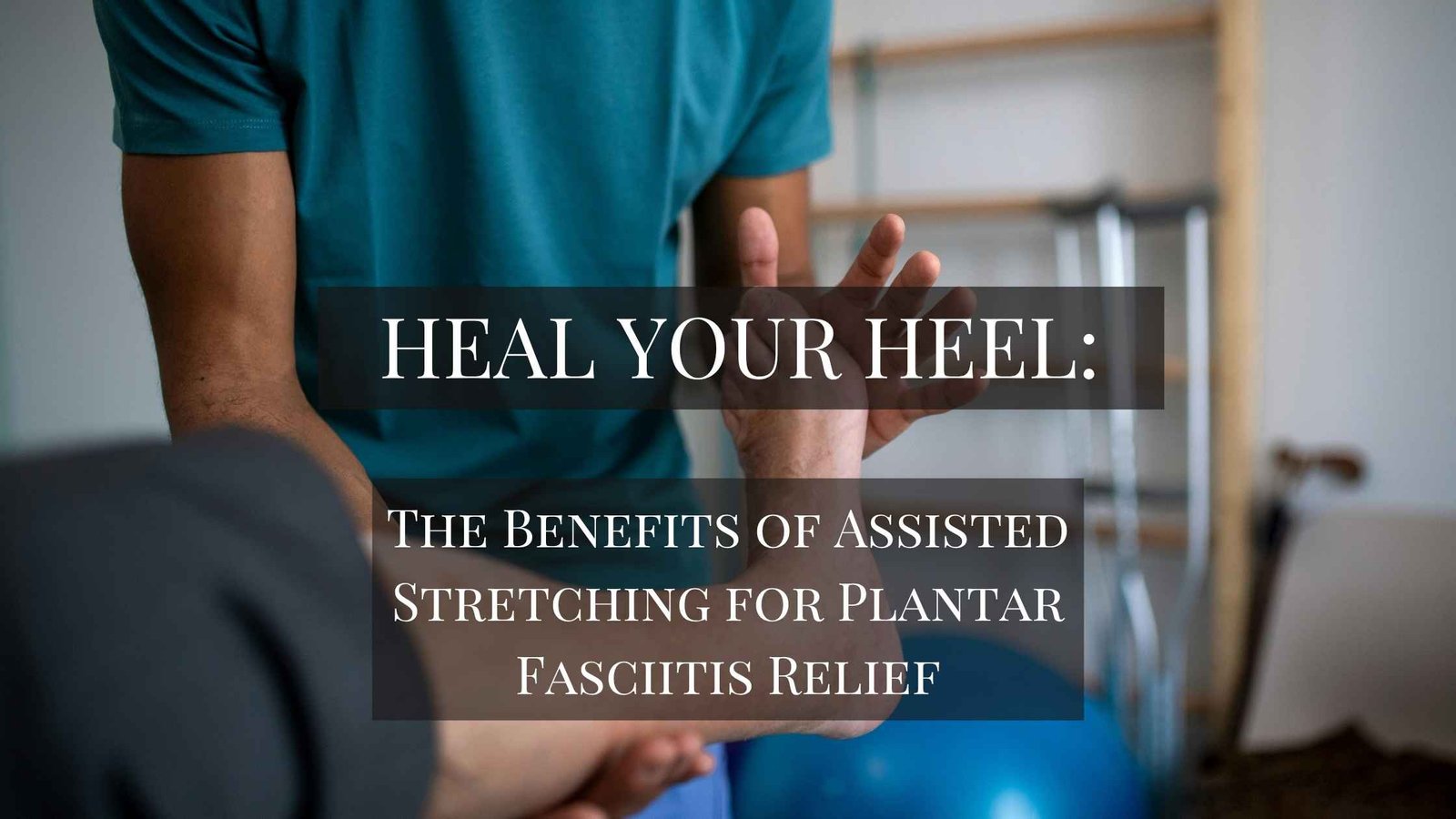

Assisted stretching can be useful for some people with plantar fasciitis, particularly when calf stiffness, restricted ankle motion or difficulty performing stretches independently is part of the problem.
But assisted stretching is not a cure for plantar fasciitis.
The strongest clinical evidence supports a broader treatment approach that can include plantar-fascia-specific stretching, calf stretching, foot and ankle strengthening, activity modification and other interventions based on the individual case.
A professional stretching session may help you perform the mobility portion of that plan more consistently and with hands-on guidance.
It should not replace the parts of recovery that rebuild your foot’s ability to tolerate load.
If you are still learning about the condition itself, start with What Is Plantar Fasciitis?.
Can Assisted Stretching Help Plantar Fasciitis?
Potentially.
Clinical guidelines support stretching as part of plantar fasciitis management.
In particular, commonly recommended approaches include:
- Plantar-fascia-specific stretching
- Gastrocnemius stretching
- Soleus stretching
- Foot and ankle resistance exercise
That provides a reasonable clinical basis for using stretching during plantar fasciitis recovery.
What has not been established is that having another person stretch you is universally more effective than doing an appropriate stretching program yourself.
The practical value of assisted stretching is therefore different.
It may provide:
- Better positioning
- Hands-on assistance
- Real-time feedback
- Easier access to certain positions
- Greater consistency
- Accountability
- Help identifying mobility limitations
For someone who already performs an effective home program consistently, the additional benefit may be smaller.
Where Assisted Stretching Fits in Plantar Fasciitis Recovery
Plantar fasciitis is better understood as a problem involving tissue load and capacity than simply a tight foot that needs to be stretched.
The plantar fascia must repeatedly tolerate force during:
- Standing
- Walking
- Running
- Climbing stairs
- Sports
- Work
- Daily activity
Symptoms can develop or persist when the stress placed on the plantar fascia exceeds what the tissue currently tolerates.
Contributing factors can differ between people.
They may include:
- A sudden increase in walking or running
- Long periods of standing
- Limited ankle dorsiflexion
- Calf tightness
- Reduced foot or ankle strength
- Changes in footwear
- Changes in body weight
- Changes in training surface or volume
This means stretching is only one part of the equation.
For a fuller recovery framework, see Plantar Fasciitis Treatment Options and the Plantar Fasciitis Load Management Guide.
Why Calf and Ankle Mobility Matter
The calf, Achilles tendon, ankle and plantar fascia all participate in walking mechanics.
If ankle dorsiflexion is restricted, the body may alter how it moves over the foot.
Those compensations can affect loading through the heel and arch.
That is one reason calf stretching and ankle mobility exercises commonly appear in plantar fasciitis rehabilitation programs.
Two calf muscles deserve particular attention:
Gastrocnemius
The larger superficial calf muscle crosses both the knee and ankle.
It is commonly stretched with the knee straight.
Soleus
The soleus sits deeper in the calf and does not cross the knee.
It is generally emphasized with the knee bent.
Both can affect ankle dorsiflexion.
For specific techniques, see Calf Stretches for Plantar Fasciitis and Ankle Stretches for Plantar Fasciitis.
Plantar-Fascia-Specific Stretching Matters Too
Calf stretching is not the only relevant mobility intervention.
Clinical evidence also supports plantar-fascia-specific stretching.
This generally involves extending the toes—particularly the big toe—to place controlled tension through the plantar fascia.
This is important because research has found plantar-fascia-specific stretching can improve pain and function in some people with plantar fasciitis.
For at-home options, see:
- Best Stretches for Plantar Fasciitis
- Arch Stretches for Plantar Fasciitis
- Stretching Routine for Plantar Fasciitis
The key is controlled stretching—not forcing the painful heel into increasingly aggressive positions.
What Is Assisted Stretching?
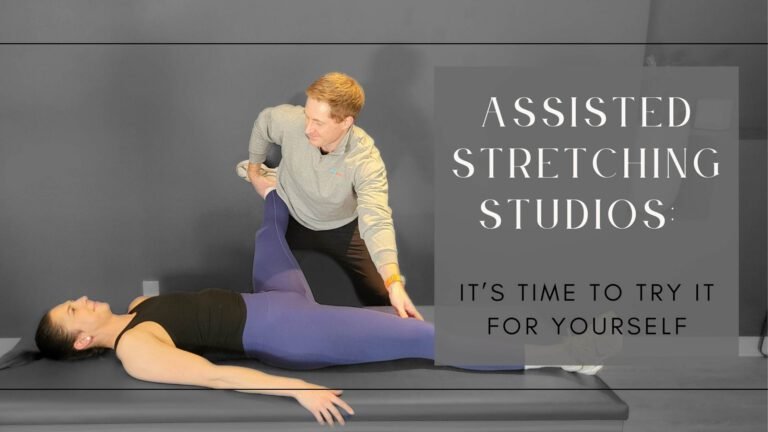
Assisted stretching is a one-on-one service in which another person helps position and move your body through stretches.
Depending on the provider, the practitioner may:
- Stabilize part of your body
- Guide a joint through range of motion
- Adjust stretch intensity
- Hold specific positions
- Use contract-relax or similar techniques
- Assess apparent mobility restrictions
- Suggest stretches to repeat at home
Commercial assisted stretching is generally considered a wellness or fitness service rather than medical treatment.
That distinction matters when plantar heel pain is involved.
A stretch practitioner may help with mobility.
They should not diagnose the cause of heel pain unless they separately hold an appropriate healthcare license and are practicing within that scope.
For the broader service model, read What Is Assisted Stretching?.
What Might a Session Focus On?
A provider working with someone who reports plantar fasciitis symptoms may spend time on more than the foot itself.
Potential areas include:
Calves
Straight-knee and bent-knee positions may be used to work on the gastrocnemius and soleus.
Ankle
The practitioner may use controlled positioning intended to improve tolerance to ankle dorsiflexion.
Plantar Fascia and Toes
Gentle big-toe extension and plantar-fascia-specific positioning may be used.
Hamstrings and Hips
A practitioner may also work on the broader lower body when mobility restrictions are present.
However, there is considerably stronger plantar-fasciitis-specific evidence for the plantar fascia and calf complex than for assuming every person needs extensive hamstring, hip or full-chain stretching.
A good session should therefore be individualized instead of automatically following a generic whole-body sequence.
What Should Assisted Stretching Feel Like?
More intensity is not automatically better.
During stretching, you may feel:
- Tension
- Mild to moderate stretch discomfort
- A pulling sensation through the calf or arch
You should not need to tolerate:
- Sharp heel pain
- Burning
- Numbness
- Tingling
- Sudden joint pain
- Electric sensations
- Pain that feels distinctly different from a stretch
A useful practical measure is what happens after the session.
If your morning-first-step pain or walking tolerance becomes meaningfully worse after stretching, the dose may have been too aggressive.
Reduce the intensity or seek clinical guidance if symptoms repeatedly worsen.
Potential Benefits of Assisted Stretching
Professional Positioning
Another person can stabilize your body and control joint position while you relax.
This may make some stretches easier to perform accurately.
Immediate Feedback
A practitioner can modify the position when you report discomfort or unusual symptoms.
Consistency
Appointments create accountability.
For someone who repeatedly skips home mobility work, that may be one of the largest practical benefits.
Help With Difficult Positions
Some people find calf, ankle or foot stretches difficult because of balance, mobility or positioning limitations.
Assistance can make those positions more accessible.
Relaxation
Some people find guided stretching easier to tolerate because they are not generating the stretch themselves.
What Assisted Stretching Cannot Do
This is where expectations matter.
Assisted stretching does not automatically:
- Cure plantar fasciitis
- Repair damaged tissue
- Strengthen the foot
- Increase plantar fascia load tolerance by itself
- Diagnose the source of heel pain
- Correct every gait abnormality
- Replace progressive resistance exercise
- Replace physical therapy when rehabilitation is needed
Those distinctions are particularly important because a person can become temporarily more flexible without developing greater tissue capacity.
Stretching and Strengthening Should Usually Work Together
The 2023 clinical practice guideline for plantar fasciitis recommends both stretching and therapeutic exercise that includes resistance training for the foot and ankle musculature.
That pairing makes sense mechanically.
Stretching addresses mobility.
Resistance training addresses capacity.
Examples of strengthening targets may include:
- Calf musculature
- Foot intrinsic muscles
- Toe flexors
- Muscles involved in ankle inversion and eversion
FlexologyGuide has separate resources for:
If you pay for professional stretching but ignore strength and activity progression, you may be addressing only one part of the problem.
Assisted Stretching vs. Physical Therapy
These services are not interchangeable.
| Factor | Assisted Stretching | Physical Therapy |
|---|---|---|
| Primary role | Mobility and guided stretching | Evaluation and rehabilitation |
| Medical service | Usually no | Yes |
| Diagnosis | Generally no | Within professional scope |
| Stretching | Yes | Often |
| Strength programming | May be limited | Common |
| Load progression | May be limited | Core rehabilitation component |
| Gait/movement assessment | Basic in some studios | Clinical assessment |
| Best suited for | Mobility assistance and consistency | Persistent, complex or function-limiting cases |
Physical therapy is generally the stronger starting point when:
- Your diagnosis is uncertain.
- Pain has persisted despite self-care.
- You are limping.
- You cannot return to normal activity.
- Symptoms repeatedly flare with increased load.
- Significant weakness is present.
- You need a structured return-to-running or return-to-sport program.
See Assisted Stretching vs. Physical Therapy for Plantar Fasciitis for the full comparison.
Assisted Stretching vs. Massage
Massage and assisted stretching overlap in some wellness environments, but they have different primary purposes.
| Assisted Stretching | Massage |
|---|---|
| Moves joints through range | Primarily manipulates soft tissue |
| Focuses on mobility | Often focuses on relaxation or tissue comfort |
| Requires stretching positions | Usually does not |
| Can target ankle dorsiflexion | May work directly on calf/foot tissue |
| Does not necessarily involve massage pressure | Relies heavily on manual pressure |
Neither service should be portrayed as a standalone cure.
If you are choosing between them, see Stretching vs. Massage for Plantar Fasciitis.
Who May Get the Most Value From Assisted Stretching?
Assisted stretching may make sense when:
- You have identifiable calf or ankle mobility restrictions.
- You struggle to perform stretches correctly.
- You cannot stay consistent with a home program.
- You prefer hands-on guidance.
- Mobility work makes it easier for you to exercise.
- You are already addressing strength and load management.
- A healthcare professional has recommended stretching.
It may provide less value when:
- You already perform an effective home stretching program consistently.
- Strength rather than mobility is the primary limitation.
- The diagnosis is unclear.
- Stretching consistently increases symptoms.
- You need rehabilitation rather than a wellness service.
When Should You Be More Cautious?
Heel pain is not always plantar fasciitis.
Other potential causes can include:
- Stress injury
- Nerve-related pain
- Fat-pad disorders
- Achilles-related conditions
- Arthritis
- Other musculoskeletal or systemic conditions
Seek appropriate medical evaluation when symptoms are unusual, severe, worsening or inconsistent with typical plantar fasciitis.
Additional reasons to seek clinical guidance include:
- Significant swelling
- New numbness or weakness
- Inability to bear weight
- Recent trauma
- Night pain unrelated to movement
- Fever or systemic symptoms
- Persistent symptoms despite appropriate conservative care
A commercial stretch session should not be used to “test” whether serious heel pain can simply be stretched away.
How to Choose a Stretch Provider
If you decide to try professional assisted stretching, ask more than how much the session costs.
Ask About Practitioner Background
Possible backgrounds include:
- Exercise science
- Kinesiology
- Personal training
- Massage therapy
- Athletic training
- Physical therapy education
- Other fitness and wellness fields
Credentials vary substantially between providers.
Ask How They Handle Pain
A good answer should involve adjusting intensity and referring out when symptoms fall outside the practitioner’s scope.
Be cautious with anyone who says pain simply means the tissue needs a deeper stretch.
Ask Whether They Understand Plantar-Fascia-Specific Stretching
The session should not automatically consist only of hamstring and hip stretches because those are easy to perform.
Evidence supports attention to the plantar fascia and gastrocnemius/soleus complex.
Ask What You Should Do Between Sessions
A professional session should ideally complement—not replace—a repeatable home plan.
StretchLab and Stretch Zone
Two major national assisted stretching brands are StretchLab and Stretch Zone.
Both provide one-on-one practitioner-guided stretching, but they use different training systems and service models.
Neither brand should be considered a medical plantar-fasciitis clinic simply because stretching is offered there.
The quality and relevance of the session also depend on the individual practitioner.
For brand-specific information, see:
How Often Should You Use Assisted Stretching?
There is no clinically established number of assisted-stretch studio visits required for plantar fasciitis.
That is an important distinction from a commercial recommendation.
A sensible approach is to base frequency on:
- Your mobility restriction
- Symptom response
- Progress
- Ability to stretch independently
- Other rehabilitation work
- Cost
Professional stretching should ideally become less necessary, not indefinitely more necessary, as you become capable of managing mobility yourself.
Avoid assuming that one or two paid sessions every week is medically required simply because a membership plan is structured that way.
What Should You Track?
Do not judge success only by how loose your foot feels immediately after a session.
Track functional outcomes such as:
Morning First-Step Pain
Is the first walk out of bed gradually becoming easier?
Walking Tolerance
Can you spend more time on your feet without a significant symptom increase?
Activity Tolerance
Can you gradually return to work, exercise or recreational activity?
Next-Day Response
Does a stretch session leave you the same or better the following morning rather than significantly worse?
Mobility
Is ankle dorsiflexion actually improving over time?
These measures tell you more than temporary post-session relief.
A Practical Recovery Framework
Assisted stretching makes the most sense when placed inside a broader plan.
Step 1: Manage Irritating Load
Temporarily adjust the activities that are repeatedly exceeding current tolerance.
This does not necessarily mean complete rest.
Read the Plantar Fasciitis Load Management Guide.
Step 2: Restore Useful Mobility
Use plantar-fascia-specific and calf stretching at tolerable doses.
Professional assistance is optional.
For a home program, use the Stretching Routine for Plantar Fasciitis.
Step 3: Build Strength
Progressively strengthen the foot and ankle.
This is an important part of rebuilding capacity.
Step 4: Progress Activity
Gradually restore walking, running, work or sport demands.
Step 5: Reassess if Progress Stalls
Persistent symptoms may warrant professional evaluation or a different treatment strategy.
Finding Assisted Stretching Near You
FlexologyGuide is transitioning from static city articles to a nationwide provider database.
Rather than relying on separate articles for individual cities, use the FlexologyGuide Studio Search to find assisted stretching providers near you.
Search by location and compare available studios, brands and services.
When evaluating a provider for plantar fasciitis, remember that appearing in an assisted stretching directory does not mean the business specializes in treating plantar fasciitis medically.
Frequently Asked Questions
Can assisted stretching cure plantar fasciitis?
No. Stretching can be one component of plantar fasciitis management, but professional assisted stretching has not been established as a standalone cure.
Is stretching recommended for plantar fasciitis?
Yes. The 2023 clinical practice guideline recommends plantar-fascia-specific stretching and gastrocnemius/soleus stretching for pain and functional improvement.
Is assisted stretching better than stretching at home?
Not necessarily. Evidence supports specific stretching techniques, not the assumption that practitioner-assisted stretching is inherently superior. Professional help can add positioning, feedback and accountability.
What muscles should be stretched for plantar fasciitis?
The gastrocnemius and soleus are commonly targeted, along with plantar-fascia-specific stretching involving the toes and forefoot.
Can stretching make plantar fasciitis worse?
It can temporarily aggravate symptoms when the intensity or volume is excessive. Sharp pain or significant next-day worsening is a reason to reduce the dose and reassess.
Is plantar-fascia-specific stretching better than calf stretching?
Some studies have found plantar-fascia-specific stretching produces better pain outcomes than Achilles/calf stretching alone, although the overall stretching literature remains heterogeneous.
Should I stretch every day?
Many rehabilitation programs use frequent stretching, but the appropriate frequency depends on the technique, symptoms and overall plan. Consistency is useful; forcing increasingly intense stretches is not.
Should I choose assisted stretching or physical therapy?
Physical therapy is usually more appropriate when diagnosis is uncertain, symptoms are persistent or complex, weakness is important, or you need structured rehabilitation. Assisted stretching is primarily a mobility-oriented wellness service.
Does StretchLab help plantar fasciitis?
StretchLab can provide professional stretching, but it should not be described as a medical treatment for plantar fasciitis. Value depends on the practitioner, your mobility needs and whether stretching fits into a broader recovery plan.
Does Stretch Zone help plantar fasciitis?
The same principle applies. Stretch Zone provides assisted stretching but is not a substitute for diagnosis or rehabilitation when those are needed.
What is the best stretch for plantar fasciitis?
There is no universal single best stretch, but plantar-fascia-specific stretching and gastrocnemius/soleus stretching have the strongest direct guideline support.
Related FlexologyGuide Resources
- What Is Plantar Fasciitis?
- Plantar Fasciitis Treatment Options
- Plantar Fasciitis Load Management Guide
- Best Stretches for Plantar Fasciitis
- Stretching Routine for Plantar Fasciitis
- Calf Stretches for Plantar Fasciitis
- Ankle Stretches for Plantar Fasciitis
- Arch Stretches for Plantar Fasciitis
- Exercises for Plantar Fasciitis
- Assisted Stretching vs. Physical Therapy for Plantar Fasciitis
- Stretching vs. Massage for Plantar Fasciitis
Bottom Line
Assisted stretching can be a useful addition to plantar fasciitis recovery when limited calf, ankle or foot mobility is part of the presentation and professional guidance helps you perform stretching more effectively or consistently.
The evidence supports stretching.
It does not establish that a commercial assisted stretching session is necessary for plantar fasciitis or superior to properly performed self-stretching.
The strongest plan is usually broader:
Manage load → restore useful mobility → strengthen the foot and ankle → gradually rebuild activity tolerance.
Professional assisted stretching can help with the mobility portion.
It should support that process rather than replace it.