
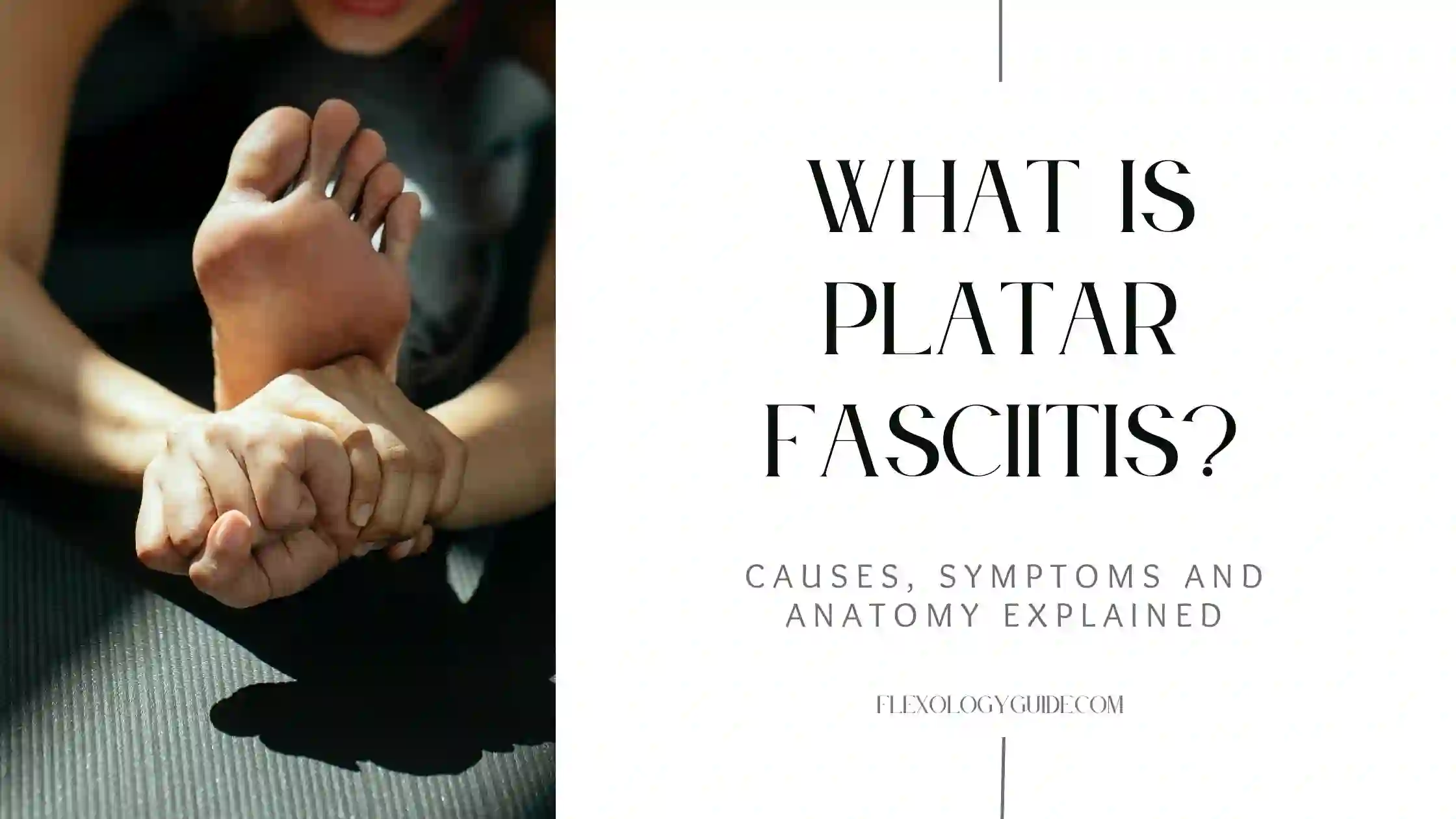

Plantar fasciitis is a common cause of pain on the bottom of the heel. It most often causes pain near the inner underside of the heel, especially during the first few steps after getting out of bed or after sitting for a period of time.
The plantar fascia is a strong band of connective tissue that runs from the heel toward the toes and helps support the arch of the foot. Plantar fasciitis develops when this tissue becomes irritated and unable to comfortably tolerate the forces being placed through it.
Despite the name, plantar fasciitis should not always be thought of as a simple inflammation problem. Persistent plantar heel pain can involve both inflammatory and degenerative tissue changes, which is why clinicians may also use the term plantar fasciopathy.
For most people, the more useful recovery question is not simply, “How do I reduce inflammation?”
It is:
What is increasing stress on my foot, and how can I gradually improve the foot’s ability to tolerate that stress?
That load-and-capacity relationship is the foundation of the FlexologyGuide approach to understanding plantar fasciitis.
What Is the Plantar Fascia?
The plantar fascia is a thick band of fibrous connective tissue on the bottom of the foot. It originates near the heel bone, or calcaneus, and extends toward the toes.
It helps:
- Support the longitudinal arch of the foot
- Absorb and distribute forces during walking
- Stabilize the foot during movement
- Store and release energy as the foot moves through each step
- Work with the calf, Achilles tendon, ankle, toes, and smaller muscles of the foot
The plantar fascia is designed to tolerate load. Walking, standing, running, and other weight-bearing activities naturally place force through it.
Problems can arise when the amount or type of loading changes faster than the foot can adapt.
What Does Plantar Fasciitis Feel Like?
The classic symptom is pain on the bottom of the foot near the heel.
Common patterns include:
- Pain during the first few steps after waking
- Heel pain when standing after sitting for a long period
- Pain after prolonged standing or walking
- Symptoms that increase after running or repetitive weight-bearing activity
- Tenderness near the inner underside of the heel
- Pain that improves after moving for a while but returns later in the day
The pain may feel sharp, stabbing, aching, or tender.
The “first-step” pattern is particularly characteristic of plantar fasciitis, but not every person has identical symptoms and not every case of heel pain is caused by the plantar fascia.
For a detailed symptom guide, read Symptoms of Plantar Fasciitis.
Why Does Plantar Fasciitis Hurt Most in the Morning?
First-step pain after waking is one of the most recognizable features of plantar fasciitis.
During sleep, the foot spends several hours under relatively little weight-bearing load. When you stand in the morning, the plantar fascia and surrounding structures suddenly have to accept your body weight again.
A sensitive plantar fascia may react strongly to that abrupt transition.
The same thing can happen after sitting at a desk, driving for a long period, or otherwise remaining inactive before standing.
The discomfort often eases once you have taken several steps and the tissues are gradually exposed to load again.
This does not necessarily mean that the plantar fascia simply “tightens overnight.” The symptom is better understood as a load-sensitive tissue reacting to renewed weight bearing after a period of rest.
What Causes Plantar Fasciitis?
There is usually no single cause.
Plantar fasciitis commonly develops through a combination of activity, biomechanics, tissue capacity, and individual risk factors.
Potential contributors include:
- Suddenly walking considerably more than usual
- Rapidly increasing running mileage
- Adding hills, speed work, jumping, or other demanding activity
- Spending long workdays standing or walking
- Working on hard surfaces
- Limited ankle dorsiflexion
- Calf stiffness
- Reduced foot or ankle strength
- Changes in body weight
- Returning to activity after a period of inactivity
- Footwear that is uncomfortable or poorly matched to the activity
Foot shape and biomechanics can also influence how forces move through the foot, but having flat feet, high arches, or another structural characteristic does not guarantee that someone will develop plantar fasciitis.
For a deeper examination of these factors, read What Causes Plantar Fasciitis?.
The FlexologyGuide Load-and-Capacity Model
One of the most useful ways to understand plantar fasciitis is to compare load with capacity.
Load
Load is everything the foot is asked to tolerate.
Examples include:
- Daily steps
- Hours spent standing
- Running mileage
- Walking speed
- Hills
- Jumping
- Sports
- Heavy lifting
- Hard flooring
- Barefoot activity
- Sudden changes in training
Capacity
Capacity describes how much of that load the foot-and-ankle system can currently tolerate.
Capacity can be influenced by:
- Calf strength
- Foot strength
- Ankle mobility
- Previous activity levels
- General conditioning
- Recovery between higher-load days
- How long symptoms have been present
Symptoms can develop when load rises faster than capacity.
Someone accustomed to 4,000 daily steps may suddenly spend a week walking 15,000 steps per day while traveling. A runner may add mileage, hills, and speed sessions at the same time. Someone starting a new job may suddenly spend an entire shift standing on concrete.
These situations are very different, but they share the same fundamental problem: the foot is being asked to tolerate substantially more than it is accustomed to.
For a deeper explanation, see the Plantar Fasciitis Load Management Guide.
Why Rest Alone May Not Solve the Problem
Reducing an activity that repeatedly aggravates symptoms can be useful, particularly during a painful flare.
But complete rest does not necessarily increase the foot’s ability to tolerate future activity.
If someone rests until symptoms settle and then immediately resumes the same workload that originally caused the problem, heel pain may return.
A more complete approach often involves:
- Temporarily reducing clearly aggravating loads.
- Maintaining tolerable activity when appropriate.
- Addressing relevant calf or ankle mobility restrictions.
- Progressively strengthening the foot and ankle.
- Gradually increasing walking, standing, running, or sport demands.
- Monitoring how symptoms respond during and after activity.
The goal is not permanent avoidance of movement.
The goal is to progressively restore the capacity required for normal life and recreation.
Does Stretching Help Plantar Fasciitis?
Yes. Evidence-based clinical guidelines support stretching as part of plantar fasciitis management.
Plantar fascia-specific stretching and stretching of the gastrocnemius and soleus calf muscles can reduce pain and disability in people with plantar heel pain.
Stretching may be particularly relevant when calf stiffness or limited ankle motion is present.
Common approaches include:
- Plantar fascia-specific stretching
- Straight-knee calf stretching
- Bent-knee calf stretching
- Gentle ankle mobility exercises
Stretching should normally be controlled rather than aggressive.
If a particular stretch produces sharp pain or consistently leaves the heel substantially worse afterward, increasing the intensity is unlikely to be helpful.
See Plantar Fasciitis Stretches and Best Stretches for Plantar Fasciitis for more detailed guidance.
Why Strengthening Is Important
Stretching addresses one part of the problem. Strengthening addresses another: capacity.
Current clinical guidance supports resistance exercise for the foot and ankle as part of plantar fasciitis management.
Depending on the person and stage of recovery, strengthening may include:
- Calf raises
- Progressive heel raises
- Toe-flexor exercises
- Intrinsic-foot exercises
- Resisted ankle inversion and eversion
- Balance exercises
- Progressive weight-bearing exercises
The objective is not simply to make the plantar fascia itself “stronger.”
The goal is to improve the ability of the entire foot-and-ankle system to absorb, control, and produce force.
That becomes particularly important when someone wants to return to prolonged walking, running, hiking, work, or sport.
See Exercises for Plantar Fasciitis and Foot Strengthening Exercises.
Do Shoes Help Plantar Fasciitis?
Footwear can influence comfort and how forces are experienced during standing and walking, but there is no single shoe that is best for everyone with plantar fasciitis.
Useful considerations include:
- Comfort
- Fit
- Cushioning
- Stability
- The activity being performed
- How much time is spent standing or walking
- Individual preference
During a painful period, some people find prolonged barefoot walking on hard surfaces uncomfortable and prefer supportive or cushioned footwear.
Shoes should generally be viewed as a way to make necessary activity more tolerable while the underlying rehabilitation plan improves capacity.
They should not be presented as a stand-alone cure.
See Best Shoes for Plantar Fasciitis for a more detailed footwear framework.
Do Insoles or Orthotics Help?
They can help some people, but they are generally most appropriate as one part of a broader management plan.
The 2023 plantar heel pain clinical practice guideline advises against using foot orthoses as an isolated treatment for short-term pain relief. It does allow their use in combination with other treatments when appropriate.
That distinction matters.
An insole may change how force is distributed through the foot or make standing and walking more comfortable, but it does not independently restore strength, mobility, or activity tolerance.
See Best Insoles for Plantar Fasciitis.
Can Assisted Stretching Help Plantar Fasciitis?
Assisted stretching may support mobility, but it should not be described as a treatment that cures plantar fasciitis.
Clinical guidelines support plantar fascia-specific and calf stretching for plantar heel pain. Evidence specifically evaluating commercial assisted-stretching services for treating plantar fasciitis is much more limited.
An assisted-stretching session may be useful when someone:
- Has calf or ankle stiffness
- Has difficulty performing mobility work independently
- Wants professional help controlling positioning and stretch intensity
- Is using mobility work alongside strengthening and load management
Potential improvements in mobility or short-term comfort should not be confused with evidence that assisted stretching heals the plantar fascia.
It should complement—not replace—appropriate exercise, load management, or medical care when those are needed.
Learn more in Assisted Stretching for Plantar Fasciitis.
What Does Plantar Fasciitis Recovery Usually Involve?
There is no single recovery plan that works for everyone.
A useful plan typically combines several strategies based on the person’s symptoms, activity requirements, and contributing factors.
| Recovery component | Main purpose |
|---|---|
| Activity and load modification | Reduce repeated aggravation during a sensitive period |
| Plantar fascia and calf stretching | Improve relevant flexibility and mobility |
| Foot and ankle strengthening | Increase the system’s capacity to tolerate load |
| Appropriate footwear | Make necessary standing and walking more comfortable |
| Orthoses when appropriate | Modify load as one component of a broader plan |
| Gradual return to activity | Restore normal walking, work, running, or sport demands |
| Professional evaluation when indicated | Confirm the likely diagnosis and evaluate other causes of heel pain |
Recovery should be evaluated by function as well as pain.
Positive changes may include:
- Less severe first-step pain
- Fewer symptom flares
- Greater standing tolerance
- Greater walking tolerance
- Improved foot and calf strength
- Better exercise tolerance
- Ability to gradually increase activity without a major symptom increase afterward
See Recovery for Plantar Fasciitis, Stages of Plantar Fasciitis, and Signs Plantar Fasciitis Is Healing.
How Long Does Plantar Fasciitis Last?
There is no universal timetable.
Duration varies according to factors such as:
- How long symptoms have already been present
- How much standing or walking the person must continue doing
- Whether aggravating activity can be modified
- Strength and mobility deficits
- Training requirements
- Consistency with rehabilitation
- Whether another condition is contributing to the heel pain
Persistent symptoms do not automatically mean permanent damage.
They do, however, provide a reason to reconsider the diagnosis, contributing factors, and rehabilitation strategy rather than repeatedly using an approach that is not working.
See How Long Does Plantar Fasciitis Last?.
For longer-lasting cases, see Chronic Plantar Fasciitis.
When Should You See a Healthcare Professional?
Not every case of heel pain is plantar fasciitis.
Consider professional evaluation when:
- Pain is severe or rapidly worsening
- You cannot comfortably bear weight
- Pain began after a significant injury
- There is substantial swelling or bruising
- You experience numbness, tingling, burning, or weakness
- Pain regularly occurs at rest or at night
- You have diabetes, neuropathy, inflammatory disease, or another condition that affects foot health
- Symptoms persist despite an appropriate period of conservative management
- The diagnosis is uncertain
Other conditions can cause heel pain, including nerve entrapment, stress injury, Achilles tendon disorders, heel-pad problems, arthritis, and other musculoskeletal conditions.
Burning, tingling, or numbness, for example, may suggest nerve involvement rather than a typical plantar-fasciitis presentation.
A healthcare professional can determine whether the symptom pattern is consistent with plantar fasciitis and whether imaging or additional evaluation is appropriate.
See When to See a Doctor for Plantar Fasciitis.
What Treatments Are Used for Plantar Fasciitis?
Most initial management is conservative.
Depending on the individual, treatment may include:
- Activity modification
- Plantar fascia-specific stretching
- Calf stretching
- Foot and ankle strengthening
- Manual therapy when appropriate
- Taping
- Appropriate footwear
- Orthoses combined with other interventions
- Night splints for selected patients
- Physical therapy
- Clinician-directed treatment for persistent cases
Current clinical guidance recommends a one- to three-month program of night splint use for people who consistently have first-step morning pain.
More invasive or specialized interventions are generally considered in persistent cases after professional assessment rather than as first-line self-treatment.
For a broader review, see Plantar Fasciitis Treatment Options.
Frequently Asked Questions
Is plantar fasciitis caused by inflammation?
Not exclusively.
Inflammation or irritation can be involved, especially in some presentations, but persistent plantar fasciitis can also include degenerative tissue changes. This is why clinicians sometimes use the term plantar fasciopathy.
The practical implication is that long-term management usually involves more than simply trying to reduce inflammation.
Is plantar fasciitis the same as a heel spur?
No.
A heel spur is a bony growth that can be visible on imaging. Plantar fasciitis refers to a painful condition involving the plantar fascia and surrounding heel structures.
A person can have a heel spur without having heel pain, so finding a spur does not automatically explain the symptoms.
Can plantar fasciitis go away on its own?
Symptoms can improve over time, particularly when aggravating activities change.
However, waiting alone does not necessarily address reduced strength, mobility limitations, or repeated load spikes. A structured approach can help restore the capacity needed for normal activity.
Should I keep walking if I have plantar fasciitis?
That depends on symptom severity and how your foot responds.
Complete inactivity is not always necessary, but repeatedly performing enough activity to substantially worsen symptoms may make recovery more difficult.
The goal is generally to find a tolerable level of activity and build upward progressively.
Is barefoot walking bad for plantar fasciitis?
Not for everyone.
Some people find barefoot walking on hard surfaces uncomfortable while symptoms are active. Others tolerate it without difficulty.
The relevant question is whether the amount and type of barefoot activity is exceeding the foot’s present capacity.
Should I stretch before getting out of bed?
Gentle plantar fascia or calf mobility may help some people with prominent first-step pain.
Stretching should be comfortable and controlled rather than aggressive.
Does massage cure plantar fasciitis?
No evidence establishes massage as a cure.
Manual or soft-tissue techniques may improve symptoms for some people, but temporary symptom relief is different from correcting all factors contributing to plantar fasciitis.
Massage is better considered a possible supportive measure within a broader plan.
Can plantar fasciitis return?
Yes.
Symptoms can recur, particularly when activity increases substantially after a period of reduced loading.
Maintaining foot and calf strength and progressively increasing walking, running, work, or sport demands may help reduce abrupt changes in tissue loading.
The Bottom Line
Plantar fasciitis is a common form of plantar heel pain involving a plantar fascia that has become irritated or sensitive to the forces being placed through the foot.
The condition is not always a simple inflammation problem, and recovery rarely depends on one shoe, insert, stretch, treatment, or recovery modality.
Current clinical guidance supports a broader approach that can include plantar fascia and calf stretching, progressive foot and ankle strengthening, appropriate load modification, and selected supportive strategies.
FlexologyGuide’s load-and-capacity framework makes the objective straightforward:
Reduce excessive aggravation without unnecessarily eliminating movement, then progressively build the foot’s ability to tolerate the activities you want to perform.
If the symptoms are severe, unusual, persistent, or inconsistent with the typical pattern of plantar fasciitis, professional evaluation is appropriate.