
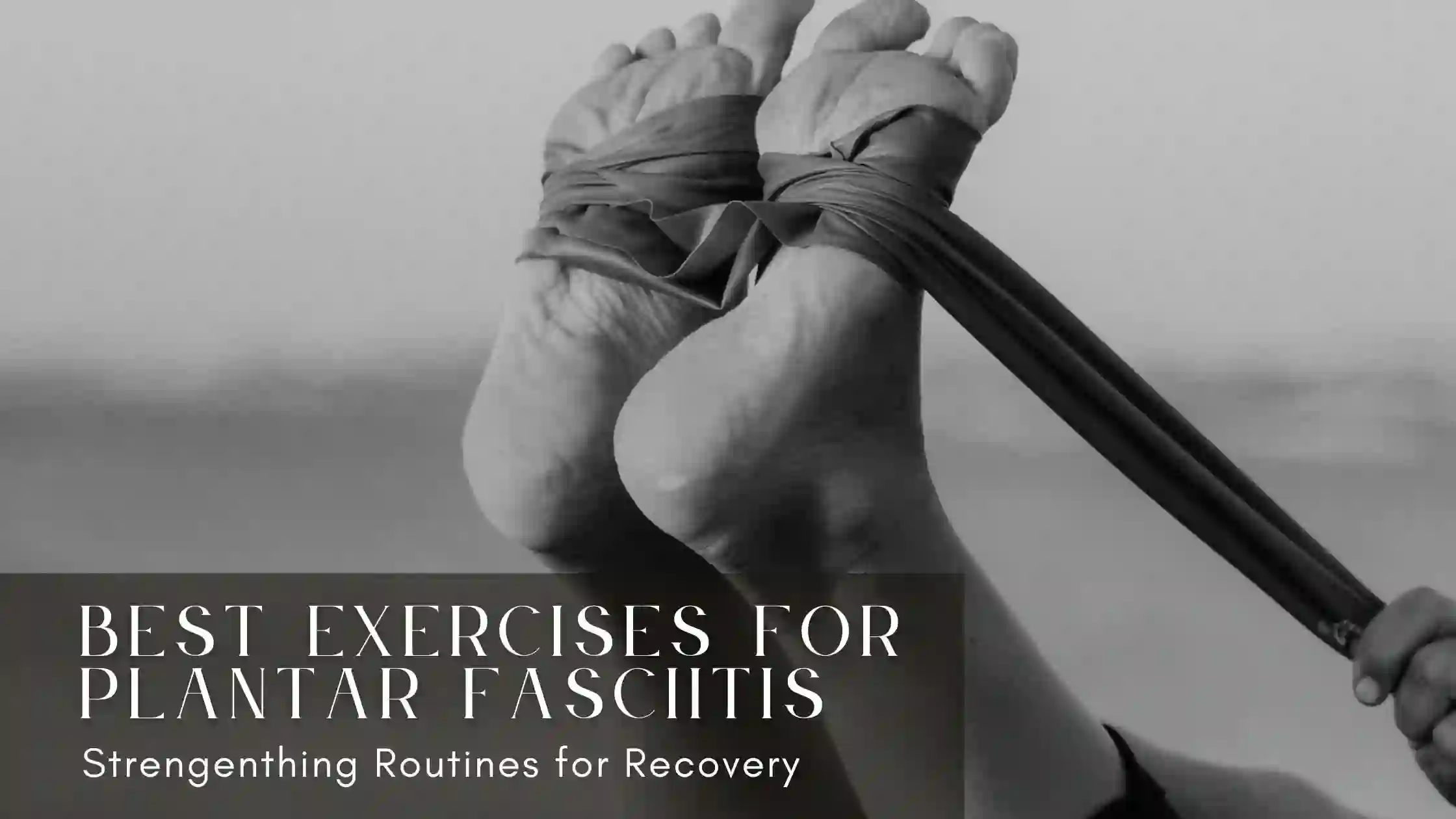

Plantar fasciitis stretches can be a useful part of conservative treatment for plantar heel pain, especially when the program addresses both the plantar fascia itself and the muscles of the calf.
Current clinical guidance specifically recommends plantar fascia-specific stretching plus gastrocnemius and soleus stretching for people with heel pain associated with plantar fasciitis.
Stretching is only one part of the picture, however. Strengthening, activity management, footwear, gradual loading and other treatments may also be important.
What Is Plantar Fasciitis?
Plantar fasciitis is a common cause of pain around the bottom of the heel.
The plantar fascia is a strong band of connective tissue that runs from the heel toward the toes and helps support the arch while managing forces during standing, walking and running.
Typical symptoms can include:
- pain around the bottom or inside of the heel
- pain with the first steps after getting out of bed
- pain after sitting or resting
- discomfort during or after prolonged standing or walking
- tenderness through the heel or arch
For a complete overview of the condition, see What Is Plantar Fasciitis?.
Which Stretches Are Most Useful for Plantar Fasciitis?
The most useful stretching program usually addresses more than one structure.
| Stretch | Main Target | Primary Purpose |
|---|---|---|
| Plantar fascia-specific stretch | Plantar fascia and arch | Direct plantar fascia mobility |
| Straight-knee calf stretch | Gastrocnemius | Calf flexibility and ankle mobility |
| Bent-knee calf stretch | Soleus | Deeper calf flexibility |
| Towel calf stretch | Calf and ankle | Lower-load seated option |
| Big-toe extension | Plantar fascia and forefoot | Controlled fascia tension |
| Ankle dorsiflexion drill | Ankle | Improve forward ankle mobility |
| Standing toe-and-arch stretch | Toes and arch | Weight-bearing plantar fascia mobility |
You do not need to perform every stretch in every session.
For many people, a plantar fascia-specific stretch combined with one or two calf and ankle exercises is a practical starting point.
1. Plantar Fascia-Specific Stretch
This is one of the most important stretches to understand because it targets the plantar fascia more directly than a general calf stretch.
How to do it
- Sit in a chair.
- Cross the affected foot over the opposite thigh.
- Hold the toes near their base.
- Gently pull the toes back toward the shin.
- Use your other hand to feel the band running through the arch.
- Stop when you feel controlled tension through the bottom of the foot.
Do not aggressively pull the toes or force the heel into pain.
The 2023 Heel Pain–Plantar Fasciitis Clinical Practice Guideline specifically recommends plantar fascia-specific stretching for improving pain and function. View the clinical guideline from APTA Orthopedics.
For more arch-specific options, see Arch Stretches for Plantar Fasciitis.
2. Straight-Knee Calf Stretch
The straight-knee calf stretch primarily emphasizes the gastrocnemius.
How to do it
- Face a wall and place your hands against it.
- Step the affected leg behind you.
- Keep the rear knee straight.
- Keep the heel on the floor.
- Keep the foot generally pointed forward.
- Lean forward until you feel a comfortable stretch through the calf.
Avoid lifting the rear heel.
See Calf Stretches for Plantar Fasciitis for additional variations.
3. Bent-Knee Soleus Stretch
Bending the knee changes the emphasis of the calf stretch and places greater focus on the soleus.
How to do it
- Start in a wall-supported calf-stretch position.
- Keep the rear heel on the floor.
- Bend the rear knee slightly.
- Allow the shin to move forward.
- Stop when you feel tension lower in the calf.
Do not force the heel down or let the foot collapse inward simply to increase the stretch.
Using both straight-knee and bent-knee calf positions addresses different portions of the calf complex.
4. Seated Towel Calf Stretch
A towel or strap provides a lower-load option when standing stretches are uncomfortable.
How to do it
- Sit with one leg extended.
- Loop a towel around the ball of the foot.
- Keep the knee comfortably straight.
- Pull gently on the towel.
- Allow the ankle to move toward dorsiflexion.
- Stop at comfortable calf tension.
AAOS includes towel-assisted calf stretching in its foot-and-ankle conditioning guidance. View the AAOS Foot and Ankle Conditioning Program.
This can also be useful before standing when first-step symptoms are prominent.
5. Big-Toe Extension Stretch
Extending the toes—particularly the big toe—places controlled tension through the plantar fascia.
How to do it
- Sit with the foot supported.
- Hold the big toe.
- Slowly move it upward.
- Stop when you feel a comfortable stretch through the toe, forefoot or arch.
- Release gradually.
Avoid using strong force.
See Toe Stretches for Plantar Fasciitis for additional variations.
6. Supported Ankle Dorsiflexion Drill
This is more accurately described as an ankle-mobility exercise than a traditional static stretch.
How to do it
- Stand facing a wall.
- Place one foot forward.
- Keep the heel on the ground.
- Move the knee slowly toward the wall.
- Keep the knee tracking over the foot.
- Return and repeat.
The heel should remain down.
See Ankle Stretches for Plantar Fasciitis for a more complete ankle-mobility progression.
7. Standing Toe-and-Arch Stretch
This provides a more weight-bearing way to stretch the toes and plantar fascia.
How to do it
- Stand facing a wall.
- Place the toes of one foot against the wall.
- Keep the heel on the floor.
- Lean forward slightly.
- Stop when you feel tension through the toes and arch.
This variation may be more demanding than a seated plantar fascia stretch.
If the heel is highly sensitive, start with seated exercises instead.
See Standing Stretches for Plantar Fasciitis for additional options.
Plantar Fascia Stretching vs Calf Stretching
They are related, but they are not the same exercise.
Plantar fascia-specific stretching tensions the plantar fascia by extending the toes.
Calf stretching targets the gastrocnemius and soleus and can influence ankle mobility.
A systematic review comparing the two found moderate-quality evidence favoring plantar fascia-specific stretching over calf stretching for pain reduction in the included studies, although the overall quality of stretching evidence varied substantially.
That does not mean calf stretching should be removed.
Current clinical guidance recommends using both plantar fascia-specific stretching and gastrocnemius/soleus stretching rather than treating them as competing choices.
For a shorter selection of exercises, see Best Stretches for Plantar Fasciitis.
A Simple Morning Stretching Routine
Pain during the first few steps after getting out of bed is a common plantar-fasciitis pattern.
A gentle mobility sequence before fully loading the foot may help.
Before standing
- Perform several ankle pumps.
- Use the seated plantar fascia-specific stretch.
- Perform a gentle towel calf stretch.
After standing
- Try a wall calf stretch if comfortable.
- Begin walking gradually rather than immediately taking long, forceful strides.
For a full routine, see Morning Stretches for Plantar Fasciitis.
What About Stretching at Night?
An evening routine can provide another opportunity to work on plantar fascia, calf and ankle mobility.
Options include:
- plantar fascia-specific stretching
- straight-knee calf stretching
- bent-knee soleus stretching
- controlled toe extension
- ankle dorsiflexion mobility
See Night Stretches for Plantar Fasciitis for a dedicated sequence.
How Long Should You Hold Plantar Fasciitis Stretches?
There is no single proven duration that every person must follow.
Research protocols vary, and different exercises are performed differently.
A useful approach is to:
- enter the stretch gradually
- use comfortable tension
- hold static stretches without forcing them
- breathe normally
- repeat as tolerated
Avoid assuming that a stretch only works if you hold it for an exact number of seconds.
How Often Should You Stretch?
Regular stretching is more relevant than occasional aggressive sessions, but there is no need to repeatedly provoke the heel.
Frequency should be adjusted according to:
- current pain sensitivity
- first-step symptoms
- walking or standing volume
- training load
- calf and ankle mobility
- how the foot responds afterward
If the foot consistently feels worse the following morning after stretching, reduce the intensity or volume.
Use Next-Morning Pain as Feedback
Plantar fasciitis often responds to accumulated loading rather than only to how an exercise feels while you are doing it.
A stretch may feel tolerable in the moment but still be too aggressive if the heel becomes substantially more painful afterward.
Monitor:
- first-step pain the next morning
- walking tolerance
- standing tolerance
- whether symptoms are trending better or worse
- whether the foot is becoming less reactive over time
That feedback is more useful than continually increasing stretch intensity.
What Should a Plantar Fasciitis Stretch Feel Like?
Appropriate stretching may feel like:
- mild to moderate calf tension
- controlled pulling through the arch
- gentle tension through the toes or ankle
It should not normally create:
- sharp heel pain
- tearing sensations
- new burning
- numbness
- significant swelling
- progressive worsening after every session
More intensity does not automatically mean a better stretch.
Should You Stretch Directly Into Heel Pain?
Usually not.
The purpose of stretching is not to aggressively pull on an already painful heel.
When symptoms are sensitive:
- use lower-load seated positions
- reduce stretch intensity
- work on comfortable calf and ankle mobility
- monitor daily walking and standing volume
If direct plantar-fascia stretching repeatedly aggravates symptoms, adjust the program rather than forcing through it.
Stretching Is Only One Part of Plantar Fasciitis Management
Stretching can help, but plantar fasciitis should not be treated as purely a flexibility problem.
Other management strategies may include:
- progressive calf strengthening
- foot-muscle strengthening
- gradual walking or running progression
- activity modification
- footwear changes when appropriate
- taping
- orthoses in selected cases
- manual therapy
- rehabilitation supervised by a qualified clinician
A newly published 2026 systematic review found that stretching-based interventions were not clearly superior to other conservative treatments overall, with very low certainty across pooled outcomes because study protocols and comparators varied substantially. View the systematic review on PubMed.
That reinforces an important point:
Stretching can be useful, but it should not be presented as a standalone cure.
See the Plantar Fasciitis Load Management Guide for the broader recovery framework.
Why Strengthening Matters
Stretching addresses mobility.
Strengthening addresses capacity.
Those are different goals.
A person can have adequate calf and ankle flexibility but still develop symptoms when standing, walking or running demands exceed what the foot and calf are currently prepared to tolerate.
As symptoms stabilize, progressive strengthening often becomes an increasingly important part of the plan.
What About Rolling the Bottom of the Foot?
Rolling the arch over a ball or bottle is different from stretching.
It applies pressure to the tissues rather than lengthening them through joint movement.
Some people find it soothing.
Avoid aggressively pressing directly into a painful heel.
See Foam Rolling for Plantar Fasciitis for a dedicated guide.
Should You Stretch the Achilles Tendon?
Many calf stretches also place tension through the Achilles-calf complex.
You generally do not need an extreme step-edge stretch simply because plantar fasciitis affects the heel.
Straight- and bent-knee wall stretches provide easier-to-control alternatives.
Be cautious with aggressive heel-drop positions if either the heel or Achilles insertion is sensitive.
Plantar Fasciitis or Something Else?
Not all heel pain is plantar fasciitis.
Other possible causes include:
- Achilles tendon disorders
- heel-pad pain
- nerve irritation
- stress injury
- inflammatory conditions
- other foot or ankle problems
Professional evaluation becomes more important when symptoms do not fit the typical pattern.
When Should You See a Healthcare Professional?
Consider professional evaluation when:
- heel pain is severe
- symptoms began after a significant injury
- you cannot comfortably bear weight
- substantial swelling or bruising is present
- numbness or burning develops
- symptoms continue worsening
- pain persists despite reasonable conservative care
- you are unsure whether the problem is actually plantar fasciitis
People with diabetes, neuropathy, circulatory problems or other conditions affecting foot health may need more individualized guidance.
Can Assisted Stretching Help Plantar Fasciitis?
Assisted stretching may help address general calf and lower-extremity mobility when appropriate.
It should not be presented as a cure for plantar fasciitis.
A stretch professional can assist with flexibility work, but persistent or unexplained heel pain should be evaluated by an appropriately qualified healthcare professional.
See Assisted Stretching for Plantar Fasciitis for the service-specific discussion.
Frequently Asked Questions
What is the best stretch for plantar fasciitis?
Plantar fascia-specific stretching is one of the best-supported options. Current clinical guidelines also recommend stretching the gastrocnemius and soleus, so a complete program often includes both direct plantar fascia and calf stretching.
Should I stretch plantar fasciitis in the morning?
Morning stretching can be useful when first-step pain is prominent. Gentle plantar fascia, ankle and calf movement before or shortly after standing is a practical approach.
Can stretching cure plantar fasciitis?
Stretching may improve pain and function, but it is not a guaranteed standalone cure. Strengthening, load management and other conservative strategies may also be important.
Is calf stretching good for plantar fasciitis?
Yes. Current clinical guidance recommends both gastrocnemius and soleus stretching for plantar fasciitis.
Should I stretch the plantar fascia itself?
Plantar fascia-specific stretching is supported by clinical evidence and included in current treatment guidelines when tolerated.
Should plantar fasciitis stretches hurt?
No. The goal is controlled tension rather than sharp heel pain. Reduce the intensity if stretching consistently aggravates symptoms.
Is rolling a ball under the foot the same as stretching?
No. Rolling applies pressure to the bottom of the foot, while stretching uses joint movement to place controlled tension through the plantar fascia or surrounding muscles.
Are heel-drop stretches good for plantar fasciitis?
They can be useful for some people, but they are more demanding than wall or seated calf stretches. They may not be appropriate when the heel or Achilles area is highly sensitive.
Should I stretch before walking?
If symptoms are worse after rest, gentle plantar fascia, ankle and calf mobility before a longer period of walking may be useful.
What if stretching is not helping?
Reassess your total activity load, strengthening program, footwear and whether the diagnosis is correct. Persistent symptoms may warrant professional assessment.
Related Resources
- What Is Plantar Fasciitis?
- Best Stretches for Plantar Fasciitis
- Stretching Routine for Plantar Fasciitis
- Calf Stretches for Plantar Fasciitis
- Ankle Stretches for Plantar Fasciitis
- Toe Stretches for Plantar Fasciitis
- Arch Stretches for Plantar Fasciitis
- Heel Stretches for Plantar Fasciitis
- Morning Stretches for Plantar Fasciitis
- Night Stretches for Plantar Fasciitis
- Seated Stretches for Plantar Fasciitis
- Standing Stretches for Plantar Fasciitis
- Plantar Fasciitis Load Management Guide
- Foam Rolling for Plantar Fasciitis
- Stretch Library
Final Takeaway
The most useful plantar fasciitis stretching program usually includes two things: plantar fascia-specific stretching and calf stretching.
Start with gentle plantar fascia, gastrocnemius and soleus stretches. Add ankle and toe mobility when useful. Use first-step pain, walking tolerance and your response the following day to judge whether the program is appropriately dosed.
Do not assume that a more painful or aggressive stretch will work better.
Most importantly, remember that flexibility is only one component of plantar-fasciitis recovery. Strength, tissue capacity, activity load and overall foot function also matter.