Quick Answer: StretchLab and Stretch Zone both provide one-on-one practitioner-assisted stretching, but their service models differ.
StretchLab generally emphasizes customized 25- or 50-minute sessions, movement assessments, progressive programming, and several membership or package options.
Stretch Zone centers its experience around the proprietary Stretch Zone Method, a patented stabilization and strapping system, primarily 30-minute assisted-stretch sessions, and membership programs built around recurring session frequency.
Neither brand is automatically the better choice. The more useful question is which studio, practitioner, session format, schedule, and membership structure better fit your goals.
StretchLab vs. Stretch Zone at a Glance
| Feature | StretchLab | Stretch Zone |
|---|---|---|
| Core Service | One-on-one assisted stretching | Practitioner-assisted stretching |
| Typical Session Length | 25 or 50 minutes | Primarily 30 minutes; some programs may offer longer sessions |
| Approach | Customized sessions and progressive programming | Proprietary method with standardized protocols |
| Stabilization | Practitioner positioning and assisted techniques | Patented strapping and stabilization system |
| Intro Offer | Discounted introductory stretch; offer varies by studio | Complimentary 30-minute first stretch at participating locations |
| Memberships | Recurring 25- or 50-minute sessions | Recurring 30-minute sessions at varying frequencies |
| Packages | Available | Programs vary by studio |
| Nationwide Access | Available on qualifying memberships at participating studios | Systemwide Access available for members |
| Unused Sessions | Rollover benefits offered on current memberships | Rollover while membership remains active |
| Session Sharing | Family-sharing options available on selected StretchLab memberships | Stretch Zone Basic Membership sessions are non-transferable |
| Pricing | Varies by location | Varies by location |
The brands share more similarities than some older comparisons suggest. Both provide hands-on stretching, both use trained practitioners, both sell recurring memberships, and both adapt sessions to the client.
The biggest differences are in session format, practitioner methodology, stabilization system, program structure, and membership details.
What Is Assisted Stretching?
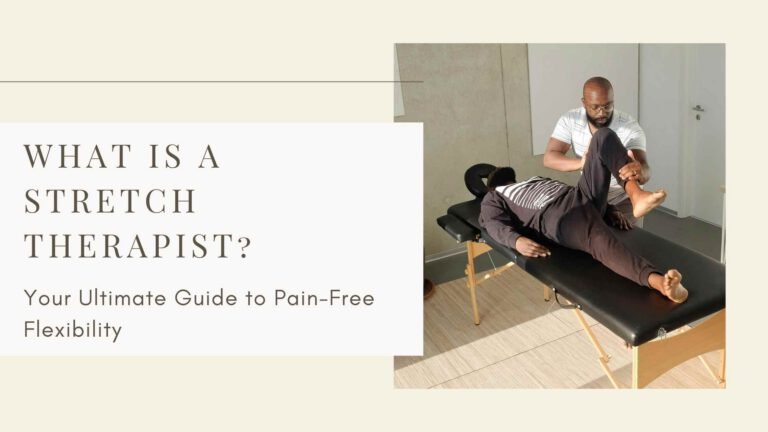
Assisted stretching involves another person helping position and move your body through a stretch.
Unlike self-stretching, the client can often relax while the practitioner controls:
- Position
- Range of motion
- Direction
- Tempo
- Stabilization
- Stretch duration
- Progression
Stretching research consistently shows that regular stretching can increase joint range of motion.
That does not mean every assisted-stretching franchise or proprietary method has been proven superior to stretching independently.
The practical value of assisted stretching often comes from professional guidance, external positioning, accountability, and consistency.
For a broader explanation, see FlexologyGuide’s Assisted Stretching Guide.
What Is StretchLab?
StretchLab is an assisted-stretching franchise built around one-on-one sessions with practitioners called Flexologists.
Current individual sessions are generally offered in:
- 25-minute sessions
- 50-minute sessions
StretchLab describes sessions as customized around the client’s mobility, goals, movement patterns, and current needs.
A typical introductory experience can include:
- Personal movement assessment
- One-on-one assisted stretch
- Personalized program recommendations
The company’s current membership structure includes recurring sessions, while non-recurring packages and individual sessions are also available.
What Is a StretchLab Flexologist?
StretchLab practitioners are called Flexologists.
Flexologists complete the company’s proprietary Flexologist Training Program before working with clients.
The current training program includes approximately 50–70 hours of combined online and in-person education covering assisted-stretching techniques, movement analysis, anatomy-related concepts, and hands-on application.
Individual Flexologists can also bring outside backgrounds such as:
- Kinesiology
- Exercise science
- Physical therapy education
- Massage therapy
- Personal training
- Yoga
- Dance
- Athletic coaching
That background varies by practitioner.
For more information, see What Is a Flexologist?.
What Is Stretch Zone?
Stretch Zone is another large practitioner-assisted stretching franchise.
Its defining feature is the Stretch Zone Method.
The method uses:
- Proprietary stretching protocols
- Specialized tables
- A patented strapping system
- Practitioner-controlled positioning
- Stabilization and isolation of targeted areas
Stretch Zone emphasizes increasing active range of motion through controlled practitioner-assisted stretching.
Its primary consumer session format is currently built around a 30-minute stretch.
How the Stretch Zone Method Differs
Stretch Zone’s strapping system is one of the clearest physical differences between the brands.
The straps help stabilize sections of the body while the practitioner works through specific movements.
The goal is to limit unwanted movement and compensation while allowing the practitioner to focus on the intended area.
Stretch Zone describes this as part of a standardized methodology rather than an improvised stretching session.
That does not mean every Stretch Zone session is identical.
The brand also describes practitioner-assisted stretching as a personalized routine.
The distinction is better understood this way:
StretchLab emphasizes individualized programming within its Flexologist model. Stretch Zone emphasizes individual application of a more explicitly standardized proprietary method.
StretchLab vs. Stretch Zone: Session Length
One of the easiest differences to compare is time.
StretchLab
StretchLab’s core one-on-one formats are:
- 25 minutes
- 50 minutes
A shorter session can focus on selected areas or provide a regular maintenance-style visit.
A 50-minute session provides more time for a broader full-body approach.
Stretch Zone
Stretch Zone prominently markets a:
- 30-minute assisted stretch
The company has also discussed 60-minute sessions within its own research and programming, although availability should be confirmed with the individual studio.
For most consumers comparing the brands, StretchLab offers the more obvious choice between a shorter and longer standard session.
StretchLab vs. Stretch Zone: Personalization
Older comparisons sometimes describe StretchLab as personalized and Stretch Zone as standardized.
That is too simplistic.
StretchLab Personalization
StretchLab explicitly emphasizes:
- Personal movement assessments
- Customized stretches
- Client goals
- Progressive programming
- Sessions that build from prior visits
Stretch Zone Personalization
Stretch Zone describes its sessions as practitioner-assisted personalized routines while applying its proprietary protocols and stabilization system.
So the distinction is not personalized versus non-personalized.
It is closer to:
- StretchLab: personalization is central to the program’s presentation.
- Stretch Zone: personalization occurs within a strongly defined proprietary method.
Some clients may prefer one structure over the other.
StretchLab vs. Stretch Zone: Practitioner Experience
The practitioner may influence your experience as much as the brand.
That is particularly important with hands-on services.
Two locations under the same franchise can differ because of:
- Practitioner background
- Communication style
- Experience
- Staff turnover
- Studio management
- Scheduling consistency
- Ability to work with the same practitioner
- Client-practitioner fit
Trying an introductory session is therefore useful before committing to a recurring membership.
StretchLab vs. Stretch Zone: Intro Offers
The two companies currently take different approaches to introductory sessions.
StretchLab Intro Offer
StretchLab currently promotes introductory stretching at up to 50% off the normal session price.
The exact price depends on the studio.
The intro typically includes:
- Movement assessment
- Assisted stretch
- Personalized recommendations
Stretch Zone Intro Offer
Stretch Zone currently promotes a complimentary 30-minute first stretch at participating studios.
Eligibility restrictions can apply.
For example, individual location offers may require:
- First-time visitor status
- Local residency
- Participating location
Stretch Zone therefore currently has the lower advertised barrier to trying the service, but consumers should verify their specific studio’s terms.
StretchLab vs. Stretch Zone: Memberships
Both businesses rely heavily on recurring membership models.
StretchLab Memberships
StretchLab currently advertises memberships including recurring:
- 25-minute sessions
- 50-minute sessions
Membership benefits can include:
- Nationwide studio access at participating locations
- Rollover credits
- Discounted additional sessions
- Movement assessments
- Digital stretching content
- Additional recovery services at participating studios
StretchLab also sells non-recurring packages, which can be attractive for someone who does not want an automatically renewing monthly membership.
Stretch Zone Memberships
Stretch Zone offers month-to-month programs involving varying numbers of 30-minute sessions.
The company also offers a Basic Membership.
Current Basic Membership features include:
- Locked-in pricing for additional sessions
- Unused-session rollover while active
- Systemwide Access
- Membership freeze options
- Additional-session purchases
Stretch Zone’s published terms currently state that month-to-month membership pricing varies by studio and program.
Can You Use Your Membership at Other Locations?
Both brands currently provide some form of cross-location access.
StretchLab
Current StretchLab membership materials advertise membership access to StretchLab studios nationally, subject to participation and membership terms.
Stretch Zone
Stretch Zone explicitly advertises Systemwide Access, allowing members to use stretch sessions at studios nationwide.
This can matter substantially for frequent travelers.
Always confirm whether your particular membership level includes nationwide access and whether any local restrictions apply.
Can You Share Sessions?
This is an area where the programs differ.
StretchLab has advertised family-sharing functionality with selected membership options.
Stretch Zone’s current Basic Membership FAQ states that sessions are exclusive to the member and cannot be transferred to someone else.
Because membership structures can change, verify family and transfer rules before joining.
StretchLab vs. Stretch Zone Pricing
There is no accurate single national price for either brand.
Both operate through individual studios, and prices vary by market.
That means a table claiming every StretchLab charges one fixed amount and every Stretch Zone charges another can be misleading.
Current official information establishes the following:
| Pricing Factor | StretchLab | Stretch Zone |
|---|---|---|
| Intro | Up to 50% off | Free 30-minute intro at participating locations |
| Membership Pricing | Location dependent | Location dependent |
| Session Frequency | Multiple membership levels | Multiple recurring frequencies |
| Packages | Yes | Studio/program dependent |
| Additional Sessions | Available | Available |
| National Fixed Price | No | No |
Stretch Zone’s published membership terms currently indicate monthly fees can vary widely based on membership program and home studio.
StretchLab directs consumers to select an individual studio before showing dedicated pricing.
Why Local Pricing Matters
Assisted-stretch studios operate in markets with very different:
- Rents
- Labor costs
- Competition
- Membership demand
- Promotions
- Franchise economics
A New York or Los Angeles studio should not be expected to price identically to a smaller-market location.
For that reason, compare your actual local studios, not generic national averages.
StretchLab vs. Stretch Zone: Method Comparison
| Category | StretchLab | Stretch Zone |
|---|---|---|
| Practitioner Title | Flexologist | Practitioner |
| Main Technique | One-on-one assisted stretching | Stretch Zone Method |
| Standardization | Proprietary Flexologist training with personalized programming | Proprietary protocols and patented stabilization system |
| Stabilization | Practitioner positioning | Specialized table and straps |
| Core Session Lengths | 25 and 50 minutes | Primarily 30 minutes |
| Assessment | Personal movement assessment offered | Practitioner assessment / method-based session |
| Program Progression | Personalized progressive approach | Recurring protocol-based program |
| Intro | Discounted | Complimentary at participating studios |
Neither approach can be declared universally more effective based simply on the brand’s service model.
What Does Stretching Research Actually Show?
Stretching itself has a substantial research base.
A 2024 systematic review and meta-analysis examining 77 studies found that chronic stretch training improves range of motion.
More recent evidence has also examined why range of motion increases after stretching.
Potential contributors include:
- Greater stretch tolerance
- Changes in passive stiffness
- Structural adaptations with longer-term training
The important limitation is that general stretching research does not automatically prove that one commercial assisted-stretching franchise produces better outcomes than another.
Brand-specific marketing claims should therefore be distinguished from broader stretching science.
Does Assisted Stretching Improve Mobility?
Stretch training can improve flexibility and range of motion.
Whether assisted stretching provides more benefit than a properly performed independent program depends on the individual and has not been established universally.
Potential practical advantages of assisted stretching include:
- External positioning
- Ability to relax during stretches
- Practitioner feedback
- Stabilization
- Access to positions that are difficult to perform alone
- Scheduled accountability
Those practical benefits can still be meaningful even without evidence proving a particular franchise is superior.
Does Assisted Stretching Help Pain?
This deserves caution.
People may feel less tension, stiffness, or discomfort after stretching.
However, pain has many potential causes.
Assisted stretching should not be presented as a treatment for:
- Herniated discs
- Sciatica
- Arthritis
- Tendon injuries
- Nerve disorders
- Significant joint injuries
- Unexplained chronic pain
People with persistent or worsening pain should seek appropriate clinical evaluation rather than relying on assisted stretching alone.
Does Assisted Stretching Improve Posture?
Stretching can influence range of motion and perceived muscle tightness.
But posture is affected by many factors, including:
- Anatomy
- Habit
- Strength
- Environment
- Task demands
- Mobility
- Motor control
Assisted stretching should therefore not be described as a guaranteed posture correction.
StretchLab vs. Stretch Zone for Athletes
Athletes can use either brand.
The more important questions are:
- Does the practitioner understand your sport?
- Can sessions be scheduled around training?
- Does the practitioner understand when aggressive stretching is inappropriate?
- Can you work consistently with the same person?
- Is your goal mobility, relaxation, recovery, or sport-specific range of motion?
A StretchLab practitioner with a strong sports-performance background may be a better fit than a less experienced practitioner elsewhere.
The reverse can also be true.
Brand alone is not enough information to decide.
StretchLab vs. Stretch Zone for Older Adults
Both brands work with older clients.
An older adult should consider:
- Ease of getting on and off the table
- Comfort level
- Practitioner communication
- Existing joint replacements
- Osteoporosis
- Balance limitations
- Recent surgeries
- Medical restrictions
- Stretch intensity
More stretching pressure is not automatically better.
Comfortable, progressive mobility work is generally more sensible than forcing range.
StretchLab vs. Stretch Zone for Beginners
Both companies provide low-commitment ways to experience the service before deciding on a long-term plan.
Stretch Zone currently has an advantage in introductory price because many participating studios advertise a free first 30-minute stretch.
StretchLab’s intro is generally discounted rather than free.
But introductory price should not be the only consideration.
Pay attention to:
- How you feel during the session
- How the practitioner communicates
- Whether the recommendations make sense
- Whether you feel pressured into a membership
- Scheduling availability
- Studio cleanliness
- Practitioner consistency
- Cancellation terms
Assisted Stretching vs. Stretching at Home
Self-stretching remains an effective option.
Research supports improvements in range of motion from regular stretching without requiring a commercial service.
Home Stretching Advantages
- Free or inexpensive
- Can be done daily
- No travel
- Easy to integrate with exercise
- Complete control over schedule
Assisted Stretching Advantages
- Practitioner guidance
- External stabilization
- Accountability
- Less effort during the stretch
- Easier access to some positions
- Scheduled consistency
For someone who already follows an effective home mobility program consistently, assisted stretching may be optional.
For someone who rarely stretches independently or values hands-on guidance, a studio can provide structure.
How Often Should You Use Assisted Stretching?
There is no universal requirement to attend one or two sessions every week.
Stretching frequency should be based on:
- Goals
- Current mobility
- Training volume
- Budget
- Response to stretching
- Other mobility work
- Practitioner recommendations
Research supports regular stretch training, but optimal frequency varies.
The best schedule is one that produces useful progress without unnecessary expense or excessive stretching.
How to Choose Between StretchLab and Stretch Zone
Instead of asking which brand is universally better, compare your local studios on several practical dimensions.
Consider StretchLab If You Prefer:
- A clear choice between 25- and 50-minute sessions
- Strong emphasis on personalized programming
- Movement assessments
- Pack options in addition to memberships
- Family-sharing possibilities on selected memberships
- Working with a Flexologist over a progressive program
Consider Stretch Zone If You Prefer:
- A proprietary standardized stretching method
- The stabilization and strapping system
- Primarily 30-minute appointments
- A complimentary introductory session
- Systemwide member access
- A membership structure centered on recurring 30-minute sessions
These are differences in service design—not proof that one produces better outcomes.
Questions to Ask Before Joining Either Studio
Before signing a membership agreement, ask:
- What does this exact membership cost?
- How long is the initial commitment?
- Does it auto-renew?
- How much notice is required to cancel?
- Do unused sessions roll over?
- When do unused sessions expire?
- Can I use sessions at other locations?
- Can I share sessions with family?
- Can I freeze the membership?
- What happens if my preferred practitioner leaves?
- Can I book with the same practitioner every visit?
- What background and training does my practitioner have?
- Are there additional fees?
These terms may matter more financially than a small difference in per-session price.
Find Assisted Stretching Near You
The best comparison is often local.
Studio quality, staff, availability, pricing, and promotions differ from one franchise location to another.
Use the FlexologyGuide assisted-stretching directory to compare studios in your area.
Frequently Asked Questions
Is StretchLab better than Stretch Zone?
Neither is universally better. StretchLab emphasizes customized 25- and 50-minute programs, while Stretch Zone applies a proprietary method using specialized stabilization and primarily 30-minute sessions. The better fit depends on your local practitioners, preferences, goals, schedule, and membership terms.
What is the biggest difference between StretchLab and Stretch Zone?
Stretch Zone’s patented strapping and stabilization system is one of the clearest methodological differences. StretchLab emphasizes personalized programming, movement assessment, and 25- or 50-minute Flexologist-led sessions.
Does Stretch Zone offer a free stretch?
Participating Stretch Zone locations currently advertise a complimentary first 30-minute stretch for eligible first-time local clients.
Does StretchLab offer a free stretch?
StretchLab currently advertises introductory sessions at up to 50% off rather than a universal free first session. Offers vary by studio.
How long are StretchLab sessions?
StretchLab’s primary one-on-one session options are 25 and 50 minutes.
How long are Stretch Zone sessions?
Stretch Zone prominently offers 30-minute practitioner-assisted stretches. Some programs and locations may offer longer sessions.
Which company is more personalized?
Both companies describe their sessions as personalized. StretchLab places stronger marketing emphasis on individualized movement assessments and progressive programming, while Stretch Zone personalizes sessions within its standardized proprietary methodology.
Can StretchLab memberships be used nationwide?
Current StretchLab materials advertise access to studios nationwide on qualifying memberships at participating locations. Confirm the terms of your specific membership.
Can Stretch Zone memberships be used nationwide?
Stretch Zone currently advertises Systemwide Access for members.
Can StretchLab memberships be shared?
Selected StretchLab membership structures have offered family-sharing options. Confirm the current rules at your studio.
Can Stretch Zone sessions be transferred to another person?
Stretch Zone’s current Basic Membership terms state that sessions are exclusive to the member and cannot be transferred.
How much does StretchLab cost?
Pricing varies by studio and market. StretchLab requires users to select a specific studio to view dedicated pricing.
How much does Stretch Zone cost?
Pricing varies by membership and home studio. Stretch Zone’s published terms currently describe a broad monthly membership range depending on program and location.
Is assisted stretching worth paying for?
It can be valuable for people who want hands-on guidance, external stabilization, accountability, and scheduled mobility work. Someone who already follows an effective stretching routine independently may not need a recurring assisted-stretch membership.
Does assisted stretching permanently improve flexibility?
Regular stretch training can produce lasting increases in range of motion while training continues. Results depend on consistency, individual physiology, training variables, and the movements being trained.
Is assisted stretching medical treatment?
No. StretchLab and Stretch Zone are wellness and mobility services, not substitutes for evaluation or treatment from qualified healthcare professionals when a medical problem is present.
Related FlexologyGuide Resources
Conclusion
StretchLab and Stretch Zone solve a similar problem in different ways.
Both provide practitioner-assisted stretching intended to make regular mobility work easier and more structured.
StretchLab currently emphasizes personalized programming, movement assessment, 25- and 50-minute session options, and a mix of memberships and packages.
Stretch Zone emphasizes its proprietary Stretch Zone Method, patented stabilization system, primarily 30-minute appointments, free introductory experience, and recurring membership programs.
The old idea that the comparison is simply “StretchLab for personalization, Stretch Zone for consistency” is no longer precise enough.
Both offer personalized services.
Both encourage recurring attendance.
Both provide nationwide membership access in some form.
The more meaningful differences are the way sessions are structured, how stabilization is performed, session duration, membership terms, practitioner fit, and local studio quality.
For most consumers, trying both nearby studios before committing to a long-term membership is more informative than relying solely on brand-level comparisons.
Medical Disclaimer
This article is for educational purposes only and is not medical advice.
Assisted stretching is a wellness service and should not replace diagnosis, physical therapy, rehabilitation, or medical treatment when those services are appropriate. Individuals with acute injuries, unexplained pain, recent surgery, osteoporosis, joint instability, neurological conditions, or other relevant medical concerns should seek appropriate professional guidance before beginning a new assisted-stretching program.