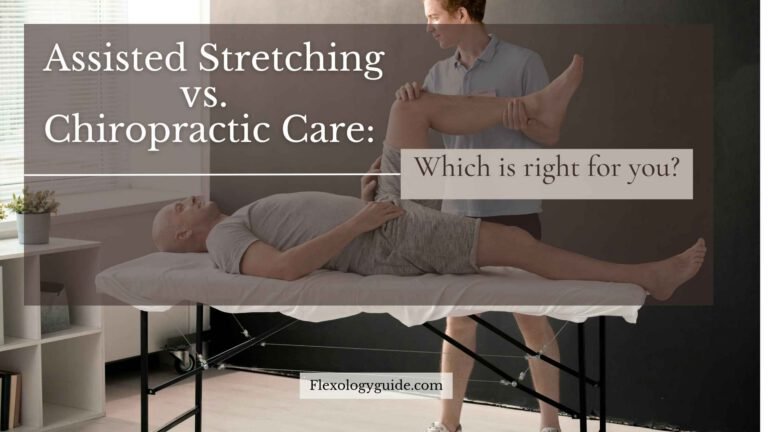
Stretch Zone is a one-on-one practitioner-assisted stretching franchise that uses specialized tables, stabilization straps, and a proprietary stretching system designed around controlled positioning and range-of-motion work.
Instead of performing stretches independently, the client remains relatively relaxed while a trained Stretch Zone practitioner positions and stabilizes the body and guides it through a structured sequence of stretches.
Stretch Zone has grown into one of the largest assisted stretching brands in the United States, with hundreds of studios across dozens of states.
For consumers, however, brand size is less important than understanding how the method works, what an individual studio charges, who is performing the stretch, and whether recurring sessions add enough value to justify the cost.
What Is Stretch Zone?
Stretch Zone is a dedicated assisted stretching franchise founded by Jorden Gold.
Its core service is practitioner-assisted stretching rather than exercise classes, massage, physical therapy, or chiropractic treatment.
Stretch Zone describes its proprietary approach as the Stretch Zone Method.
The method emphasizes:
- One-on-one practitioner assistance
- Specialized stretching tables
- Stabilization straps
- Controlled body positioning
- Isolation of targeted areas
- Progressive range-of-motion work
- A repeatable session structure
The company specifically emphasizes active range of motion, or the range a person can access during movement.
If you are new to the category itself, start with our guide to what assisted stretching is and how it works.
How Does the Stretch Zone Method Work?
The most distinctive part of Stretch Zone’s service model is not simply that another person stretches you.
It is the way the company combines practitioner assistance with stabilization equipment.
Specialized Stretching Tables
Stretch Zone sessions take place on proprietary stretching tables designed to allow the practitioner to position the client securely.
The table gives the practitioner leverage without requiring the client to stabilize every part of the body independently.
Stabilization Straps
Stretch Zone’s patented and proprietary strapping system helps stabilize parts of the body while the practitioner works on another area.
For example, stabilizing the pelvis may allow the practitioner to focus more specifically on movement through the hip or leg.
The concept is similar to what happens during many assisted mobility techniques: stabilize one region so movement can be directed more precisely somewhere else.
Practitioner-Guided Stretching
The practitioner then moves the client through a sequence of controlled stretches.
Stretch Zone describes its method as drawing on principles of neuromuscular behavior and gradually working to increase active range of motion.
That company-specific explanation should be distinguished from independent clinical evidence.
Stretching research does support improvements in flexibility and range of motion with regular stretching. The evidence does not establish that one commercial assisted stretching franchise is universally superior to other professionally delivered stretching methods or to a well-designed independent mobility program.
What Happens During Your First Stretch Zone Visit?
Many Stretch Zone studios currently advertise a free 30-minute first stretch.
Current location pages specify that the promotion is generally intended for first-time guests and may require you to be a local resident.
A first visit typically follows several steps.
1. Initial Conversation
The practitioner will ask why you came in and what you hope to improve.
Possible goals include:
- General flexibility
- Hip mobility
- Shoulder mobility
- Feeling less stiff
- Maintaining movement as you age
- Athletic mobility
- Establishing a regular stretching routine
You should also disclose any injuries, surgeries, medical conditions, pain, or movement restrictions.
2. Basic Movement or Flexibility Assessment
Current Stretch Zone location pages describe a brief movement and flexibility assessment before the first stretch.
This helps the practitioner understand your current mobility and goals.
It is not a medical examination and should not be treated as a diagnosis.
3. Practitioner-Assisted Stretching
You lie on the stabilization table while the practitioner positions your body through a sequence of stretches.
The straps may be used to stabilize certain regions as other areas are moved.
4. Feedback During the Session
The practitioner should regularly check how the stretch feels.
You should speak up immediately if you feel:
- Sharp pain
- Pinching
- Numbness
- Tingling
- Joint pain
- Dizziness
- Unusual symptoms
Stretching does not become more productive simply because it becomes more painful.
5. Membership Discussion
After a complimentary introductory session, the studio may discuss recurring sessions or membership options.
That is normal for a membership-driven franchise.
You should still understand the actual price, frequency, contract terms, and expected use before committing.
How Long Are Stretch Zone Sessions?
Stretch Zone’s current location pages heavily promote a 30-minute introductory stretch, and many describe the visit as taking roughly 30 minutes from start to finish.
Ongoing appointment formats can vary by studio.
Because Stretch Zone does not publish one universal national menu with standardized consumer pricing and session options for every location, confirm the following directly with the studio:
- Available session lengths
- Membership frequencies
- Individual-session pricing
- Package options
- Cancellation rules
- Whether session credits expire
- Late-cancellation policies
Do not assume an old online price chart applies to your local Stretch Zone.
How Much Does Stretch Zone Cost?
Stretch Zone pricing varies by location.
The earlier version of this guide listed fixed nationwide prices for 30-minute sessions, 60-minute sessions, packages, and memberships.
Those figures should not be treated as current national Stretch Zone prices.
Stretch Zone’s current public website focuses instead on getting prospective clients into the local studio through the complimentary introductory stretch and then providing local membership information.
That means the most reliable pricing source is the individual location.
What to Ask Before Joining
Request answers to these questions in writing:
- What is the monthly membership price?
- How many stretches are included?
- How long is each appointment?
- What is the effective cost per stretch?
- Is there an enrollment fee?
- Is there an initial commitment?
- Does the membership automatically renew?
- What is the cancellation notice requirement?
- Can unused sessions roll over?
- Do unused credits expire?
- Are there late-cancel or no-show fees?
- Can the membership be frozen?
The answers can matter more than the headline monthly price.
Why Does Stretch Zone Offer a Free First Stretch?
The complimentary first stretch serves two purposes.
For the client, it provides a low-risk way to experience practitioner-assisted stretching before paying for a recurring program.
For the studio, it functions as an introductory appointment that can lead into a membership discussion.
That does not make the offer inherently good or bad.
It simply means you should use the free session as an evaluation opportunity.
Pay attention to:
- Practitioner communication
- Comfort with hands-on stretching
- Stretch intensity
- Cleanliness and professionalism
- Whether the session feels relevant to your goals
- Appointment availability
- Membership pricing
- Sales pressure
The practitioner and local studio experience can matter as much as the brand itself.
Who Performs Stretch Zone Sessions?
Stretch Zone refers to its providers as certified stretch practitioners.
The company states that its practitioners complete proprietary training in the Stretch Zone Method.
Practitioners may also have outside backgrounds in areas such as:
- Exercise science
- Kinesiology
- Personal training
- Massage therapy
- Sports performance
- Physical therapy education
- Coaching
- Other wellness disciplines
Individual backgrounds vary.
This is worth asking about because the Stretch Zone practitioner credential itself is a company-specific qualification rather than a medical license.
A practitioner who separately holds a healthcare license retains that independent credential, but receiving Stretch Zone training does not by itself turn someone into a physical therapist, physician, chiropractor, or other licensed clinician.
What Can Stretch Zone Help With?
The clearest evidence-based use case is flexibility and range-of-motion work.
Recent systematic reviews continue to find that regular stretching can meaningfully improve flexibility and joint range of motion.
That gives Stretch Zone a reasonable foundation as a professional stretching service.
Potential practical benefits include:
Structured Flexibility Work
A practitioner controls positioning and progression rather than leaving you to determine every stretch yourself.
External Stabilization
The strapping system can help stabilize parts of the body that may otherwise move during self-stretching.
Accountability
Appointments put stretching on the calendar.
For someone who consistently skips mobility work, this may be one of the biggest practical advantages.
Real-Time Feedback
A practitioner can modify positioning based on what you report during the session.
Relaxation
Some people simply prefer having another person manage the stretch while they focus on breathing and relaxing.
These advantages do not mean assisted stretching is necessary for everyone.
What Does the Research Actually Support?
It is useful to separate stretching evidence from Stretch Zone marketing claims.
Research strongly supports stretching for improving flexibility and range of motion.
A 2025 systematic review and meta-analysis involving 189 studies and more than 6,600 adults found meaningful improvements in flexibility after both single stretching sessions and ongoing static stretching programs.
Research also suggests that improvements in range of motion can involve changes in stretch tolerance and, to some extent, tissue stiffness.
What the research does not establish is that Stretch Zone specifically:
- Prevents injuries
- Treats chronic pain
- Produces faster recovery
- Improves circulation enough to produce meaningful medical outcomes
- Corrects posture
- Outperforms other assisted stretching systems
- Outperforms properly performed self-stretching for everyone
Those claims require more specific evidence.
Stretch Zone can be valuable without overstating what professional stretching can do.
Who May Benefit From Stretch Zone?
People Who Struggle to Stretch Consistently
For some clients, the main benefit is accountability.
If your home stretching routine repeatedly disappears after a few days, scheduled appointments can create consistency.
People New to Stretching
A practitioner can remove much of the guesswork around positioning and intensity.
Desk Workers
People who spend much of the day sitting may appreciate focused mobility work for areas that feel restricted after prolonged sitting.
That does not mean stretching alone will correct every posture-related complaint or resolve back pain.
Athletes and Active Adults
Athletes may use Stretch Zone as one component of a larger mobility and recovery program.
Assisted stretching should complement—not replace—strength training, conditioning, sport practice, sleep, nutrition, and appropriate healthcare.
For a deeper look at this population, see Assisted Stretching for Athletes.
Older Adults
Some older adults may appreciate practitioner-controlled stretching because it reduces the need to get on the floor or create leverage independently.
Medical history becomes particularly important when joint replacements, osteoporosis, neurological disease, recent surgery, cardiovascular conditions, or significant balance limitations are present.
Who Should Be More Cautious?
Assisted stretching is a wellness service and is not appropriate for every physical complaint.
Seek medical guidance before stretching if you have:
- A recent fracture
- Recent surgery
- An acute muscle or tendon injury
- Significant unexplained pain
- New neurological symptoms
- Joint instability
- Severe osteoporosis
- A condition for which a healthcare provider has restricted movement
- Symptoms that worsen during stretching
Stretch Zone should not replace medical evaluation, physical therapy, or rehabilitation when those services are appropriate.
Stretch Zone vs. Self-Stretching
Self-stretching can absolutely improve flexibility.
The main differences involve assistance, equipment, feedback, accountability, and cost.
| Factor | Stretch Zone | Self-Stretching |
|---|---|---|
| Practitioner assistance | Yes | No |
| Stabilization equipment | Yes | Usually no |
| Immediate feedback | Yes | Limited |
| Appointment accountability | Yes | Self-managed |
| Cost | Recurring expense | Usually free |
| Convenience | Requires travel and scheduling | Can be done almost anywhere |
| Customization | Practitioner-guided | Self-directed |
| Range-of-motion benefit | Possible with consistent practice | Possible with consistent practice |
There is no evidence-based reason to say Stretch Zone is automatically more effective for every person.
Someone who understands mobility training and consistently follows a home program may make excellent progress without a commercial studio.
Someone who needs guidance or accountability may get considerably more value from assisted sessions.
Stretch Zone vs. StretchLab
Stretch Zone and StretchLab are two of the largest assisted stretching brands, but they use different branded systems.
Stretch Zone emphasizes:
- A proprietary standardized method
- Stabilization tables and straps
- Active range-of-motion language
- A free first-stretch model at many locations
StretchLab emphasizes:
- Flexologist-led personalized sessions
- 25- and 50-minute formats
- MAPS movement assessments
- A different proprietary training system
The individual practitioner, local price, schedule availability, contract terms, and your preference for session style may matter more than the brand name.
For the complete comparison, see StretchLab vs. Stretch Zone.
Stretch Zone Strengths and Limitations
| Area | Potential Strength | Limitation |
|---|---|---|
| Intro offer | Free first stretch at many locations | Eligibility restrictions may apply |
| Stabilization | Proprietary straps and tables | Equipment alone does not guarantee better results |
| Method | Repeatable company-specific system | May feel more standardized than some alternatives |
| Accountability | Scheduled appointments | Requires recurring time and money |
| Practitioner assistance | Immediate positioning and feedback | Practitioner experience varies |
| Large footprint | Hundreds of U.S. locations | Local pricing and policies differ |
| Mobility focus | Specialized environment for stretching | Does not replace strength or rehabilitation |
| Cost transparency | Local studio can explain options | National pricing is not clearly published online |
Is Stretch Zone Worth It?
Stretch Zone may be worth the cost if it solves a mobility or consistency problem that you are not successfully solving on your own.
It may provide good value if:
- You rarely stretch without an appointment.
- You prefer hands-on assistance.
- You like the stabilization system.
- You respond well to a structured method.
- You value accountability.
- You consistently use your membership.
- Your local practitioner communicates well.
- The cost fits comfortably within your wellness budget.
It may provide less value if:
- You already stretch consistently and effectively.
- You dislike hands-on services.
- You primarily need rehabilitation.
- Membership appointments are difficult to schedule.
- You do not use your sessions consistently.
- You prefer a more flexible or highly customized coaching model.
The free introductory stretch makes this relatively easy to test before committing.
What to Look for During Your Free Stretch
Use the first session to evaluate the actual service rather than simply whether you feel temporarily looser afterward.
Ask yourself:
- Did the practitioner explain what they were doing?
- Were you asked about injuries and limitations?
- Did they adjust when you gave feedback?
- Did you feel stable on the table?
- Did any position cause pain?
- Did the practitioner respect your boundaries?
- Was the membership explained clearly?
- Is the schedule realistic for you?
- Would you be comfortable working with this practitioner regularly?
A good introductory session should help you make an informed decision rather than simply push you toward a contract.
Questions to Ask Before Buying a Stretch Zone Membership
Before joining, ask:
- What is the total monthly cost?
- How many sessions are included?
- How long is each session?
- What is my cost per visit?
- Is there an enrollment fee?
- How long is the initial commitment?
- Does the membership automatically renew?
- What is the cancellation process?
- How much notice is required?
- What happens to unused stretches?
- Are credits transferable?
- Can I freeze the membership?
- What happens if my practitioner leaves?
- Can I switch practitioners?
- How far ahead do members need to book?
These practical details often determine whether a membership becomes valuable or frustrating.
What Should You Wear to Stretch Zone?
Wear flexible athletic clothing that allows your hips, shoulders, knees, and torso to move freely.
Good choices include:
- Athletic pants
- Leggings
- Shorts
- T-shirts
- Athletic tops
Avoid restrictive clothing that limits movement.
Your local studio can tell you whether socks or specific footwear are required.
Frequently Asked Questions
What is Stretch Zone?
Stretch Zone is a practitioner-assisted stretching franchise that uses proprietary stretching tables, stabilization straps, and a company-specific method focused on guided range-of-motion work.
Is the first Stretch Zone session really free?
Many current Stretch Zone locations advertise a free 30-minute first stretch. Offers commonly apply to first-time clients and may require local residency. Confirm eligibility with your chosen location.
How long is a Stretch Zone session?
Many introductory appointments are approximately 30 minutes. Ongoing session structures can vary by location, so confirm the available formats with your studio.
How much does Stretch Zone cost?
Stretch Zone does not publish one universal national membership price. Rates and plan structures vary by studio, making the local location the most reliable source for current pricing.
Are Stretch Zone practitioners certified?
Stretch Zone refers to its providers as certified stretch practitioners and trains them in its proprietary method. That company-specific credential is separate from independent licenses or healthcare credentials a practitioner may hold.
Does Stretch Zone use straps?
Yes. Stretch Zone uses patented and proprietary stabilization equipment to position and stabilize the body during practitioner-assisted stretching.
Does Stretch Zone improve flexibility?
Regular stretching has strong research support for increasing flexibility and range of motion. Stretch Zone provides a professionally assisted way to perform that work, although research does not establish that Stretch Zone is universally superior to other stretching methods.
Can Stretch Zone help with pain?
Some clients seek assisted stretching because they feel stiff or uncomfortable, but Stretch Zone is a wellness service rather than medical treatment. Persistent, severe, worsening, or unexplained pain should be evaluated by an appropriate healthcare professional.
Is Stretch Zone better than stretching at home?
Not universally. Professional stretching adds assistance, stabilization, accountability, and feedback, while self-stretching is inexpensive and convenient. The better option depends on your ability to stretch effectively and consistently on your own.
How often should you go to Stretch Zone?
There is no universally necessary frequency. The appropriate schedule depends on your goals, response to stretching, other exercise, budget, and how much professional assistance you actually need.
Is Stretch Zone worth it?
It may be worthwhile for people who value hands-on assistance and scheduled accountability. Someone who already follows a consistent and effective mobility program independently may get less additional value.
Related Resources
- What Is Assisted Stretching?
- Assisted Stretching for Athletes
- StretchLab vs. Stretch Zone
- Find Assisted Stretching Studios by City
Conclusion
Stretch Zone has built one of the largest assisted stretching networks in the United States around a distinctive combination of practitioner assistance, proprietary stabilization equipment, and a structured stretching method.
The service’s most defensible value is straightforward: it gives clients professional positioning, external stabilization, immediate feedback, and appointment-based accountability.
Stretch Zone does not need to outperform every other form of stretching to be useful.
Research strongly supports stretching for improving flexibility and range of motion, but consumers should remain skeptical of broader promises around injury prevention, chronic pain, recovery, posture, or superior athletic performance unless those claims are supported by appropriate evidence.
The free introductory stretch available at many studios makes Stretch Zone relatively easy to evaluate.
Use that session to judge the practitioner, the method, your comfort with assisted stretching, the studio’s scheduling availability, and the full membership cost.
If those factors work for you and professional guidance makes you more consistent with mobility work, Stretch Zone may provide meaningful value.
If you already stretch effectively on your own, you may not need a recurring studio membership to improve flexibility.