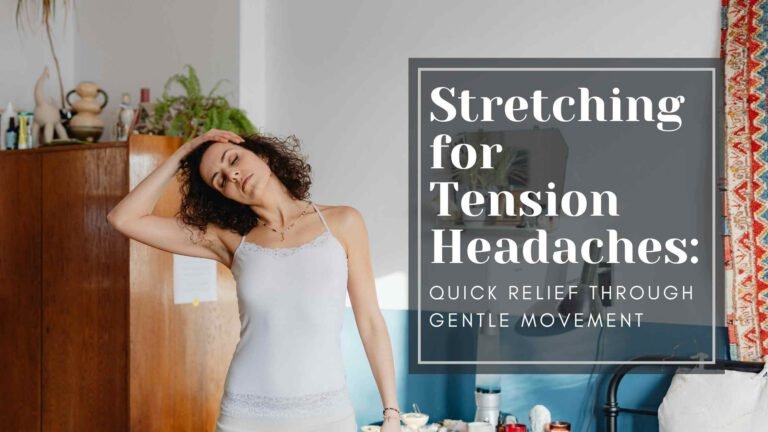
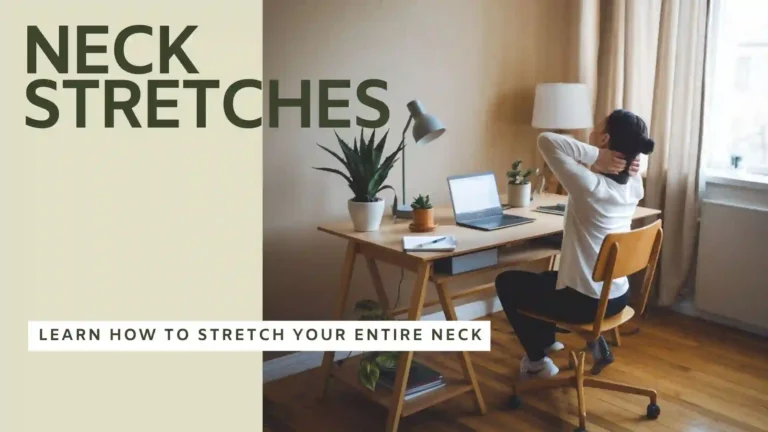
Shoulder blade stretches can help improve upper-back, shoulder, and thoracic mobility when the area feels stiff or tight.
Useful options include the cross-body shoulder stretch, thread the needle, Cat-Cow, Eagle Arms, an upper-trapezius stretch, a doorway chest stretch, and gentle scapular movement exercises.
But shoulder blade pain is not always caused by a muscle that simply needs to be stretched.
Pain around or between the shoulder blades can come from several structures, including muscles, joints, the neck, the shoulder itself, or referred pain from another area. If pain is severe, unexplained, persistent, associated with injury, or accompanied by chest symptoms, weakness, numbness, or shortness of breath, stretching should not be your first step.
What Causes Pain or Tightness Around the Shoulder Blades?
The shoulder blades, or scapulae, sit on the back of the rib cage and move as your arms and shoulders move.
Several muscles attach to or influence the scapula, including:
- Trapezius
- Rhomboids
- Serratus anterior
- Levator scapulae
- Latissimus dorsi
- Rotator-cuff muscles
- Pectoral muscles indirectly through shoulder positioning
Discomfort in this region can sometimes follow:
- Long periods in one position
- Repetitive upper-body activity
- A sudden increase in training volume
- Heavy lifting
- Shoulder or neck muscle fatigue
- Reduced thoracic mobility
- Local muscle soreness
- Shoulder or cervical-spine conditions
It is tempting to blame every case on “poor posture,” but that is too simple.
Research does not show a straightforward relationship in which rounded posture automatically causes shoulder pain. Thoracic position can affect shoulder range of motion, but posture is only one possible factor.
Can Stretching Help Shoulder Blade Pain?
Sometimes.
Stretching may be useful when discomfort is associated with stiffness, limited movement, or muscle tension.
It may temporarily improve how the area feels and make certain movements easier.
However, stretching is not a universal treatment for shoulder blade pain.
Research on shoulder rehabilitation generally supports exercise-based programs, often combining mobility, strengthening, and scapular-control exercises rather than stretching alone. Systematic reviews have found potential improvements in function and pain with scapular-focused exercise programs, although certainty and effect size vary by population.
The practical takeaway is simple:
Use stretching as one part of a broader movement strategy—not as proof that every painful shoulder blade needs to be stretched.
1. Cross-Body Shoulder Stretch
The cross-body stretch moves one arm horizontally across the chest.
It can create a stretch across the back of the shoulder and may be useful when posterior shoulder mobility feels restricted.
How to Do It
- Sit or stand upright.
- Bring one arm across your chest.
- Use the opposite arm to gently draw it closer.
- Keep the stretching-side shoulder relaxed.
- Stop at comfortable tension.
- Hold for about 20–30 seconds.
- Repeat on the other side.
Avoid pulling directly on the elbow joint.
For a more detailed guide, see the Cross-Body Shoulder Stretch.
You can also compare it with the Arm Across Chest Stretch.
2. Thread the Needle Stretch
Thread the needle combines upper-back rotation with movement around the shoulder blade.
It can be useful when the upper back feels stiff after sitting or repetitive activity.
How to Do It
- Begin on your hands and knees.
- Slide your right arm underneath your left arm.
- Allow your right shoulder and the side of your head to move toward the floor.
- Keep your hips relatively centered.
- Breathe normally.
- Hold briefly or move slowly in and out of the position.
- Repeat on the other side.
Do not force your shoulder against the floor.
See the full Thread the Needle Stretch guide for technique and variations.
3. Cat-Cow Stretch
Cat-Cow moves the thoracic spine through flexion and extension while the shoulder blades move around the rib cage.
It is more accurately considered a general spinal and scapular mobility drill than a targeted shoulder-blade muscle stretch.
How to Do It
- Start on your hands and knees.
- Place your hands beneath your shoulders.
- Slowly round your upper and middle back.
- Allow the shoulder blades to spread apart.
- Reverse the movement gradually.
- Let the chest move forward while keeping the motion comfortable.
- Continue for several slow repetitions.
Move within a comfortable range rather than forcing your neck or lower back.
For the full movement breakdown, visit the Cat-Cow Stretch.
4. Eagle Arms Stretch
Eagle Arms places the shoulders and upper back in a position that can create tension between and around the shoulder blades.
How to Do It
- Sit or stand comfortably.
- Reach both arms forward.
- Cross one arm over the other.
- Bend the elbows.
- Bring the backs of the hands or palms toward each other as your mobility allows.
- Gently lift the elbows.
- Reach the hands slightly away from your face.
- Hold for 20–30 seconds.
- Switch which arm is on top.
Do not force the hands together if your shoulders do not comfortably allow it.
See the Eagle Arms Stretch for more detailed instruction.
5. Upper-Trapezius Stretch
The upper trapezius runs from the neck toward the shoulder.
If the upper neck and shoulder region feels tense, gentle side bending may create a useful stretch.
How to Do It
- Sit upright.
- Keep one shoulder relaxed.
- Slowly tilt your head toward the opposite side.
- Stop when you feel gentle tension along the side of the neck and upper shoulder.
- Hold without pulling forcefully on your head.
- Return slowly.
- Repeat on the opposite side.
If the movement causes numbness, tingling, dizziness, or pain traveling down the arm, stop.
See the Upper Trap Stretch for variations and form guidance.
6. Doorway Chest Stretch
A chest stretch does not directly stretch the muscles between your shoulder blades.
Instead, it lengthens anterior shoulder and chest tissues.
That distinction matters.
Some people find that opening the chest makes upper-body movement feel easier after prolonged sitting, but the stretch should not be described as “releasing shoulder blade knots.”
How to Do It
- Stand in a doorway.
- Place one or both forearms against the frame.
- Keep your shoulders relaxed.
- Step forward slowly.
- Stop when you feel a comfortable stretch across the chest or front of the shoulders.
- Hold for 20–30 seconds.
- Step back to release.
Change your arm height if the position feels uncomfortable.
7. Scapular Protraction and Retraction
Not every useful shoulder-blade exercise needs to be a static stretch.
Allowing the shoulder blades to move forward and backward can help you practice controlled scapular motion.
How to Do It
- Sit or stand upright.
- Reach your arms forward.
- Allow your shoulder blades to glide apart gently.
- Then draw them back toward one another without shrugging.
- Move slowly between the two positions.
- Repeat several times.
Do not aggressively squeeze the shoulder blades together.
The goal is controlled movement.
FlexologyGuide also has a dedicated Scapular Retraction Stretch guide.
Which Stretch Should You Choose?
Different stretches emphasize different regions.
| Exercise | Main Movement Emphasis | May Be Useful When |
|---|---|---|
| Cross-body stretch | Posterior shoulder | Back of shoulder feels restricted |
| Thread the needle | Thoracic rotation | Upper back feels stiff |
| Cat-Cow | Thoracic flexion/extension | General spinal stiffness |
| Eagle Arms | Upper back/posterior shoulder | Tension between shoulder blades |
| Upper-trap stretch | Neck/upper shoulder | Upper shoulder feels tense |
| Doorway chest stretch | Chest/anterior shoulder | Front of chest feels restricted |
| Scapular protraction/retraction | Shoulder-blade movement | You want controlled scapular mobility |
No single stretch is the “best” option for every type of shoulder blade discomfort.
What About Shoulder Rotation?
Shoulder rotation can also influence movement around the scapula.
FlexologyGuide has separate guides for:
These address rotational mobility at the shoulder joint rather than simply stretching the area between the shoulder blades.
What Are Shoulder Blade “Knots”?
People often use the word knot to describe a tender or tight spot in a muscle.
Clinically, some of these areas may be discussed as myofascial trigger points, but trigger-point diagnosis is not as simple or standardized as finding a painful lump.
Research reviews have found substantial inconsistency in how trigger points are defined and identified.
For that reason, it is better to describe a tender area as a sensitive or tight spot unless it has been professionally evaluated.
Can You Use a Tennis or Massage Ball Around the Shoulder Blade?
Some people use a tennis ball, massage ball, or similar tool against a wall for self-massage.
If you try it:
- Place the ball between the wall and a muscular area around the shoulder blade.
- Avoid placing direct pressure on the spine or bony edge of the scapula.
- Lean into the ball gently.
- Move slowly.
- Stop if you experience sharp pain, numbness, tingling, or pain traveling down the arm.
You do not need to press as hard as possible.
More pressure is not necessarily better.
Self-massage may temporarily change soreness or perceived tension, but it should not be described as permanently “breaking up knots.”
Should You Stretch Several Times a Day?
Not automatically.
The legacy version of this article recommended stretching several times every day, but there is no universal frequency appropriate for every cause of shoulder blade pain.
For general mobility, a short routine performed consistently may be reasonable.
The right frequency depends on:
- Why you are stretching
- How the area responds
- Your activity level
- The specific stretch
- Whether you have an injury
- Whether a healthcare professional has given you a rehabilitation plan
If repeated stretching makes the area more irritated, doing more is unlikely to be the solution.
Stretching vs Strengthening for Shoulder Blade Problems
Stretching addresses mobility.
Strengthening addresses the ability of muscles to produce and control force.
For many shoulder problems, rehabilitation programs include both.
Scapular-focused exercise programs commonly work muscles such as:
- Serratus anterior
- Middle trapezius
- Lower trapezius
- Rotator cuff
Research suggests scapular therapeutic exercise may improve shoulder function in some populations, while effects on pain can vary.
That is why a complete shoulder program often includes more than static stretching.
Daily Habits That May Help
Instead of trying to maintain one “perfect posture,” focus on movement variety and manageable activity.
Useful habits may include:
- Changing positions regularly
- Taking movement breaks during long sitting periods
- Gradually increasing training load
- Avoiding sudden spikes in repetitive upper-body activity
- Maintaining shoulder and upper-back strength
- Using a workstation that allows comfortable movement
- Sleeping in a position that does not aggravate symptoms
- Paying attention to which activities reliably make symptoms better or worse
Posture can influence movement, but there is no single posture that guarantees pain prevention.
Assisted Stretching for Shoulder and Upper-Back Mobility
Basic shoulder-blade mobility exercises can usually be performed independently.
Assisted stretching adds another person who helps guide positioning and range of motion.
That can provide:
- External positioning assistance
- Feedback
- Accountability
- Help reaching certain positions
It does not automatically mean a stretch should be deeper or more forceful.
A stretching professional should stay within your comfortable range and recognize when pain is outside the scope of a wellness service.
If you are unfamiliar with the category, read What Is Assisted Stretching? and How to Start Assisted Stretching.
If you want to see assisted-stretching options where you live, use the FlexologyGuide Assisted Stretching Studio Search.
When Shoulder Blade Pain Needs Medical Evaluation
Do not assume that every case of shoulder blade pain is muscular.
Seek prompt medical evaluation if pain follows a significant injury or is accompanied by:
- Inability to raise or use the arm
- Obvious deformity
- Sudden swelling
- Severe pain
- Significant weakness
- Persistent numbness or tingling
Mayo Clinic advises emergency medical attention when shoulder pain occurs with symptoms that could indicate a heart problem, including difficulty breathing, chest tightness, or sweating.
You should also consider evaluation if:
- Pain continues to worsen
- Symptoms persist despite reasonable activity modification
- Pain regularly wakes you at night
- Symptoms travel into the arm
- You develop unexplained weakness
- You cannot identify why the pain started
Stretching should not delay evaluation of unexplained or concerning symptoms.
Frequently Asked Questions
What is the best stretch for pain between the shoulder blades?
There is no single best stretch because pain between the shoulder blades can have different causes. Thread the needle, Cat-Cow, Eagle Arms, and gentle scapular movements may be useful for mobility, but persistent pain should be evaluated rather than repeatedly stretched.
How do you stretch directly between the shoulder blades?
Movements that spread the scapulae apart—such as reaching the arms forward, Eagle Arms, Cat-Cow, or some cross-body positions—can create tension across the upper back between the shoulder blades.
Can poor posture cause shoulder blade pain?
Posture may influence movement and symptoms in some people, but research does not support a simple rule that slouched posture directly causes shoulder pain. Activity level, strength, mobility, workload, injury history, and other factors also matter.
Should I stretch a shoulder blade muscle knot?
Gentle stretching or self-massage may feel useful for a tender muscular area, but a painful spot is not necessarily a clearly defined “knot.” Avoid aggressive pressure and seek evaluation if pain persists, worsens, or includes neurological symptoms.
How long should I hold shoulder blade stretches?
About 20–30 seconds is a practical starting point for many gentle static stretches, but different exercises use different durations. Dynamic exercises such as Cat-Cow are better performed through slow repetitions.
How often should I stretch my shoulder blades?
There is no universal prescription. Start with a modest amount of comfortable mobility work and adjust based on your response rather than assuming more frequent stretching is always better.
Can stretching fix shoulder blade pain?
Not necessarily. Stretching may help stiffness or mobility limitations, but shoulder blade pain can have many causes. Some conditions respond better to strengthening, load modification, physical therapy, or medical treatment.
Should shoulder blade stretching hurt?
No. Gentle tension is acceptable, but sharp pain, pinching, numbness, tingling, weakness, or worsening symptoms are reasons to stop.
Can strengthening help shoulder blade pain?
In some shoulder-pain populations, scapular-focused strengthening and rehabilitation programs can improve function, and some studies report pain improvements. The appropriate program depends on the underlying problem.
Related Shoulder and Upper-Back Stretches
Explore more movement guides in the FlexologyGuide Stretch Library.
Useful related exercises include:
- Thread the Needle Stretch
- Cat-Cow Stretch
- Cross-Body Shoulder Stretch
- Arm Across Chest Stretch
- Eagle Arms Stretch
- Upper Trap Stretch
- Scapular Retraction Stretch
- Wall Lat Stretch
- Shoulder Internal Rotation Stretch
- Shoulder External Rotation Stretch
Bottom Line
Shoulder blade stretches can be useful when your upper back or shoulders feel stiff, but stretching is only one tool.
Cross-body stretching, Thread the Needle, Cat-Cow, Eagle Arms, upper-trapezius stretching, chest mobility, and controlled scapular movement all address slightly different regions.
The more important question is why the area hurts or feels restricted.
For mild stiffness associated with sitting or activity, gentle mobility work may be reasonable.
For persistent, severe, unexplained, traumatic, or neurologic symptoms, do not keep stretching in hopes of “releasing a knot.” Get the problem properly evaluated.
For additional mobility exercises, explore the FlexologyGuide Stretch Library.
If you want professionally guided stretching rather than a self-directed routine, use the FlexologyGuide Assisted Stretching Studio Search to compare providers in your area.