Table of Contents
What a 15 Minute Stretch Routine Is
A 15 minute stretch routine is a structured sequence designed to improve flexibility and mobility across the entire body. The duration allows enough time to address multiple muscle groups without requiring a long training session.
- Targets the hips, legs, spine, shoulders, and neck
- Can be performed daily or after exercise
- Works well for beginners and experienced athletes
- Helps maintain consistent mobility practice
Shorter routines like the 5 minute stretch routine and 10 minute daily stretch are often used when time is limited, while longer routines like the 20 minute stretch routine allow deeper flexibility work.
Benefits of a 15 Minute Stretch Routine
A 15 minute session provides enough time to target multiple areas of the body and transition slowly between stretches. This helps the muscles relax and allows the joints to move through comfortable ranges.
- Improves overall flexibility
- Supports healthy joint mobility
- Helps reduce stiffness from sitting
- Encourages consistent daily movement
- Supports posture and movement efficiency
For a broader collection of stretches, explore the Stretch Library.
The Complete 15 Minute Stretch Routine
| Stretch | Target Area | Time |
|---|---|---|
| Calf Wall Stretch | Calves | 1 minute |
| Standing Hamstring Stretch | Hamstrings | 1 minute per side |
| Kneeling Hip Flexor Stretch | Hip flexors | 1 minute per side |
| Figure Four Stretch | Glutes | 1 minute per side |
| Cat Cow Stretch | Spine | 1 minute |
| Thread the Needle Stretch | Upper back | 45 seconds per side |
| Wall Lat Stretch | Lats | 45 seconds per side |
| Doorway Chest Stretch | Chest | 45 seconds |
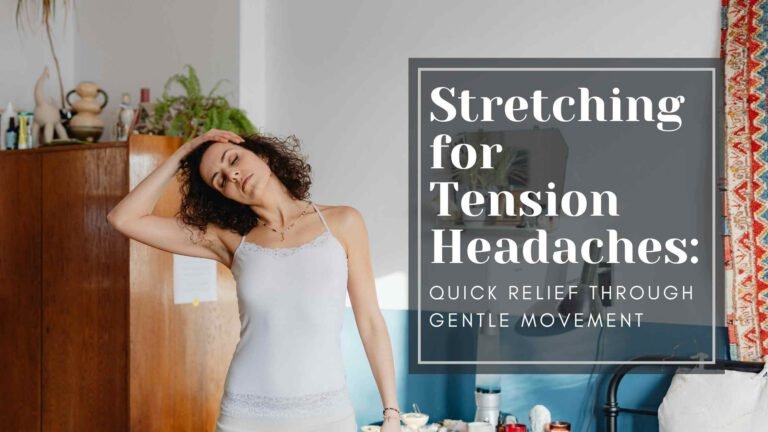
| Neck Side Bend Stretch | Neck | 30 seconds per side |
How to Structure the Routine
The order of the routine matters. Start with larger muscle groups in the lower body, then move upward toward the spine and shoulders. Finish with the neck to release tension in the upper body.
- Begin with calves and hamstrings
- Move into hips and glutes
- Mobilize the spine
- Stretch the upper back and shoulders
- Finish with gentle neck stretches
This structure helps the body gradually warm up while maintaining smooth transitions between positions.
Common Stretching Mistakes
- Moving too quickly between stretches
- Holding the breath during stretches
- Forcing a stretch beyond a comfortable range
- Skipping major muscle groups
- Performing stretches inconsistently
Stretching should feel controlled and steady rather than aggressive.
Assisted Stretching vs Self Stretching
Self stretching routines allow individuals to maintain flexibility through daily movement practice. These routines are simple to perform and can easily fit into a normal schedule.
However, many individuals eventually reach a point where flexibility improvements slow down. This can occur when balance, leverage, or positioning limits the depth of a stretch.
Assisted stretching involves working with a trained professional who helps guide the body into specific positions while applying controlled pressure. This approach can help some individuals explore additional range of motion while maintaining alignment.
- Self stretching: effective for daily flexibility maintenance.
- Assisted stretching: useful when mobility improvements plateau.
Learn more in the Assisted Stretching Guide or browse Stretch Studios by City.
FAQ
Is 15 minutes enough time for stretching?
Yes. A 15 minute routine can effectively target the entire body when the stretches are structured efficiently.
Should this routine be done before or after exercise?
It can be done either before exercise as preparation or after exercise to help relax the muscles.
How often should a 15 minute stretch routine be performed?
Many people perform stretching routines daily or several times per week depending on their activity level.
Can beginners follow this routine?
Yes. Beginners can perform each stretch gently and gradually increase the duration as flexibility improves.