If you search for “Flexology,” you will find the term used in different ways. The simplest way to understand it is as a concept centered on flexibility, stretching, mobility, and better movement.
On FlexologyGuide, Flexology is the broader system connecting those topics: learning how stretching works, choosing individual stretches and mobility routines, understanding professional assisted stretching, and finding qualified providers when hands-on help makes sense.
It is important to make one distinction immediately: Flexology is not a standardized medical specialty or universally recognized clinical treatment. Professional assisted stretching is one part of the broader flexibility and mobility category, but different providers use different techniques, practitioner titles, training programs, and service models.
What Is Flexology?
Flexology is the study and practical use of stretching, flexibility, and mobility techniques to help people improve how comfortably and effectively they move.
Within FlexologyGuide, that includes:
- Self-directed stretching
- Mobility exercises
- Individual stretches
- Structured stretch routines
- Passive stretching
- Dynamic stretching
- PNF-style stretching
- One-on-one assisted stretching
- Professional mobility services
- Stretching tools and equipment
- Flexibility and mobility education
For someone simply trying to become more flexible, Flexology may mean learning which stretches fit a particular goal.
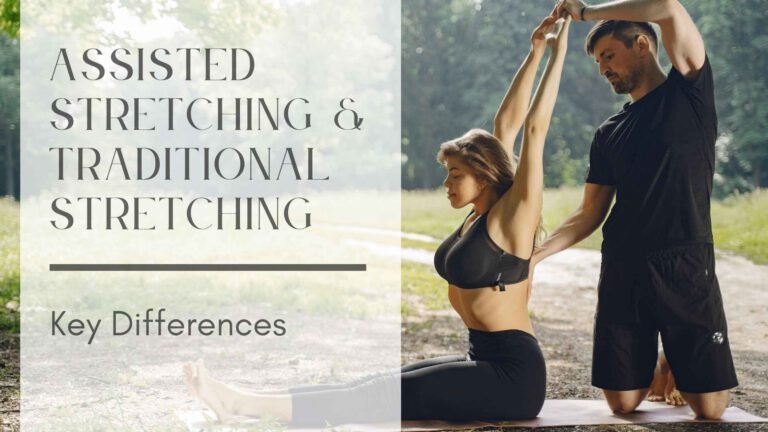
For someone who wants professional guidance, it may lead to assisted stretching, where a practitioner helps position and guide the body through controlled stretches.
If assisted stretching is specifically what you want to understand, read our complete guide to what assisted stretching is.
Flexology, Flexibility, Mobility, and Assisted Stretching
These terms are related, but they do not mean exactly the same thing.
| Term | What It Describes |
|---|---|
| Flexibility | The ability of muscles and related tissues to allow movement through a range |
| Mobility | The ability to move a joint or body region through useful range with control |
| Stretching | Techniques used to place muscles and related tissues under controlled lengthening |
| Assisted stretching | Stretching in which another person helps position or guide the body |
| Flexology | FlexologyGuide’s broader framework connecting stretching, flexibility, mobility, education, and professional stretching services |
The distinction matters because improving movement is rarely about one technique alone.
Someone may have adequate passive flexibility but need better strength or control through that range. Another person may simply be unfamiliar with effective stretching techniques. Someone else may prefer the accountability and positioning assistance of a one-on-one stretch session.
FlexologyGuide is designed to help identify which path makes sense.
Is Flexology a Medical Treatment?
No.
Flexology, general stretching, mobility training, and most commercial assisted-stretching services should not be confused with medical diagnosis or rehabilitation.
Stretching can also be used by licensed professionals such as physical therapists as one component of clinical treatment. In that setting, however, the stretching is part of a healthcare plan delivered within that professional’s licensed scope of practice.
A commercial stretching session does not automatically become medical treatment simply because hands-on techniques are used.
If you have significant pain, a recent injury, neurological symptoms, unexplained weakness, or a condition that affects safe movement, an appropriate healthcare professional should help determine what type of activity is suitable.
What Is a Flexologist?
The word Flexologist requires a separate explanation because it is not a universal job title for every stretching professional.
Flexologist™ is a trademarked term associated with StretchLab.
StretchLab uses the title for practitioners working within its assisted-stretching system. Its Flexologist Training Program provides education in assisted stretching, flexibility, mobility, movement analysis, and related techniques.
Importantly, StretchLab’s own program documentation distinguishes completion of its certificate program from earning a separate professional certification or healthcare credential.
That means you should not assume that every professional who performs assisted stretching is called a Flexologist—or that the title itself represents a medical license.
Other providers may use titles such as:
- Stretch practitioner
- Mobility coach
- Stretch specialist
- Assisted-stretching practitioner
- Flexibility specialist
- Stretch therapist
Training and professional backgrounds can vary considerably.
For a detailed explanation of the role, see What Is a Flexologist?.
How Professional Assisted Stretching Works
One-on-one assisted stretching is one of the most visible professional applications within the Flexology category.
Instead of doing every stretch independently, a practitioner helps guide the position, angle, stabilization, and intensity.
A session may include several stages.
Initial Conversation
The practitioner may ask about your goals, activity level, areas that feel restricted, previous injuries, health concerns, and experience with stretching.
Common goals include:
- Improving general flexibility
- Feeling less stiff
- Increasing comfortable range of motion
- Supporting an exercise program
- Maintaining mobility
- Developing a consistent stretching routine
Movement or Flexibility Check
Some providers use simple movement assessments or range-of-motion measurements before stretching.
These can help guide the session and establish a baseline, but a wellness assessment should not be presented as a medical diagnosis.
Guided Stretching
The practitioner may use a combination of techniques such as:
- Passive stretching
- Static stretching
- Active-assisted movements
- Dynamic mobility work
- Contract-relax or PNF-style techniques
You may remain relaxed during some stretches and participate actively during others.
Individualized Focus
The session can emphasize areas relevant to your goals, such as the:
- Hips
- Hip flexors
- Hamstrings
- Quadriceps
- Calves
- Glutes
- Chest
- Shoulders
- Upper back
The practitioner should adjust intensity according to your comfort rather than simply trying to create the deepest possible stretch.
What Does the Research Say About Stretching?
Stretching has a substantial research base, but the evidence is stronger for some claims than others.
Stretching Can Improve Range of Motion
This is one of the clearest findings.
Systematic reviews and meta-analyses have found that both individual stretching sessions and repeated stretch training can improve joint range of motion.
Long-term flexibility gains can occur with consistent stretching across a variety of stretching methods.
That supports one of the central goals of Flexology: using appropriately selected stretching and mobility work to improve usable movement.
More Stretching Is Not Automatically Better
Stretching should be progressive rather than aggressive.
A productive stretch commonly creates noticeable tension without sharp pain. Forcing a joint farther than it comfortably tolerates is not required to improve flexibility.
The appropriate intensity depends on the person, technique, goal, joint, training history, and medical context.
Stretching and Exercise Performance Are More Complicated
Static stretching immediately before activities requiring maximal strength, speed, or explosive performance may temporarily affect performance when performed extensively.
That does not mean static stretching is harmful.
It means timing, duration, and purpose matter.
Dynamic mobility is often used before activity, while longer static stretching may fit better at another point in a training or flexibility program.
Stretching Is Not a Guaranteed Injury-Prevention Strategy
Claims that stretching by itself prevents injuries are too broad.
Injury risk depends on many variables, including:
- Training load
- Strength
- Conditioning
- Movement demands
- Previous injury
- Recovery
- Fatigue
- Sport
- Individual anatomy
Stretching may be useful when adequate range of motion is important to an activity, but it should generally be considered one part of a larger movement or training strategy.
Stretching Is Not a Cure for Pain
Stretching can feel comfortable and may help some people manage feelings of stiffness or restriction.
However, pain has many possible causes.
Persistent, severe, worsening, or unexplained pain should not automatically be treated as a flexibility problem.
This is particularly important when symptoms include numbness, tingling, weakness, significant swelling, trauma, fever, loss of function, or other concerning signs.
Potential Benefits of Flexology
When described realistically, a stretching and mobility practice can provide several useful benefits.
Improved Flexibility
Consistent stretching can increase range of motion over time.
This may be useful for daily activities, exercise, recreation, and sports that require particular movement ranges.
Better Mobility Awareness
Flexology encourages people to pay attention to where movement feels limited and how different joints and muscle groups contribute to a movement pattern.
That awareness can make a mobility program more specific than randomly selecting stretches.
Personalized Guidance
Professional assisted stretching provides immediate feedback.
A practitioner can modify:
- Position
- Angle
- Stabilization
- Duration
- Intensity
- Technique
For some people, this makes stretching easier to learn and more consistent.
Accountability
One of the practical advantages of booking professional stretching is simply having scheduled time dedicated to mobility.
The physiological effects of the stretch still matter, but consistency often determines whether flexibility training becomes an actual habit.
Access to Positions That Are Difficult Alone
A practitioner can provide leverage and stabilization that may be difficult to reproduce during self-stretching.
That does not automatically make assisted stretching superior to self-stretching. It is simply a different way to perform flexibility work.
Assisted Stretching vs. Self-Stretching
Both can improve flexibility.
| Factor | Self-Stretching | Assisted Stretching |
|---|---|---|
| Cost | Usually free | Paid service |
| Scheduling | Anytime | Appointment required |
| External assistance | No | Yes |
| Practitioner feedback | No | Yes |
| Positioning help | Limited | Can be substantial |
| Accountability | Self-directed | Scheduled |
| Personalization | Self-designed | Practitioner-guided |
| Can improve range of motion | Yes | Yes |
Research on stretching supports improvements in range of motion, but it does not establish that commercial assisted stretching is universally superior to properly performed self-stretching.
The reason to consider professional stretching is often practical: guidance, positioning, feedback, accountability, or difficulty stretching independently.
If you prefer to stretch on your own, the FlexologyGuide Stretch Library organizes individual stretches and routines by body part, goal, activity, and mobility need.
Flexology vs. Yoga, Massage, and Physical Therapy
These approaches overlap in some goals but serve different primary purposes.
| Approach | Primary Focus | Active or Passive? | Medical Treatment? |
|---|---|---|---|
| Flexology / flexibility work | Flexibility, mobility and movement | Can be either | No |
| Assisted stretching | Guided flexibility and mobility | Often largely passive or assisted | Usually no |
| Yoga | Movement, poses, breathing and mind-body practice | Primarily active | No |
| Massage | Manual manipulation of soft tissues | Primarily passive | Generally wellness/therapeutic within provider scope |
| Physical therapy | Evaluation and rehabilitation of injury or movement dysfunction | Often both | Yes |
Physical therapy deserves particular distinction.
A physical therapist evaluates and treats medical and functional conditions within a licensed healthcare profession. General assisted stretching does not replace that role.
Massage also differs from stretching because the therapist primarily applies manual techniques to soft tissues rather than guiding joints through a stretching program.
For a deeper comparison, see Assisted Stretching vs. Massage.
Who Might Use Flexology?
Flexibility and mobility work can be useful across many populations when appropriately adapted.
People Who Feel Stiff
Someone who spends hours sitting, driving, traveling, or performing repetitive tasks may simply want a structured way to move through ranges they do not use frequently.
Recreational Exercisers
Lifters, runners, cyclists, golfers, pickleball players, hikers, and other active adults may use mobility work alongside their normal training.
Athletes
Sport-specific mobility needs vary considerably.
A gymnast and distance runner do not need identical flexibility programs, which is why the goal should be appropriate range of motion rather than achieving maximum flexibility everywhere.
Older Adults
Maintaining comfortable movement can support daily activities and independence.
Programs should account for balance, medical conditions, joint health, previous injuries, and individual exercise experience.
Beginners
You do not need to already be flexible to start stretching.
A beginner program should generally emphasize controlled positions, moderate intensity, breathing, and consistency rather than extreme range.
How Often Should You Stretch?
There is no single schedule that is ideal for every person.
Frequency depends on your goals, starting flexibility, training, age, technique, and how your body responds.
The more useful principle is regular exposure over time.
Someone using stretching as general maintenance may need a different routine from an athlete attempting to improve a specific range of motion.
Professional assisted-stretching appointments also do not eliminate the value of independent mobility work between sessions.
Is Flexology Safe?
Appropriately performed stretching is generally accessible for many people, but stretching is still a physical intervention.
Use extra caution or seek individualized advice if you have:
- A recent injury
- Recent surgery
- Significant joint instability
- Severe osteoporosis
- Acute swelling or inflammation
- Unexplained severe pain
- Numbness or tingling
- Neurological symptoms
- Certain connective-tissue disorders
- Medical restrictions on movement
Stretching should not require sharp pain.
Stop or change the position if a stretch creates pain, neurological symptoms, dizziness, or another concerning response.
People with injuries or medical conditions may benefit from guidance from a qualified healthcare professional or physical therapist before starting or substantially changing a flexibility program.
How to Start Using FlexologyGuide
FlexologyGuide is designed to connect education with action.
If you want to understand the fundamentals of stretching, start with the Stretching Hub.
If you already know which body region or goal you want to work on, use the Stretch Library.
If you want professional hands-on stretching, read the Assisted Stretching Guide before choosing a provider.
And if you are ready to compare professional options near you, use the assisted-stretching studio directory.
That progression—learn, identify your goal, choose an approach, and find professional help when useful—is the central idea behind Flexology.
Frequently Asked Questions
What does Flexology mean?
On FlexologyGuide, Flexology refers to the broader practice and study of flexibility, mobility, stretching, and professional assisted-stretching services. It is an educational and movement concept, not a standardized medical specialty.
Is Flexology the same as assisted stretching?
No. Assisted stretching is one component of Flexology. FlexologyGuide also covers self-stretching, mobility, stretch routines, individual stretches, equipment, and related movement education.
What is the difference between flexibility and mobility?
Flexibility describes the ability of muscles and related tissues to permit range of motion. Mobility is broader and includes the ability to move a joint or body region through useful range with control.
What is a Flexologist?
Flexologist™ is a trademarked StretchLab practitioner title. It should not be treated as a generic professional credential for everyone who performs assisted stretching.
Does Flexology help with pain?
Stretching may help some people feel less stiff or restricted, but Flexology is not a medical treatment and pain has many possible causes. Persistent or concerning pain should be evaluated appropriately rather than assumed to be a flexibility problem.
Is assisted stretching better than stretching by yourself?
Not universally. Both self-stretching and assisted stretching can be used to improve flexibility. Assisted stretching can add professional guidance, external positioning, feedback, and accountability.
Do I need to be flexible before starting?
No. Your starting flexibility is simply your baseline. Stretching should be adapted to your current range and progressed gradually.
Is Flexology the same as reflexology?
No. Reflexology is a separate practice involving pressure applied to specific areas—commonly the feet or hands. FlexologyGuide uses Flexology to describe flexibility, mobility, stretching, and related movement services.
Related Resources
Stretching Hub — Learn the fundamentals of stretching, flexibility, mobility, techniques, routines, and related topics.
Stretch Library — Find individual stretches and routines organized by body part and goal.
What Is Assisted Stretching? — Learn how professional assisted stretching works, what the research supports, and what to expect.
What Is a Flexologist? — Understand StretchLab’s Flexologist role, training, and scope.
Find Assisted Stretching Near You — Compare professional assisted-stretching options in your area.
Conclusion
Flexology is best understood as FlexologyGuide’s broader framework for stretching, flexibility, mobility, and professional movement support.
The clearest evidence-supported benefit of regular stretching is improved flexibility and range of motion. Professional assisted stretching can add guidance, positioning, feedback, and accountability, but it is not medical treatment and should not be marketed as a universal solution for pain, injury prevention, or recovery.
The goal is not to become as flexible as possible.
It is to develop the range of motion that helps you move comfortably and effectively for the activities that matter to you—and to understand which tools, techniques, and professionals can help you get there.