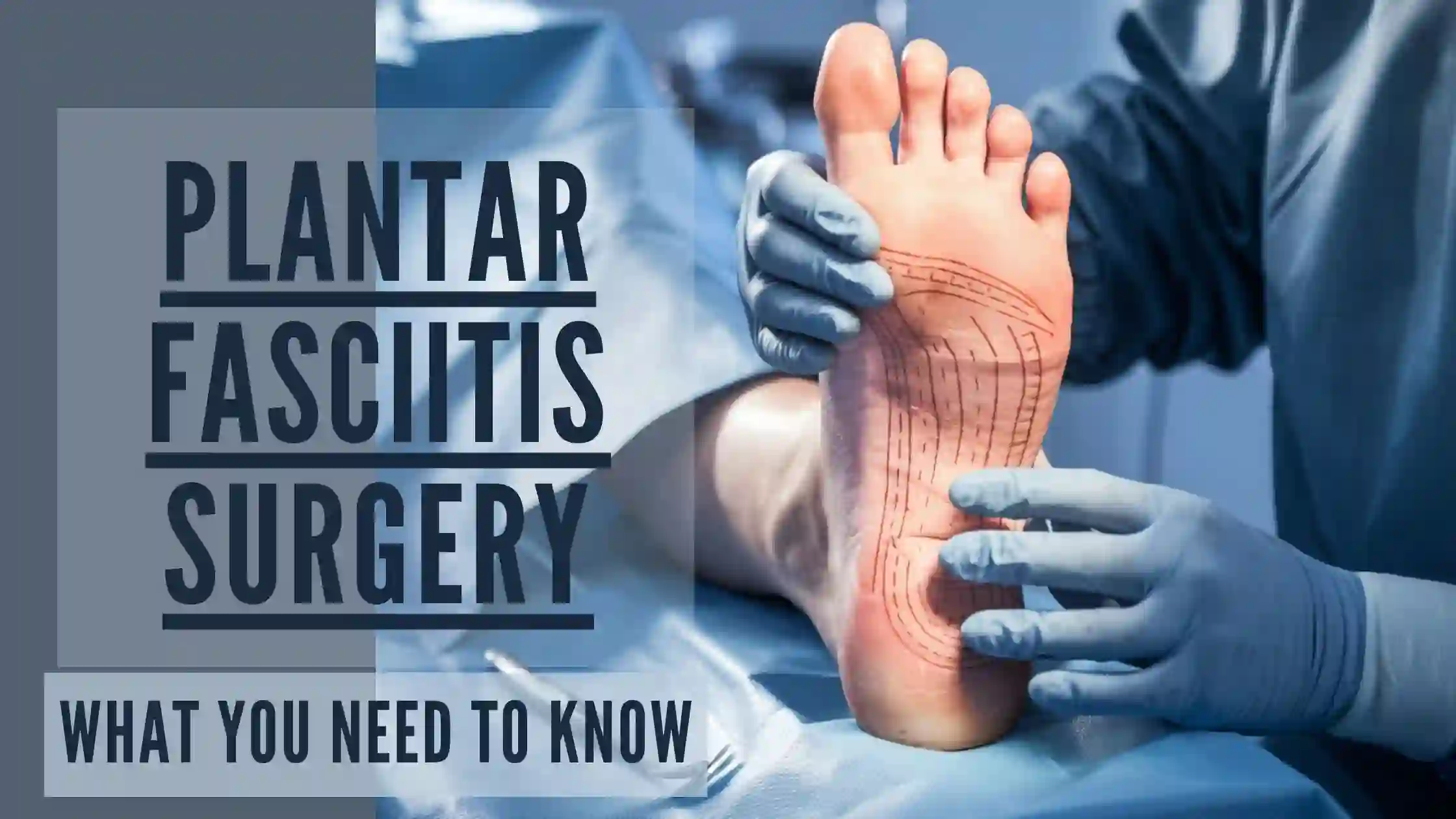

Plantar fasciitis surgery is usually reserved for persistent heel pain that has not improved after an extended course of appropriate nonsurgical treatment. Most people with plantar fasciitis never need an operation.
When surgery is considered, the two procedures most commonly discussed are plantar fascia release, which partially releases the plantar fascia, and gastrocnemius recession, which lengthens part of the calf when clinically significant calf tightness is contributing to excessive tension through the foot.
The important question is not simply whether plantar fasciitis has lasted a long time. Before surgery, the diagnosis should be confirmed, other causes of heel pain should be considered, and the conservative treatment plan should be reviewed to determine whether reasonable nonsurgical options have actually been exhausted.
When Is Surgery Considered for Plantar Fasciitis?
Surgery is generally considered only for chronic, refractory plantar fasciitis—persistent symptoms that remain disabling despite a substantial course of nonsurgical care.
There is no universal calendar date at which plantar fasciitis suddenly becomes a surgical condition. Many surgeons consider an operation only after roughly 6 to 12 months or longer of appropriate conservative treatment, depending on symptom severity, diagnosis, function, previous treatments, and the individual patient.
Before reaching that point, treatment may include:
- Plantar fascia-specific stretching
- Gastrocnemius and soleus stretching
- Progressive foot and lower-leg strengthening
- Physical therapy
- Activity and load modification
- Supportive footwear
- Taping
- Orthoses as part of a broader treatment program
- Night splints, particularly for persistent first-step morning pain
- Extracorporeal shockwave therapy in selected chronic cases
- Injections or other physician-directed treatments when appropriate
Surgery becomes a more reasonable discussion when pain remains substantial enough to interfere with walking, work, exercise, sleep, or everyday activities despite a well-executed treatment program.
That is different from simply having plantar fasciitis for several months.
Confirm the Diagnosis Before Considering Surgery
Persistent heel pain deserves another diagnostic look before an irreversible procedure is performed.
Plantar fasciitis commonly produces pain near the medial underside of the heel, especially with the first steps after getting out of bed or after sitting. However, several other conditions can produce similar symptoms.
Depending on the presentation, a clinician may consider alternatives such as:
- Calcaneal stress injury
- Heel fat-pad disorders
- Nerve entrapment
- Tarsal tunnel syndrome
- Achilles-related pain
- Plantar fibroma
- Inflammatory or arthritic conditions
- Referred pain from elsewhere in the lower extremity
Imaging is not required to diagnose every case of plantar fasciitis, but X-rays, ultrasound, MRI, or other testing may sometimes be appropriate when symptoms are atypical, severe, prolonged, or inconsistent with the expected diagnosis.
For someone contemplating surgery, confirming exactly what is generating the pain is particularly important.
What Are the Main Types of Plantar Fasciitis Surgery?
There is no single plantar fasciitis operation. Surgical selection depends partly on why the condition has remained persistent.
The main options include plantar fascia release and gastrocnemius recession.
| Procedure | What It Does | When It May Be Considered | Important Considerations |
|---|---|---|---|
| Plantar fascia release | Partially releases the plantar fascia | Chronic plantar fasciitis that has not responded to nonsurgical treatment | Excessive release may affect arch mechanics |
| Endoscopic plantar fascia release | Performs the release through smaller incisions using an endoscopic approach | Selected patients appropriate for plantar fasciotomy | Technique-specific risks still apply |
| Open plantar fascia release | Accesses the fascia through a conventional incision | Selected chronic cases | Incision and recovery may differ from endoscopic techniques |
| Gastrocnemius recession | Lengthens part of the calf complex | Persistent plantar fasciitis associated with clinically significant gastrocnemius tightness/equinus | Does not directly cut the plantar fascia |
The appropriate operation depends on the physical examination, the patient’s anatomy and mobility, previous treatment, surgeon experience, and the suspected mechanism driving symptoms.
Plantar Fascia Release
A plantar fascia release, also called a plantar fasciotomy, reduces tension within the plantar fascia by surgically releasing a portion of the tissue.
The goal is not generally to sever the entire plantar fascia.
The plantar fascia contributes to supporting the arch and transferring forces through the foot while walking and running. Excessive disruption of this structure can alter foot mechanics, which is one reason surgical technique and the amount of fascia released matter.
Open Plantar Fascia Release
An open procedure uses an incision to give the surgeon direct access to the plantar fascia.
The surgeon identifies and releases the intended portion of the fascia and may address other tissue depending on the procedure and findings.
Endoscopic Plantar Fascia Release
Endoscopic plantar fasciotomy uses small incisions and an endoscope to visualize the plantar fascia.
Research evaluating open and endoscopic procedures suggests that both can improve pain and function in appropriately selected patients. Some studies report shorter operative times or differences in complication profiles with endoscopic techniques, but the evidence does not establish one universally superior operation for every patient.
The surgeon’s experience, the patient’s anatomy, and the specific clinical situation remain important.
Gastrocnemius Recession
Not every operation for plantar fasciitis involves cutting the plantar fascia.
A gastrocnemius recession lengthens part of the gastrocnemius muscle-tendon complex in the calf. It may be considered when limited ankle dorsiflexion or a clinically significant gastrocnemius contracture is believed to be increasing mechanical stress through the plantar fascia.
This distinction is important.
Instead of directly releasing the painful plantar fascia, gastrocnemius recession attempts to reduce one of the forces contributing to plantar loading.
Systematic reviews have reported improvements in pain and function following gastrocnemius recession in appropriately selected patients with chronic plantar fasciitis, particularly when gastrocnemius tightness is present. However, surgical research in this area remains smaller and less definitive than would be ideal, and patient selection matters.
A person without relevant calf restriction would not automatically be a candidate for this procedure simply because plantar fasciitis has become chronic.
Plantar Fascia Release vs Gastrocnemius Recession
These procedures address the problem differently.
Plantar fascia release acts directly on the plantar fascia.
Gastrocnemius recession addresses calf restriction that may be contributing to increased tension through the plantar fascia.
Neither procedure should be selected simply because it sounds less invasive or promises a faster recovery.
A qualified foot-and-ankle specialist should determine whether the patient’s symptoms, examination, biomechanics, and previous treatment history provide a reasonable indication for either approach.
How Effective Is Plantar Fasciitis Surgery?
Surgery can substantially improve pain and function for some people with carefully selected, treatment-resistant plantar fasciitis, but success is not guaranteed.
A 2023 systematic review and network meta-analysis evaluating multiple plantar fasciitis operations found improvements in pain and function across the surgical approaches studied. However, the authors concluded that available evidence was still insufficient to establish a clearly superior surgical technique and called for larger randomized studies and better long-term evidence.
More recent research continues to support gastrocnemius recession as an option for selected patients with recalcitrant plantar fasciitis and gastrocnemius contracture, while also emphasizing variations in techniques, study populations, and evidence quality.
This makes surgery a case-selection decision, rather than a predictable cure.
What Are the Risks of Plantar Fasciitis Surgery?
Every surgical procedure has risks.
General surgical complications can include:
- Infection
- Bleeding
- Anesthesia-related complications
- Blood clots
- Delayed wound healing
- Injury to nerves or blood vessels
Plantar fascia procedures can also carry procedure-specific concerns, including:
- Persistent heel pain
- Recurrent symptoms
- Numbness or nerve irritation
- Scar sensitivity
- Altered foot mechanics
- Lateral foot or midfoot pain
- Changes in arch stability
Research examining plantar fasciotomy biomechanics has raised particular concerns about excessive plantar fascia release because the fascia contributes to maintaining the medial longitudinal arch.
Gastrocnemius recession has a different risk profile that can include persistent pain, nerve irritation, calf weakness, or other procedure-specific complications.
Your surgeon should explain both the common and less common complications of the specific technique being proposed.
What Is Recovery Like After Plantar Fasciitis Surgery?
There is no single plantar fasciitis surgery recovery timeline.
Recovery depends on:
- Which operation was performed
- Whether the procedure was open, endoscopic, or another technique
- How much tissue was released
- Whether additional procedures were performed
- The surgeon’s postoperative protocol
- The person’s occupation and activity demands
- Overall health and healing
- Rehabilitation progress
After plantar fascia release, many procedures are performed on an outpatient basis.
A postoperative shoe, splint, or walking boot may be used. Weight-bearing restrictions vary considerably. Some patients may initially need to keep weight off the operated foot, while others may be permitted protected weight bearing relatively early.
Sutures, when present, are commonly evaluated or removed during early follow-up. FootCareMD, the patient-education resource of the American Orthopaedic Foot & Ankle Society, notes that many patients return to normal weight bearing around two to three weeks after plantar fascia release, although this should not be interpreted as full recovery or clearance for unrestricted activity.
Returning to work, prolonged standing, running, jumping, and sports usually follows a separate progression.
Does Surgery Mean Rehabilitation Is Finished?
No.
Surgery changes anatomy, but it does not automatically restore strength, conditioning, movement tolerance, or confidence under load.
Postoperative rehabilitation may address:
- Walking mechanics
- Ankle mobility
- Calf mobility
- Foot and ankle strength
- Progressive weight bearing
- Balance
- Gradual increases in standing and walking
- Return to work
- Return to running or sport
The exact rehabilitation plan should come from the surgeon and rehabilitation professional because protocols vary by procedure.
What Should You Try Before Surgery?
A decision about surgery should include a review of what has already been tried—and whether those treatments were used in an appropriate way for long enough to evaluate them.
Stretching
The 2023 clinical practice guideline for heel pain and plantar fasciitis recommends plantar fascia-specific stretching and gastrocnemius/soleus stretching for reducing pain and improving function.
Stretching is most useful as one part of a broader treatment strategy rather than the entire plan.
Strengthening and Progressive Loading
Persistent plantar fasciitis often requires more than reducing symptoms. Restoring the capacity of the foot and lower leg to tolerate standing, walking, exercise, or occupational demands is an important part of rehabilitation.
Progressive loading may involve foot, ankle, calf, and lower-extremity strengthening.
Taping and Orthoses
Taping can provide short-term improvements in pain and function for some people.
Orthoses can also be useful, particularly when incorporated into a broader treatment strategy rather than being treated as a standalone cure.
Night Splints
For people with persistent first-step morning pain, current physical therapy guidance supports a trial of night splints, typically over one to three months.
Shockwave Therapy
Extracorporeal shockwave therapy, or ESWT, is a nonoperative option that may be considered for persistent plantar heel pain.
It is particularly relevant for someone approaching a surgical decision because it can provide another nonsurgical treatment pathway in selected chronic cases.
Corticosteroid Injections
Corticosteroid injections may temporarily reduce pain for some people, but they are not considered a structural cure.
Potential complications include plantar fascia rupture and heel fat-pad changes, particularly with repeated injections. The risks and expected benefit should be discussed with the treating clinician.
Platelet-Rich Plasma
Platelet-rich plasma, or PRP, is sometimes offered for persistent plantar fasciitis, but the evidence is less definitive than marketing around the treatment may suggest.
It should not automatically be assumed to be a required step before surgery.
Questions to Ask Before Agreeing to Surgery
A surgical consultation should leave you understanding not only what will be done, but why.
Useful questions include:
- Are you confident plantar fasciitis is the main source of my pain?
- What other causes of heel pain have been ruled out?
- Which nonsurgical treatments have I adequately completed?
- Why are you recommending this particular procedure?
- Why plantar fascia release versus gastrocnemius recession?
- How much of the plantar fascia would be released?
- What are your expected outcomes for patients similar to me?
- What complications do you see most often?
- When will I be allowed to bear weight?
- When could I realistically return to work, exercise, running, or sports?
- What physical therapy or rehabilitation will be required?
- What happens if the operation does not relieve my pain?
For an elective procedure after months of chronic heel pain, seeking a second opinion is reasonable if you remain uncertain about the diagnosis, procedure, or expected outcome.
Frequently Asked Questions About Plantar Fasciitis Surgery
Is surgery common for plantar fasciitis?
No. Surgery is generally reserved for a relatively small group of people with persistent, function-limiting symptoms that have not responded adequately to prolonged nonsurgical treatment.
How long should you have plantar fasciitis before considering surgery?
There is no universal cutoff, but surgery is commonly considered only after approximately 6 to 12 months or more of appropriate conservative treatment. The decision should be based on the diagnosis, treatment history, severity, and functional limitations—not duration alone.
What is the most common plantar fasciitis surgery?
Plantar fascia release, or plantar fasciotomy, is one established surgical option. Gastrocnemius recession is another important option when clinically significant calf tightness or gastrocnemius contracture is present.
Is endoscopic plantar fascia surgery better than open surgery?
Not necessarily for every patient. Both techniques can improve pain and function. Evidence comparing surgical approaches continues to evolve, and procedure selection should depend on the individual case and surgeon expertise.
Can plantar fasciitis return after surgery?
Yes. Surgery does not guarantee permanent elimination of heel pain. Persistent or recurrent pain is a recognized potential outcome.
Can you walk after plantar fascia surgery?
Weight-bearing instructions vary by procedure and surgeon. Some patients require an initial period of restricted weight bearing, while others progress more quickly. Follow the postoperative protocol provided by the surgeon rather than a generic timeline.
How long does complete recovery take?
There is no reliable universal recovery date. Basic walking may return relatively early in some cases, while recovery for prolonged standing, strenuous work, running, or sports can take considerably longer.
Does plantar fascia surgery weaken the arch?
The plantar fascia contributes to arch stability. Biomechanical research suggests that releasing too much fascia can alter arch mechanics, which is one reason plantar fasciotomy is generally performed as a controlled partial release rather than indiscriminate complete release.
When should I get a second opinion?
Consider another opinion if the diagnosis remains uncertain, different surgeons recommend substantially different operations, conservative treatment has not been thoroughly explored, or you do not understand why a particular procedure is being recommended.
Related Resources
If you are still determining where you are in the treatment process, start with FlexologyGuide’s overview of what plantar fasciitis is and its broader treatment framework.
For persistent symptoms, the chronic plantar fasciitis guide explains why heel pain can continue for months and how long-term recovery differs from early treatment.
The plantar fasciitis load-management guide provides a framework for reducing aggravating forces while rebuilding the foot’s capacity.
If you are considering another nonsurgical option before an operation, review the guide to shockwave therapy for plantar fasciitis.
If your symptoms are changing, worsening, or have not been medically evaluated, the guide to when to see a doctor for plantar fasciitis can help clarify when professional assessment makes sense.
The Bottom Line
Plantar fasciitis surgery can be appropriate for a carefully selected group of people with persistent, disabling heel pain that has not improved despite comprehensive nonsurgical treatment.
But chronic heel pain alone does not automatically mean surgery is necessary.
Before proceeding, confirm the diagnosis, review whether conservative treatment has truly been optimized, understand why a specific procedure is being recommended, and discuss realistic benefits, limitations, complications, rehabilitation, and recovery with a qualified foot-and-ankle specialist.
When surgery is appropriate, plantar fascia release and gastrocnemius recession can both improve symptoms in selected patients. The best choice depends on the underlying mechanics and clinical findings—not simply how long the heel has hurt.