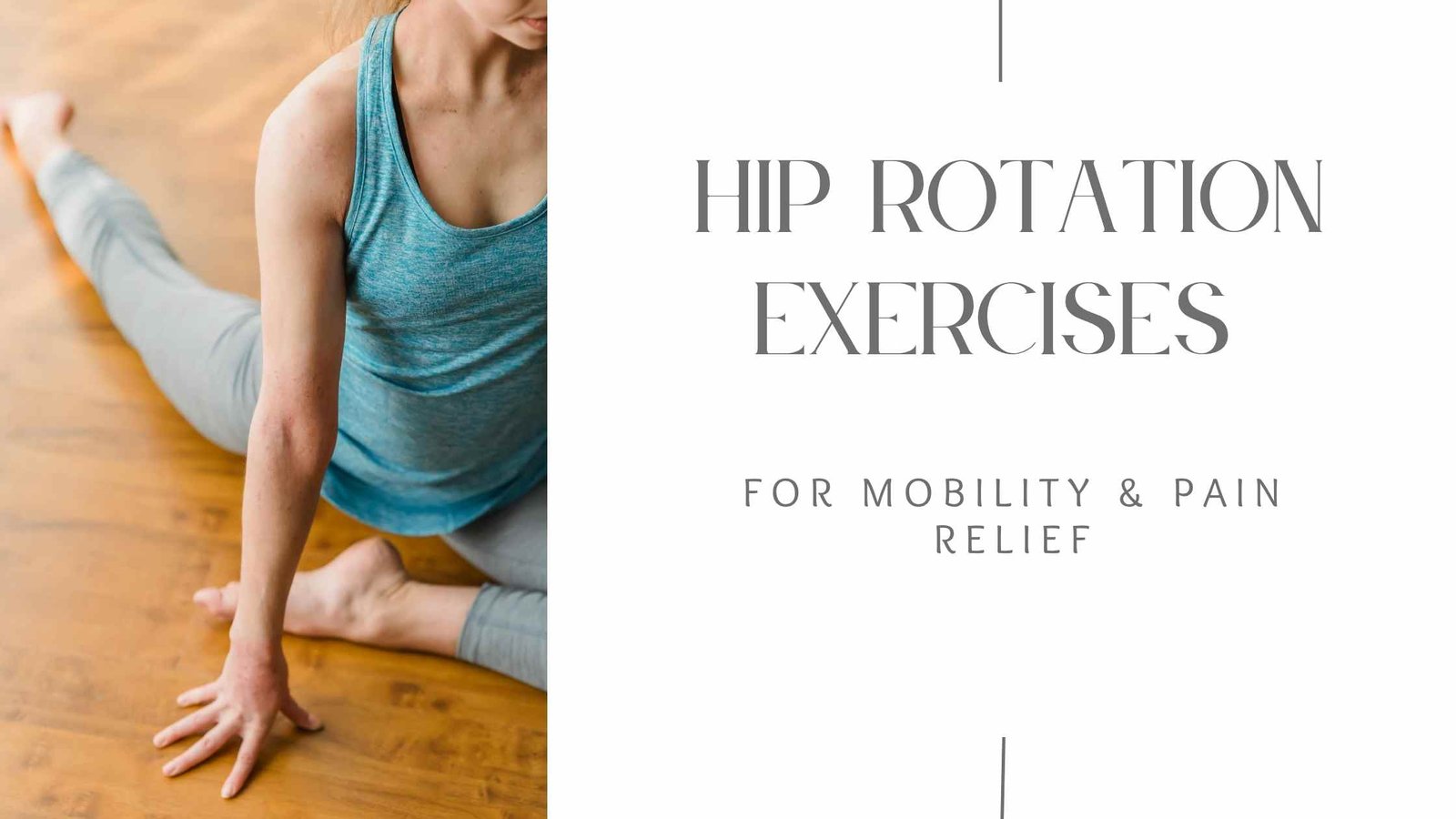

Hip rotation is more than a flexibility trend—it’s foundational for movement efficiency, joint health, and pain prevention. Both internal rotation (thigh turns inward) and external rotation (thigh turns outward) play crucial roles in everything from squatting to walking.
Many people unknowingly develop imbalances—usually tight external rotators and restricted internal rotation—which can lead to:
- Lower back discomfort
- Knee instability
- Limited squat and lunge depth
- Reduced athletic stride power
By restoring full hip rotation, you improve performance, posture, and injury resilience—whether you’re training, stretching, or simply walking pain-free.
Warm-Up Phase: Activate and Mobilize
Use these drills at the start of your session to prepare the hips for deeper movement. They focus on controlled mobility and active range of motion.
1. 90/90 Hip Rotations
- Setup: Sit with both legs bent at 90°, forming “L” shapes.
- Action: Rotate both knees across your body to the opposite side, shifting between internal and external rotation.
- Reps: 6–10 per side.
- Why it works: Builds awareness and control through full hip rotation without added load.
2. Windshield Wipers
- Setup: Sit with knees bent and feet flat.
- Action: Drop both knees side-to-side, rotating the hips in opposite directions.
- Reps: 10–12 per side.
- Why it works: Loosens up the hips dynamically while encouraging smooth transitions between ranges.
3. Standing Pendulum Leg Swings
- Setup: Hold onto a wall for balance.
- Action: Swing your leg in front of and across your body with control, then swing it out laterally.
- Reps: 10–15 per leg.
- Why it works: Opens the hip capsule dynamically and boosts blood flow before training.
Strength & Flexibility Phase: Deepen Range & Build Control
These exercises develop hip joint integrity, increase flexibility, and promote long-term mobility improvements.
4. Seated Internal Rotation
- Setup: Sit on a chair, knees bent at 90°, feet flat.
- Action: Keep the knee still and rotate your foot outward to isolate internal rotation.
- Reps: 10–12 per leg.
- Why it works: Trains often neglected internal rotators crucial for joint balance.
5. Banded Hip Internal Rotation
- Setup: Attach a resistance band to your ankle, anchored to a fixed point.
- Action: Sit or lie with knees bent, rotating the banded leg inward against resistance.
- Reps: 8–10 slow reps.
- Why it works: Builds strength and stability in deep hip ranges.
6. Pigeon Pose with Active External Rotation
- Setup: From a hands-and-knees position, bring one leg forward and across, shin on the floor.
- Action: Lean into the stretch, then actively press the front knee and ankle into the floor for 10 seconds before relaxing.
- Reps: Repeat 3 rounds per side.
- Why it works: Combines passive stretch with active tension to open external rotation and glute flexibility.
Bonus: Fire Hydrants with Toe Drop (Internal/External Combo)
- Setup: Start on all fours.
- Action: Lift one leg sideways (like a fire hydrant), then slowly rotate the foot inward (toe drop) and return.
- Reps: 8–10 controlled reps per leg.
- Why it works: Trains hip rotators through both internal and external motion under tension.
Technique Tips for Better Results
- Start light: Never force a stretch or angle you can’t control.
- Control the tempo: Focus on slow, deliberate movement over momentum.
- Use your breath: Exhale to ease into deeper ranges.
- Stay consistent: Even 5–10 minutes daily can produce noticeable changes.
- Balance both sides: Spend more time on the side that feels stiffer or weaker.
Key Benefits of Hip Rotation Training
- Improved posture and spinal alignment
- Relief from hip, lower back, and knee pain
- Better mechanics in squats, lunges, and daily activities
- Increased stride length and efficiency for runners and walkers
- Greater joint health and injury resilience
- Enhanced balance, agility, and athletic movement
Common Mistakes to Avoid
- Skipping internal rotation: Most routines focus on external rotation only (like pigeon pose), ignoring the other half of the equation.
- Training too fast: Control is critical—fast reps often miss the deep engagement needed for long-term gains.
- Working through pain: Discomfort is expected; sharp or shooting pain is not. Stop and modify as needed.
Frequently Asked Questions
What limits hip rotation?
Poor posture, prolonged sitting, tight muscles, weak glutes, and undertrained joint capsules.
How often should I train hip rotation?
3–5 sessions per week is ideal. Daily short sessions are excellent for ongoing maintenance.
Can this help with lower back or sciatic pain?
Yes. Improved hip mechanics often reduce pressure on the lower back and help align the pelvis and glutes, which can ease sciatic tension.
Do I need equipment?
No. All exercises can be done with just your bodyweight. Resistance bands can enhance results but are optional.
When should I stretch—before or after?
Use dynamic drills (like pendulum swings and 90/90s) before activity. Save static or resisted work for afterward or on mobility-focused days.