Table of Contents
- What it is: A series of stretches that address multiple muscle groups in one session.
- Who it helps: Individuals seeking balanced flexibility and mobility.
- When to use it: During recovery sessions, after workouts, or as part of a daily mobility routine.
- Common mistakes: Skipping major muscle groups, rushing through stretches, or forcing range.
Why Full Body Stretching Improves Mobility
Stretching the entire body in one session helps maintain balanced flexibility between muscle groups. When mobility is improved across multiple regions, movement patterns often become more efficient.
Full body routines also help identify areas that feel stiff or restricted so those areas can receive additional attention over time.
- Maintains balanced flexibility
- Supports joint range of motion
- Encourages better posture
- Improves overall movement comfort
For targeted work on specific areas, cluster guides such as hamstring stretches, hip flexor stretches, and neck stretches can provide deeper instruction.
Complete Full Body Stretch Routine
This routine progresses from the lower body to the upper body to create balanced mobility through the entire system.
| Stretch | Target Area | Hold Time |
|---|---|---|
| Standing hamstring stretch | Hamstrings | 20–30 seconds |
| Standing quad stretch | Quadriceps | 20–30 seconds |
| Calf wall stretch | Calves | 20–30 seconds |
| Kneeling hip flexor stretch | Hip flexors | 20–30 seconds |
| Cat cow stretch | Spine | 6–8 slow reps |
| Supine spinal twist | Spinal rotation | 20–30 seconds |
| Wall lat stretch | Lats | 20–30 seconds |
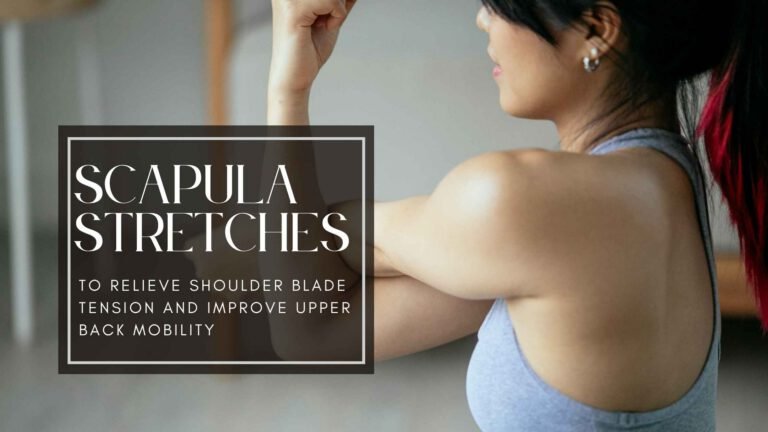
| Cross body shoulder stretch | Shoulders | 20–30 seconds |
| Neck side bend stretch | Neck | 20–30 seconds |
For shorter mobility sessions, routines such as the 10 minute daily stretch or the 5 minute stretch routine may provide quicker alternatives.
The full library of mobility movements can also be explored in the Stretch Library. The central hub for stretching education is Stretching, Mobility, and Pain Relief.
How Often to Perform a Full Body Stretch Routine
Consistency typically produces better results than occasional long sessions. Many people benefit from performing a full body stretch routine several times per week.
- Frequency: 3–5 sessions per week
- Session length: 10–20 minutes
- Intensity: Mild to moderate stretch tension
These routines can also complement other structured programs such as a morning stretch routine or evening stretch routine.
Common Mistakes During Full Body Stretching
- Skipping major muscle groups: A full routine should address the legs, hips, back, shoulders, and neck.
- Rushing through movements: Hold stretches long enough for muscles to relax.
- Forcing range of motion: Stretch gradually rather than pushing aggressively.
- Ignoring posture: Maintain neutral alignment during each stretch.
- Inconsistent practice: Mobility improves best with regular sessions.
Assisted Stretching vs Self Stretching
Self-stretching allows individuals to maintain flexibility through simple movements that can be performed independently. Because the person controls the intensity, it works well for daily routines and recovery sessions.
However, many people reach a mobility ceiling when stretching alone. Limited leverage, positioning, or stability can make it difficult to explore deeper mobility.
Assisted stretching introduces a trained professional who guides body positioning and applies controlled pressure while monitoring alignment. This approach may allow individuals to explore range improvements that are harder to reach independently.
- Self stretching: useful for daily flexibility maintenance.
- Assisted stretching: may help when progress plateaus.
To learn how guided sessions work, visit the Assisted Stretching Guide. To compare locations offering assisted sessions, browse stretch studios by city.
FAQ
How long should a full body stretch routine take?
Many routines take between 10 and 20 minutes. Shorter routines can still be effective if performed consistently.
Can full body stretching improve flexibility?
Regular stretching may help maintain or gradually improve flexibility by encouraging muscles and joints to move through controlled ranges of motion.
Should stretching be done daily?
Stretching can be performed most days of the week. Many people find that consistent sessions support mobility more effectively than occasional longer sessions.
Is it better to stretch before or after workouts?
Stretching is commonly performed after workouts or during recovery sessions. Some routines may also be used during warmups when performed gently.
What if flexibility improvements stop?
If progress slows, adjusting technique, adding targeted mobility work, or exploring coached sessions described in the assisted stretching guide may help.
Can beginners perform full body stretch routines?
Yes. Beginners can start with shorter sessions and gradually add more stretches as comfort and mobility improve.
Strategic Reinforcement
Full body stretching helps maintain balanced mobility across major muscle groups. Consistent routines that progress gradually can support long-term flexibility and comfortable movement. When self-stretching progress plateaus, assisted stretching may offer guided positioning to explore additional range.