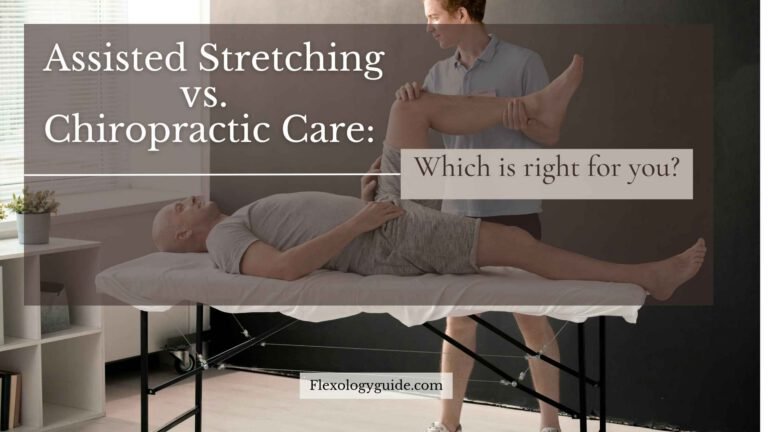
assisted stretching for back pain is commonly used in wellness settings to support movement comfort, mobility, and recovery when the back feels stiff, restricted, or overworked. In a non-medical context, back “pain” often reflects a combination of muscle tension, limited joint movement, repetitive posture, fatigue, and stress rather than a single structural issue. Assisted stretching can be helpful when self-stretching feels inconsistent, uncomfortable, or difficult to target safely.
It’s important to be clear up front: assisted stretching is not a medical treatment, does not diagnose conditions, and is not a substitute for physical therapy or medical care. Instead, it functions as a structured wellness service that may support mobility and movement quality when applied conservatively and consistently.
This guide explains how assisted stretching is typically used for back-related discomfort, when it may be appropriate, when it may not be, and how to integrate it into a broader recovery system as of January 2026.
Key Takeaways
- Back discomfort often reflects movement habits, stiffness, and load management, not just one tight muscle.
- Assisted stretching focuses on controlled mobility, not forcing range or “fixing” pain.
- Many back issues improve when hips, thoracic spine, and breathing mechanics are addressed.
- Moderate, repeatable sessions usually outperform occasional aggressive stretching.
- Assisted stretching works best alongside short DIY mobility and lifestyle adjustments.
Table of Contents
- How We Researched & Chose (Methodology)
- What “Back Pain” Often Means in a Wellness Context
- Common Non-Medical Contributors to Back Discomfort
- Useful Signals vs When to Pause
- Common Misconceptions About Stretching for Back Pain
- Core Back Mobility & Recovery Education
- Recovery Modalities Explained: What to Use and When
- Audience-Specific Deep Dives
- Comparison Table: DIY vs Studio-Based Care
- Assisted Stretching as Part of a Recovery Program
- Choosing a Recovery Studio (Directory Bridge)
- Conclusion & Sample Weekly Plan
- FAQs
How We Researched & Chose (Methodology)
This article was developed using consensus guidance from mobility coaching, biomechanics-informed stretching, and recovery best practices commonly used in non-medical wellness environments. We reviewed how top educational pages frame back pain and identified frequent gaps—most notably the tendency to focus only on the spine rather than the surrounding systems that influence it.
Our approach emphasizes practical movement patterns, conservative progression, and repeatability. The goal is to help readers understand when assisted stretching may be a reasonable wellness option and how to use it responsibly.
What “Back Pain” Often Means in a Wellness Context
Outside of a medical diagnosis, back pain is often better described as back discomfort, stiffness, or movement sensitivity. In wellness settings, this usually involves:
- Muscle tension or guarding in the lower, mid, or upper back
- Reduced spinal mobility (especially rotation or extension)
- Compensation from hips or shoulders
- Fatigue from prolonged sitting, standing, or repetitive tasks
- Stress-related increases in muscle tone
Because the spine works as part of a system, addressing only the back itself is often less effective than improving how the hips, ribcage, and shoulders share movement.
Common Non-Medical Contributors to Back Discomfort
Prolonged sitting and posture habits
Long hours sitting can reduce hip mobility and thoracic movement, forcing the lower back to compensate. Over time, this can feel like tightness or soreness even without injury.
Limited hip mobility
When hips don’t move well, the lower back often moves more to make up the difference. This is why many back-focused routines include hip mobility work.
Reduced thoracic spine rotation
The mid-back (thoracic spine) is designed to rotate. When rotation is limited, twisting tasks may stress the lower back instead.
Training load and fatigue
Heavy lifting, repetitive movements, or inconsistent recovery can increase muscle tone and sensitivity in the back.
Stress and nervous system tone
Stress can increase baseline muscle tension and reduce tolerance to movement, making the back feel stiff or sore even without structural issues.
Useful Signals vs When to Pause
Common, non-alarming signals during mobility work
- A stretching or pressure sensation that is intense but controllable
- Temporary soreness that resolves within 24–48 hours
- Improved ease of movement after light repetition
Signals to pause and seek medical evaluation
- Sharp or worsening pain with movement
- Numbness, tingling, or radiating symptoms
- Back pain following a fall, accident, or recent injury
- Symptoms that progressively worsen over time
If you experience these red flags, consult a qualified healthcare professional before continuing any stretching or bodywork routine.
Common Misconceptions About Stretching for Back Pain
Misconception: “I should stretch my lower back directly.”
Sometimes direct spinal stretching helps, but many people benefit more from improving hip mobility, thoracic rotation, and breathing mechanics.
Misconception: “If stretching hurts, it’s fixing something.”
Forcing range can increase guarding and sensitivity. Productive mobility work prioritizes control and comfort.
Misconception: “Stretching alone solves back pain.”
Stretching supports movement comfort, but strength, posture, daily habits, and recovery all matter.
Core Back Mobility & Recovery Education
In a wellness framework, back comfort improves when movement is shared appropriately across joints. Key principles include:
- Hip contribution: hips should handle large ranges of flexion and extension.
- Thoracic rotation: the mid-back should rotate during twisting tasks.
- Breathing mechanics: diaphragmatic breathing can reduce unnecessary tension.
- Gradual exposure: repeated, moderate mobility beats aggressive sessions.
Lower back (lumbar spine)
The lower back favors stability with controlled movement. Excessive stretching without support can feel uncomfortable for some people.
Mid-back (thoracic spine)
Thoracic mobility often improves posture and reduces strain elsewhere. Gentle rotation and extension work are common focuses.
Hips and pelvis
Improving hip extension, rotation, and control often reduces compensatory stress on the lower back.
Recovery Modalities Explained: What to Use and When
Assisted stretching
- What it does: guided mobility with controlled positioning and pacing.
- When useful: when self-stretching is inconsistent or uncomfortable.
- Often combined with: guided mobility, breath-focused recovery.
Compression therapy
- What it does: circulation-focused recovery support.
- When useful: after long standing or training days.
Infrared sauna
- What it does: heat-based relaxation support.
- When useful: stress-heavy weeks or generalized stiffness.
Percussion & vibration therapy
- What it does: localized muscle relaxation support.
- When useful: before light mobility work.
Audience-Specific Deep Dives
Desk Workers
Focus on hips, thoracic spine, and posture-related mobility. Short daily movement breaks matter.
Athletes
Prioritize recovery pacing and avoid aggressive spinal stretching during heavy training blocks.
Seniors
Emphasize comfort-first ranges, balance awareness, and consistency.
Comparison Table: DIY vs Studio-Based Care
| Approach | Best For | Pros | Limitations |
|---|---|---|---|
| DIY mobility | Daily maintenance | Accessible, repeatable | Technique dependent |
| Assisted stretching | Guided positioning | Structure, feedback | Cost, scheduling |
| Hybrid approach | Long-term results | Progress + retention | Requires small habits |
Assisted Stretching as Part of a Recovery Program
Assisted stretching can complement recovery routines by helping improve movement comfort and reducing compensatory patterns.
- Brief intake and comfort check
- Light warm-up or mobility prep
- Hip and thoracic mobility focus
- Controlled spinal movement (as tolerated)
- Breathing and pacing integration
- Short at-home mobility recommendations
This content is for general wellness education and is not medical advice.
For foundational context, visit the assisted stretching guide. To explore local options, use the assisted stretching studio directory.
Choosing a Recovery Studio (DIRECTORY BRIDGE — MANDATORY)
If back discomfort is your primary concern, look for studios that emphasize communication, conservative pacing, and system-based mobility rather than aggressive stretching.
- Clear non-medical scope explanations
- Intake questions about comfort and movement history
- Ability to adjust focus areas session to session
- Education around between-session habits
A National Recovery Studio City Directory (coming soon) will help compare services by location and focus.
Conclusion & Sample Weekly Plan
Assisted stretching for back discomfort works best when used as part of a system that respects comfort, consistency, and movement quality. It is not about forcing the spine—it’s about helping the whole system move better.
Sample Weekly Plan (non-medical):
- 1 assisted stretching session (moderate intensity)
- 2–3 short DIY mobility sessions (5 minutes)
- Daily posture and movement awareness
FAQs
Can assisted stretching cure back pain?
No. Assisted stretching supports mobility and comfort but does not diagnose or treat medical conditions.
Is assisted stretching safe for most back discomfort?
It is generally suitable within a non-medical scope when adjusted to comfort and tolerance.
How often should I do assisted stretching for my back?
Many people start with once per week and adjust based on response.
Should stretching hurt to be effective?
No. Productive stretching should feel controlled and comfortable.
When should I avoid stretching my back?
If you have sharp pain, neurological symptoms, or a recent injury, consult a healthcare professional first.