

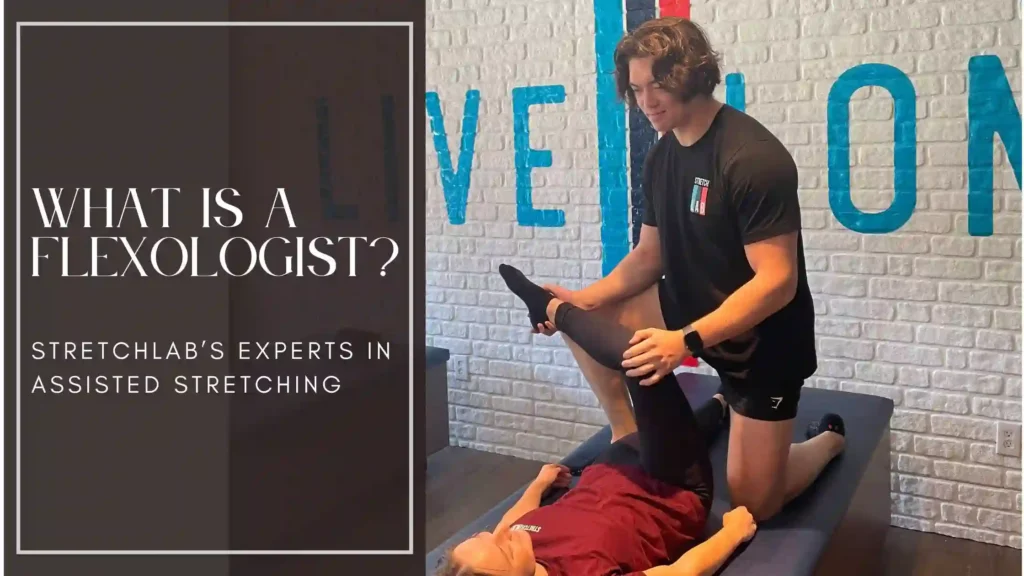
Flexologist is StretchLab’s job title for a certified movement professional who delivers assisted stretching sessions to help clients improve flexibility, mobility, and movement comfort through guided positioning and coaching.
In plain terms: a Flexologist provides one-on-one assisted stretching sessions inside StretchLab studios. The work is hands-on, communication-heavy, and focused on mobility outcomes rather than exercise programming or medical treatment.
Current as of January 2026. Any time, pay, or pricing information on this page is approximate and varies by studio, market, and role expectations.
Key Takeaways
- A Flexologist is a StretchLab role title for a professional who delivers assisted stretching sessions.
- Flexologists do not diagnose or treat medical conditions; the service is mobility and stretching-focused.
- Sessions typically include goal intake, movement checks, guided stretching, and simple at-home guidance.
- Training commonly includes anatomy basics, biomechanics, technique practice, safety protocols, and coaching skills.
- Pay varies by market and experience; many roles include hourly pay plus possible incentives (studio-dependent).
- If you want to work in mobility services without running workouts or managing heavy training plans, this can be a strong fit.
Table of Contents
- How We Researched & Chose (Methodology)
- What a Flexologist Is (Definition & Scope)
- What Flexologists Do in a Typical Session
- Assisted Stretching Techniques & Coaching Cues (How It’s Coached)
- Beginners: Comfort, Nervous System Safety, and First Sessions
- Desk Workers: Posture Fatigue and “Always Tight” Areas
- Athletes: Recovery Cycles and Mobility Priorities
- Seniors: Safe Range of Motion, Pacing, and Confidence
- Flexologist vs Other Roles (Comparison Table)
- Why Become a Flexologist at StretchLab (Career Fit)
- How to Become a Flexologist (Step-by-Step)
- How Much Do Flexologists Make? (Approximate Ranges)
- How Long Training Takes & What It Costs
- Choosing a Studio or Team as a Flexologist
- Find Assisted Stretching Near You (Directory Bridge)
- Conclusion & Practical Next Steps
- FAQ
How We Researched & Chose (Methodology)
This page is built as a category-defining reference for people trying to understand the Flexologist role—either as a client choosing a provider or as a candidate evaluating the job.
- Service-category framing: We treated assisted stretching as a professional service category (not a workout class, not medical care).
- Coaching fundamentals: We used widely accepted movement-coaching principles: alignment, breathing, progressive intensity, and consent-based communication.
- Role clarity: We separated mobility coaching from diagnosis, rehabilitation, and strength programming to keep expectations realistic and outcome-safe.
- Neutral language: We avoided guarantees and “miracle” claims. Stretching and mobility support can be helpful, but outcomes vary.
- Link integrity: We preserved every original active link and kept them clickable within the updated structure.
What a Flexologist Is (Definition & Scope)
A Flexologist is StretchLab’s title for a trained movement professional who delivers one-on-one assisted stretching sessions inside the StretchLab system.
What Flexologists Focus On
Flexologists focus on stretching and mobility techniques designed to support:
- Range of motion and comfortable mobility
- Reduced muscular tension and stiffness
- Movement efficiency and body awareness
- Recovery support and injury-risk management behaviors (non-medical)
What Flexologists Do Not Do (Important)
Flexologists are not the same as personal trainers, physical therapists, or medical providers. In general, the Flexologist role does not include:
- Diagnosing injuries or medical conditions
- Providing medical treatment or rehabilitation plans
- Prescribing exercise programs as a primary service (some may have fitness backgrounds, but the StretchLab service is assisted stretching)
If a client has acute injury concerns, unexplained pain, or medical questions, the appropriate next step is a licensed healthcare professional.
Common Methods Used in Assisted Stretching
Flexologists commonly use evidence-informed approaches such as passive stretching, dynamic mobility work, and contract-relax patterns often referred to as PNF-style stretching (learn the concept here: PNF Stretching). Sessions are typically customized to the client’s tolerance, goals, and current movement comfort.
What Flexologists Do in a Typical Session
Assisted stretching sessions are usually structured. The provider’s job is not to “push you further,” but to guide you through positions safely, communicate clearly, and choose techniques that match your body and goals.
Typical Session Flow
- Goal intake (2–5 minutes): What feels tight? What activities matter? What’s your comfort level with hands-on work?
- Movement check (brief): Simple ranges (hips, shoulders, ankles, spine) to see where you’re restricted today.
- Guided stretching sequence: A set of positions chosen for your priorities (for example: hips + hamstrings + chest for desk posture; ankles + hips for runners).
- Coaching cues: Breathing, relaxation, gentle engagement (when needed), and feedback on intensity.
- Wrap-up: What changed today, what to expect after the session, and a short between-session plan.
What “Good” Assisted Stretching Should Feel Like
- Strong but controllable stretch sensation (no sharp pain)
- Breath is steady (you can exhale slowly without breath-holding)
- Clear consent (the provider checks in and adjusts quickly)
- Positions feel stable (you’re not being yanked or forced)
Beginners: Comfort, Nervous System Safety, and First Sessions
If you’re new to assisted stretching, the best sessions are conservative and communication-heavy. Beginners often benefit most from learning what “appropriate intensity” feels like.
- What to prioritize: breathing, comfort, and clear feedback.
- What to avoid: chasing extreme range on day one.
- What a good Flexologist does: explains the plan, checks in frequently, and adjusts quickly.
Desk Workers: Posture Fatigue and “Always Tight” Areas
Desk work commonly creates predictable tight-feeling areas: hip flexors, chest, calves, and upper back. Flexologists often structure sessions around stacked posture and reducing guarding rather than simply “pulling harder.”
- Common focus: hips, hamstrings, chest/shoulders, thoracic rotation.
- Session goal: feel less restricted and move with less effort in daily activities.
Athletes: Recovery Cycles and Mobility Priorities
Athletes often use assisted stretching to maintain joint-friendly range, support recovery days, and improve movement efficiency. The best outcomes usually come from pairing mobility work with strength and skill training—not replacing it.
- Common focus: ankles, hips, thoracic spine, shoulders (sport-dependent).
- Timing: dynamic or active-assisted work before training; longer passive holds on recovery days.
Seniors: Safe Range of Motion, Pacing, and Confidence
For seniors, the priority is often confidence and comfort in movement. Flexologists typically use slower pacing, stable positioning, and shorter ranges—then gradually build tolerance over time.
- Common focus: hips, ankles, chest/shoulders, gentle spinal mobility.
- Best practice: frequent check-ins and conservative progressions.
Flexologist vs Other Roles (Mandatory Comparison Table)
People often confuse the Flexologist title with other movement or healthcare roles. Here’s a neutral comparison to clarify typical scope (not a judgment of quality—just different services and responsibilities).
| Role | Primary focus | Typical setting | What you can expect |
| Flexologist | Assisted stretching + mobility coaching | StretchLab studios | 1:1 guided stretching, range-of-motion support, comfort-first cueing |
| Personal trainer | Strength/fitness programming | Gyms, private training | Workouts, strength plans, conditioning, habit coaching |
| Massage therapist | Soft-tissue manipulation | Massage clinics, wellness studios | Relaxation, tissue comfort, pressure-based work |
| Physical therapist (licensed) | Rehab and clinical movement care | Medical/clinical settings | Assessment and treatment plans for injuries/conditions (medical scope) |
| Yoga/Pilates instructor | Group or private movement instruction | Studios, gyms | Classes focused on strength, mobility, and movement practice |
Why Become a Flexologist at StretchLab (Career Fit)
For many movement professionals, the Flexologist path is attractive because it’s specialized: you focus on mobility sessions all day rather than splitting your attention across workouts, sales, and programming.
1) Make a Practical, Measurable Impact
- You help clients move better, feel less restricted, and improve day-to-day comfort through guided mobility work.
- You can track progress in practical ways: smoother movement, more comfortable range, and improved tolerance over time.
- You typically work 1:1, which allows for high-quality coaching and communication.
2) Specialized Training & Repeatable Systems
- StretchLab provides a structured training pathway often referred to as a proprietary Flexologist training program.
- The curriculum typically includes anatomy basics, biomechanics, assisted stretching techniques, client assessment, programming structure, and safety protocols.
- A standardized approach can help newer coaches deliver consistent sessions while still customizing for each client.
3) Growth Potential in a Growing Service Category
- Interest in recovery and mobility services continues to expand as more people look for professional support beyond traditional gyms.
- Studio growth can create opportunities for leadership and mentorship roles (titles vary by location and region).
- Many Flexologists build valuable coaching skills that transfer to strength coaching, recovery services, or education roles later.
4) A Work Environment Built Around Sessions
- Scheduling can be flexible compared to some training or clinical roles (varies by studio needs).
- It can be a strong fit for personal trainers, massage therapists, PTA students, and other movement professionals who enjoy hands-on work.
- Studios often support continued development through mentorship, coaching feedback, and continuing education (studio-dependent).
How to Become a Flexologist (Step-by-Step)
If you’re passionate about mobility and enjoy one-on-one coaching, becoming a StretchLab Flexologist can be a strong professional pathway—especially if you like structured service delivery and repeatable session systems.
1) Build a Movement-Coaching Foundation
Many Flexologists come from movement-adjacent backgrounds such as:
- Personal training (NASM, ACE, ISSA, and similar)
- Physical therapy assisting programs
- Massage therapy credentials (varies by state)
- Yoga or Pilates instruction
- Kinesiology, biomechanics, or exercise science education
A degree is not always required, but comfort with anatomy, movement cueing, and client communication is a major advantage.
2) Complete StretchLab’s Training Pathway
To become a Flexologist, candidates typically complete StretchLab’s internal training program. The official training page is here (external link): StretchLab Flexologist Training Program (FTP).
Training commonly covers:
- Basic anatomy and physiology
- Assisted stretching technique practice
- Client assessment approaches and session structure
- Safety protocols, contraindications, and best practices
3) Build Skill Through Mentorship and Repetition
- Most new Flexologists refine technique through supervised, on-the-job development.
- You learn how to work with different bodies, comfort levels, and goals.
- The biggest skill is often communication: check-ins, pacing, and coaching cues.
4) Add Optional Credentials for Long-Term Growth
While StretchLab’s training is the required internal standard for the role, additional credentials can support your development over time:
- Corrective exercise education (for movement quality and regressions/progressions)
- Mobility and flexibility continuing education (deeper coaching tools)
- General fitness certification (broadens overall coaching foundation)
How Much Do Flexologists Make? (Approximate Ranges)
Compensation varies by experience, location, studio volume, and demand. Some studios offer performance-based incentives, and tipping policies vary by location.
Hourly Pay (Approximate, January 2026)
- Entry-level: approximately $18 – $25 per hour
- Experienced: approximately $25 – $35 per hour
- Higher-cost markets: approximately $30 – $45 per hour (varies widely)
Annual Salary Estimates (Approximate)
- Full-time: approximately $35,000 – $55,000 per year
- Highly experienced / higher-volume markets: approximately $60,000 – $80,000+ per year (varies by role and market)
Reality check: “How much you make” is often influenced by schedule availability, studio demand, conversion expectations, and how roles are structured locally. If you’re interviewing, ask how pay is calculated and what a typical schedule looks like.
How Long Training Takes & What It Costs
How Long Is Flexologist Training?
The StretchLab Flexologist Training Program commonly lasts 2 – 4 weeks (approximate), combining instruction with hands-on practice. Length and format can vary by region and staffing needs.
How Much Does Flexologist Training Cost?
In many cases, Flexologist training is covered by the studio/company upon hiring (policies vary by location). If you’re applying, ask directly whether training is paid, whether there are retention requirements, and what the training schedule involves.
Choosing a Studio or Team as a Flexologist
Not every studio environment feels the same. If you’re considering the role, evaluate the team the same way you’d evaluate a coaching job: support, development, communication, and realistic expectations.
Questions to Ask in an Interview
- What does success look like in the first 30, 60, and 90 days?
- How are sessions structured and coached across the team?
- How is feedback delivered (shadowing, check-ins, mentorship)?
- How is pay calculated (hourly, incentives, tiering)?
- What is the typical weekly schedule and demand pattern?
What Makes a Great Flexologist (Practical Checklist)
- Communication: checks in early and often; explains intensity and purpose.
- Pacing: progresses range conservatively; avoids forcing.
- Positioning skill: creates stable setups; uses alignment and leverage safely.
- Professional boundaries: stays in scope (mobility support, not diagnosis).
- Consistency: follows a repeatable approach while customizing for each client.
Find Assisted Stretching Near You (Directory Bridge)
If you’re reading this as a client and want to try assisted stretching (whether at StretchLab or another provider), use our city directory hub to compare options near you.
Assisted Stretching City Directory Hub
Each directory page is designed to help you understand what services are offered locally and what to expect before booking your first session.
Conclusion & Practical Next Steps
A Flexologist is StretchLab’s role title for a movement professional who delivers assisted stretching sessions focused on mobility, flexibility, and movement comfort. It’s a specialized path that can be a strong fit for coaches who enjoy hands-on work, communication, and structured session delivery.
Practical Next Steps (Clients)
- Decide what you want most: hip mobility, shoulder comfort, desk-related stiffness relief, or recovery support.
- Book a session with a provider who emphasizes pacing, communication, and comfort-first intensity.
- Use the Assisted Stretching City Directory Hub to compare options in your area.
Practical Next Steps (Candidates)
- Audit your foundation: anatomy basics, cueing skills, and client communication.
- Review StretchLab’s training info and expectations: Flexologist Training Program (FTP).
- Interview for mentorship quality, clear scope expectations, and realistic pay structure.
FAQ
What does a Flexologist do?
A Flexologist provides one-on-one assisted stretching sessions to improve mobility, flexibility, posture tolerance, and recovery support. They assess client priorities, guide customized stretching routines, and use safe techniques such as passive stretching and PNF-style contract-relax patterns.
Are Flexologists only at StretchLab?
Yes. “Flexologist” is StretchLab’s proprietary role title. Flexologists are trained through StretchLab’s internal training pathway and are employed within the StretchLab system.
Do Flexologists diagnose injuries or treat medical conditions?
No. Flexologists do not diagnose injuries or provide medical treatment. They focus on stretching and mobility support. If you have injuries or medical concerns, consult a licensed healthcare professional.
How long does it take to become a Flexologist?
Training commonly takes about 2–4 weeks for StretchLab’s Flexologist Training Program, followed by supervised on-the-job development. Exact timelines vary by studio and region.
What background helps you get hired as a Flexologist?
Helpful backgrounds include personal training, massage therapy, PTA programs, yoga/pilates instruction, kinesiology/exercise science, and other movement-focused education or coaching experience.
How much do Flexologists make?
Pay varies by market and experience. Many Flexologists earn roughly $18–$25/hour entry level and $25–$35/hour with experience, with higher ranges possible in major metros. Some studios offer incentives, and tipping may occur depending on studio policy.