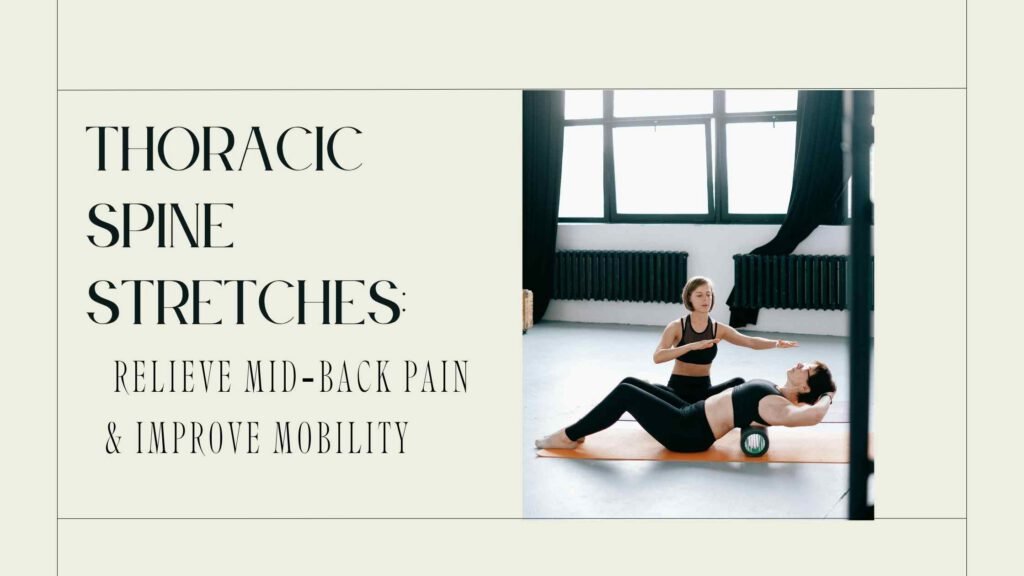
Thoracic Spine Stretches: Relieve Mid‑Back Pain & Improve Mobility

If your mid‑back feels stiff, sore, or locked up—especially from sitting too long—these thoracic spine stretches will help relieve tension and restore mobility. Why Thoracic Spine Stretches Matter What is the thoracic spine? It consists of 12 vertebrae (T1–T12) between your neck and lower back. It anchors your ribcage and supports posture. Why it stiffens: Prolonged sitting, screen hunching, or lack of movement tightens this naturally rigid region. What tightness causes: Rounded shoulders & poor posture Reduced shoulder mobility & inhibited breathing Extra stress on your neck and lower back Limited twisting and overhead movement Unlocking thoracic extension (arch backward) and rotation (twisting) is key to reversing these effects. Top 6 Thoracic Spine Mobility Stretches / Exercises 1. Foam Roller Thoracic Extension How to do it: Lie on your back with a foam roller under your upper back. Support your head with both hands. Lean back gently over the roller, opening your chest. Hold 5–10 seconds, then reset. Repeat 8–10×. Why it works: Restores extension—crucial for upright posture and overhead movement. 2. Thread‑the‑Needle (Thoracic Rotation) How to do it: Begin on hands and knees. Slide your right arm under your left, lowering your right shoulder + ear to the floor. Hold 20–30 seconds, then switch sides. Why it works: Gently enhances spinal rotation and mid‑back flexibility. 3. Wall Angels How to do it: Stand with lower back, upper back, and head against a wall; feet a few inches from it. Raise arms overhead and slide them up/down like snow angels. Perform 10–15 reps, keeping contact with the wall. Why it works: Encourages thoracic extension and scapular motion while reinforcing upright posture. 4. Seated Thoracic Rotation How to do it: Sit tall on a chair, feet flat. Cross arms or place hands behind your head. Rotate your upper body to one side, hold 2–3 seconds; switch. Repeat 10–12× per side. Why it works: Easy way to unlock rotation without equipment. 5. Child’s Pose with Side Reach How to do it: Start in child’s pose (knees wide, arms forward, forehead grounded). Move both hands to the right to stretch left ribcage and mid‑back. Hold 30 seconds; switch sides. Why it works: Targets lateral thoracic region; opens up rib‑intercostal muscles. 6. Open Book Stretch How to do it: Lie on your side with knees bent, arms straight in front. Open the top arm like a book, rotate your upper back. Gaze follows your hand. Hold 10–20 seconds. Repeat 5–8× per side. Why it works: Excellent combo of extension and rotation through mid‑back. How Often & Who Benefits When to do it: 2–3 times daily if you're sitting a lot (e.g. morning, before workouts, during breaks). Who benefits most: Desk workers Overhead athletes (golfers, swimmers, CrossFit) Older adults preventing kyphosis Yoga practitioners enhancing diaphragmatic breathing Anyone with neck, shoulder, or lower back pain Consistency over time (2–4 weeks daily) brings real, lasting improvement. Tips for Safe & Effective Stretching Don’t force it—ease into each movement. Breathe deeply to enhance each stretch. Use props (foam rollers, blocks) for better positioning. Pair with strength work (e.g. thoracic extension holds, scapular retractions) to lock in gains. Quick Daily Routine Table Time of Day Recommended Moves Morning Foam Roller Extension + Wall Angels (5 – 8 reps) Work Place Stretch Routine Thread‑the‑Needle or Seated Rotation (5 – 10/side) Evening Child’s Pose Side Reach + Open Book (2 – 3 rounds) FAQ  Q: Can thoracic spine stiffness cause neck pain? Yes. When your mid‑back is tight, your neck compensates with excess motion, which can lead to strain and pain over time. Q: How long does it take to improve thoracic mobility? With consistent daily practice, most people feel noticeable improvements within 2–4 weeks. Q: Are these stretches safe for herniated discs? While gentle, it’s best to consult a physical therapist if you have a diagnosed disc condition. Q: Can I do thoracic stretches while pregnant? Yes—many are safe and beneficial for relief and rib‑cage mobility. Avoid lying flat too long and check with your healthcare provider. Q: Do I need a foam roller? No—though helpful, many rotation-based stretches require no equipment. ✅ Final Thoughts & Call-to-Action A mobile thoracic spine supports better posture, easier breathing, reduced pain, and smoother movement. Begin with just a few minutes a day, and observe how much more upright and open you feel.

If your mid‑back feels stiff, sore, or locked up—especially from sitting too long—these thoracic spine stretches will help relieve tension and restore mobility.

Why Thoracic Spine Stretches Matter

  • What is the thoracic spine? It consists of 12 vertebrae (T1–T12) between your neck and lower back. It anchors your ribcage and supports posture.
  • Why it stiffens: Prolonged sitting, screen hunching, or lack of movement tightens this naturally rigid region.
  • What tightness causes:
    • Rounded shoulders & poor posture
    • Reduced shoulder mobility & inhibited breathing
    • Extra stress on your neck and lower back
    • Limited twisting and overhead movement

Unlocking thoracic extension (arch backward) and rotation (twisting) is key to reversing these effects.

Top 6 Thoracic Spine Mobility Stretches / Exercises

1. Foam Roller Thoracic Extension

  • How to do it:
    1. Lie on your back with a foam roller under your upper back.
    2. Support your head with both hands.
    3. Lean back gently over the roller, opening your chest.
    4. Hold 5–10 seconds, then reset. Repeat 8–10×.
  • Why it works: Restores extension—crucial for upright posture and overhead movement.

2. Thread‑the‑Needle (Thoracic Rotation)

  • How to do it:
    1. Begin on hands and knees.
    2. Slide your right arm under your left, lowering your right shoulder + ear to the floor.
    3. Hold 20–30 seconds, then switch sides.
  • Why it works: Gently enhances spinal rotation and mid‑back flexibility.

3. Wall Angels

  • How to do it:
    1. Stand with lower back, upper back, and head against a wall; feet a few inches from it.
    2. Raise arms overhead and slide them up/down like snow angels.
    3. Perform 10–15 reps, keeping contact with the wall.
  • Why it works: Encourages thoracic extension and scapular motion while reinforcing upright posture.

4. Seated Thoracic Rotation

  • How to do it:
    1. Sit tall on a chair, feet flat.
    2. Cross arms or place hands behind your head.
    3. Rotate your upper body to one side, hold 2–3 seconds; switch.
    4. Repeat 10–12× per side.
  • Why it works: Easy way to unlock rotation without equipment.

5. Child’s Pose with Side Reach

  • How to do it:
    1. Start in child’s pose (knees wide, arms forward, forehead grounded).
    2. Move both hands to the right to stretch left ribcage and mid‑back.
    3. Hold 30 seconds; switch sides.
  • Why it works: Targets lateral thoracic region; opens up rib‑intercostal muscles.

6. Open Book Stretch

  • How to do it:
    1. Lie on your side with knees bent, arms straight in front.
    2. Open the top arm like a book, rotate your upper back. Gaze follows your hand.
    3. Hold 10–20 seconds. Repeat 5–8× per side.
  • Why it works: Excellent combo of extension and rotation through mid‑back.

How Often & Who Benefits

  • When to do it:
    • 2–3 times daily if you’re sitting a lot (e.g. morning, before workouts, during breaks).
  • Who benefits most:
    • Desk workers
    • Overhead athletes (golfers, swimmers, CrossFit)
    • Older adults preventing kyphosis
    • Yoga practitioners enhancing diaphragmatic breathing
    • Anyone with neck, shoulder, or lower back pain

Consistency over time (2–4 weeks daily) brings real, lasting improvement.

Tips for Safe & Effective Stretching

  • Don’t force it—ease into each movement.
  • Breathe deeply to enhance each stretch.
  • Use props (foam rollers, blocks) for better positioning.
  • Pair with strength work (e.g. thoracic extension holds, scapular retractions) to lock in gains.

Quick Daily Routine Table

Time of Day Recommended Moves
Morning Foam Roller Extension + Wall Angels (5 – 8 reps)
Work Place Stretch Routine Thread‑the‑Needle or Seated Rotation (5 – 10/side)
Evening Child’s Pose Side Reach + Open Book (2 – 3 rounds)

FAQ 

Q: Can thoracic spine stiffness cause neck pain?


Yes. When your mid‑back is tight, your neck compensates with excess motion, which can lead to strain and pain over time.

Q: How long does it take to improve thoracic mobility?


With consistent daily practice, most people feel noticeable improvements within 2–4 weeks.

Q: Are these stretches safe for herniated discs?


While gentle, it’s best to consult a physical therapist if you have a diagnosed disc condition.

Q: Can I do thoracic stretches while pregnant?


Yes—many are safe and beneficial for relief and rib‑cage mobility. Avoid lying flat too long and check with your healthcare provider.

Q: Do I need a foam roller?


No—though helpful, many rotation-based stretches require no equipment.

✅ Final Thoughts & Call-to-Action

A mobile thoracic spine supports better posture, easier breathing, reduced pain, and smoother movement. Begin with just a few minutes a day, and observe how much more upright and open you feel.