

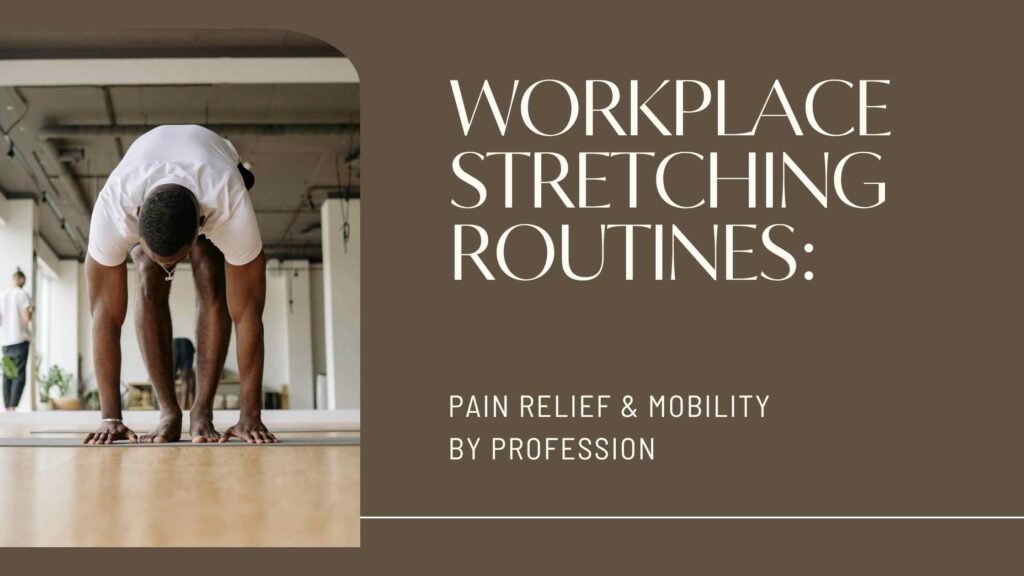
Industry-specific stretching routines are some of the most effective ways to relieve pain, prevent injuries, and improve mobility—regardless of your job. Whether you’re seated at a desk, lifting materials, dancing, or driving long distances, different muscle groups are placed under stress.
This comprehensive guide outlines profession-based stretching routines, backed by expert advice and proven to reduce discomfort, improve posture, and increase flexibility.
Why You Need Workplace Stretching Routines
Each job causes repetitive strain on different body parts. For example:
- Office workers often experience neck and upper back tension
- Construction workers suffer from shoulder strain
- Truck drivers feel it in the lower back
- Fitness Professionals: Hamstring Tightness
- Medical Professionals: Calf Tension & Ankle Mobility
Without proactive care, this strain can limit movement, affect performance, and increase injury risk. With just 5–10 minutes of daily stretching tailored to your profession, you can:
- Alleviate common pain points
- Enhance flexibility and range of motion
- Support injury prevention and faster recovery
Profession-Specific Stretching Routines
Office Workers: Neck & Postural Tension
Common Issues: “Tech neck,” forward head posture, tension headaches
Key Stretches: Chin Tucks, Neck Tilts
Chin Tucks
Sit or stand tall. Gently pull your chin straight back, as if making a double chin. Hold for 5 seconds. Repeat 10 times.
Neck Tilts
Tilt your ear toward one shoulder. Keep your opposite shoulder down. Hold for 20 seconds each side.
These stretches improve posture and reduce neck strain from computer use.
Construction Workers: Shoulder Flexibility & Overhead Strain
Common Issues: Shoulder tightness, rotator cuff fatigue
Key Stretches: Cross-Body Shoulder Stretch, Arm Circles
Cross-Body Stretch
Extend one arm across your chest. Use your other arm to pull it closer to your body. Hold for 20–30 seconds.
Arm Circles
Raise both arms to shoulder height. Rotate them in small circles—10 forward, 10 backward.
Performing these stretches daily helps protect shoulder joints and maintain mobility during lifting or overhead tasks.
Truck Drivers: Lower Back Compression & Hip Stiffness
Common Issues: Lumbar compression, nerve tension
Key Stretches: Child’s Pose, Seated Forward Bend
Child’s Pose
Kneel on the floor, stretch your arms out in front of you, and sink your hips back toward your heels. Hold for 30 seconds.
Seated Forward Bend
Sit with legs extended. Hinge forward at the hips and reach toward your toes while keeping your back straight. Hold for 30 seconds.
These moves help release pressure from the lower spine and reduce sitting-related back pain.
Fitness Professionals: Hamstring Tightness & Mobility Challenges
Common Issues: Tight hamstrings from repeated lifting or cueing movements, limited hip mobility, risk of strain during dynamic sessions
Key Stretches: Standing Hamstring Stretch, Seated Hamstring Stretch
Standing Hamstring Stretch
Place one heel on a low bench or box. Keep the leg straight and hinge forward at the hips without rounding the back. Hold for 30 seconds per side.
Seated Hamstring Stretch
Sit with both legs extended in front of you. With a flat spine, reach toward your toes. Hold for 30 seconds while breathing deeply.
Maintaining hamstring flexibility is essential for proper form during lifts, preventing low-back strain, and supporting fluid movement patterns during demonstrations and training sessions.
Medical Professionals: Calf Tension & Ankle Mobility
Common Issues: Prolonged standing, tight calves, Achilles soreness, reduced ankle mobility
Key Stretches: Wall Calf Stretch, Heel Drops
Wall Calf Stretch
Stand facing a wall. Step one foot back, keeping the heel pressed into the ground. Lean your body forward to stretch the calf. Hold for 20 seconds per leg.
Heel Drops
Stand on the edge of a step. Slowly lower your heels below step level, then return to start. Perform 10 controlled reps.
These stretches relieve calf tightness caused by long shifts on your feet, improve circulation, and reduce the risk of overuse injuries like plantar fasciitis or Achilles strain—common among healthcare workers who spend hours walking or standing.
Quick Reference: Workplace Stretching Guide
| Profession | Body Area | Recommended Stretches | Top Benefits |
| Office Worker | Neck & Back | Chin Tucks, Neck Tilts | Reduces stiffness, prevents headaches |
| Construction | Shoulders | Cross-Body Stretch, Arm Circles | Improves flexibility, protects joints |
| Truck Driver | Lower Back | Child’s Pose, Seated Forward Bend | Eases compression, boosts spinal health |
| Runner | Hamstrings | Standing & Seated Hamstring Stretch | Prevents strain, increases stride length |
| Dancer | Calves/Ankles | Wall Calf Stretch, Heel Drops | Enhances mobility, prevents injuries |
Enhance Your Results: Add Assisted Stretching to Your Routine
While self-guided stretching is a great starting point, assisted stretching offers significantly deeper, more effective relief—especially when it’s tailored to the physical demands of your profession.
Professional stretch studios like StretchLab, Stretch Zone, and other local specialists provide hands-on techniques that help you:
- Safely access deeper muscle layers and fascia
- Personalize your stretching plan based on your daily movement patterns
- Accelerate improvements in posture, alignment, and flexibility
- Recover more effectively from repetitive stress and tightness
Trained professionals often use proven techniques such as PNF (proprioceptive neuromuscular facilitation) to stretch your muscles further than you can on your own—without pain or strain.
Looking for a stretch studio near you?
👇 Use the link below to explore top-rated stretch studios by city:
👉 Find Stretch Studios Near You by City »
Final Thoughts: Start Your Stretching Plan Today
No matter your profession, your body deserves attention. These workplace stretching routines are more than quick fixes—they’re tools for lasting pain relief and performance improvement.
Frequently Asked Questions (FAQ)
How often should I stretch?
Daily—especially after long work hours or physical activity. Consistency makes a difference.
Can I mix stretches from different professions?
Absolutely. Customize your routine based on how your body feels and your job’s physical demands.
What if I’m not currently in pain?
Preventive stretching is just as important—it keeps you flexible and injury-free.
Are these stretches beginner-friendly?
Yes. All routines use static holds that are safe and simple for all levels.
Do I need to warm up first?
Yes. Try light cardio or dynamic moves (e.g., arm swings) before stretching to prepare your muscles.