

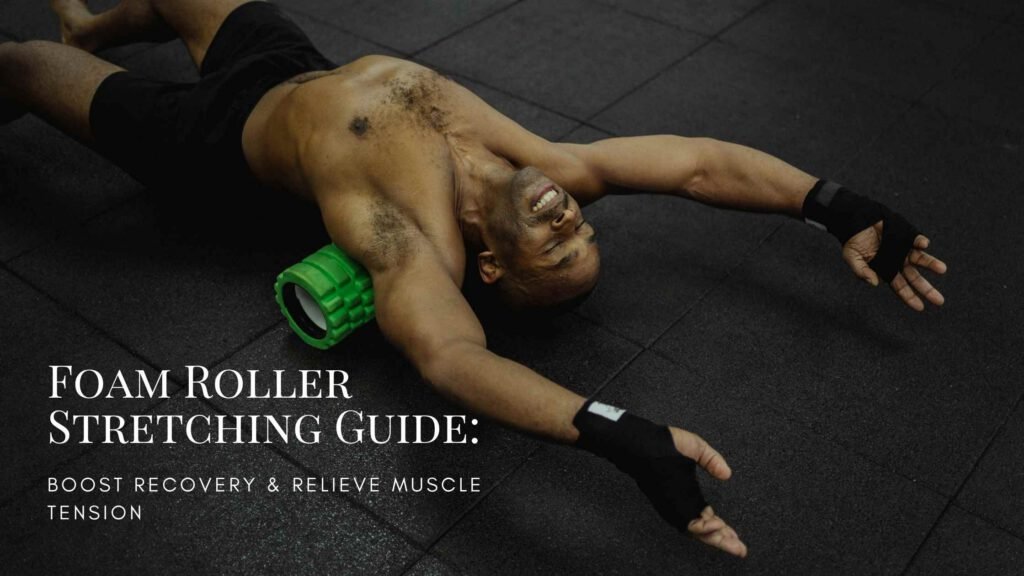
Looking to relieve tight muscles, improve flexibility, and recover faster? Using foam rollers for stretching can unlock mobility and ease pain in just minutes a day. Whether you’re an athlete, office worker, or weekend warrior, foam rolling bridges the gap between passive stretching and active muscle release.
In this guide, you’ll discover:
- What foam rolling is and how it works
- Proven benefits backed by science
- Step-by-step routines for every body region
- Foam rolling vs. traditional stretching
- Common mistakes to avoid
- A free printable routine to stay consistent
What Is Foam Rolling? (And Why It Works)
Foam rolling, or self-myofascial release, involves applying pressure to tight muscles and fascia (the connective tissue around them) using a cylindrical foam roller. It improves circulation, restores range of motion, and prepares your body for movement or recovery.
Unlike static stretching, which lengthens muscles passively, foam rolling actively targets fascia, which can become tight from poor posture, stress, or overuse.
Benefits of Using Foam Rollers for Stretching
| Benefit | How It Helps |
| Improves flexibility | Releases fascia and muscle knots, increasing range of motion |
| Speeds up recovery | Boosts blood flow and removes metabolic waste |
| Reduces soreness | Eases post-workout DOMS (delayed onset muscle soreness) |
| Improves posture | Releases tension pulling your body out of alignment |
| Relieves chronic pain | Especially helpful for desk-bound hips, shoulders, and back |
| Increases body awareness | Helps identify and treat tight or underused areas |
Foam Roller Stretching Techniques: How to Use a Foam Roller Properly
Foam rolling is active, not passive—you apply movement and body weight to targeted muscle groups.
Step-by-Step Guide
- Choose the right roller – Beginners should start with a smooth, medium-density roller.
- Roll slowly – About 1 inch per second; slower equals deeper release.
- Pause on tender points – Hold for 20–30 seconds to allow release.
- Roll 1–2 minutes per area – Avoid over-rolling to prevent irritation.
- Hydrate and stretch afterward – Foam rolling prepares tissues for deeper flexibility work.
Best Foam Roller Stretches by Body Region
Upper Back Roll
Targets: Thoracic spine, rhomboids
Lie on your back, roller under your shoulder blades. Cross your arms, lift hips, and roll from mid-back to just below your neck.
IT Band Roll
Targets: Outer thigh
Lie on your side, roller under the thigh. Use your top leg and hand to stabilize. Roll from hip to just above the knee.
Quads Roll
Targets: Front thighs
Lie face down, roller under quads. Support with forearms. Roll from hips to knees.
Calf Roll
Targets: Lower legs
Sit with legs extended, roller under calves. Lift hips, roll from ankles to knees.
Glutes & Piriformis Roll
Targets: Hips & deep glute muscles
Sit on the roller, cross one ankle over the opposite knee, lean toward the raised leg, and roll.
Lats Roll
Targets: Side body, upper back
Lie on your side with the roller under your armpit. Extend bottom arm and roll toward mid-back.
When to Use a Foam Roller
| Timing | Purpose |
| Before workouts | Improve range of motion and performance |
| Post workouts | Reduce soreness, boost recovery |
| During work breaks | Combat desk posture and stiffness |
| Before bed | Calm the nervous system and promote relaxation |
Avoid These Common Foam Rolling Mistakes
- Rolling too fast – Go slow for effective myofascial release
- Overdoing it – Limit time to 30–60 seconds per trigger point
- Rolling over joints – Stick to muscle tissue only
- Holding your breath – Breathe slowly to help tissues relax
- Poor form – Engage your core to protect your spine
Foam Rolling vs. Traditional Stretching
| Feature | Foam Rolling | Stretching |
| Targets fascia? | ✅ Yes | ❌ No |
| Passive or active? | ✅ Active | ✅ Passive (static), ✅ Active (dynamic) |
| Best before workouts? | ✅ Yes | ⚠️ Static = not ideal |
| Best after workouts? | ✅ Yes | ✅ Yes |
| Boosts blood flow? | ✅ Strongly | ⚠️ Limited |
| Improves flexibility fast? | ✅ Targeted gains | ✅ With consistency |
🔑 Pro tip: Use foam rolling before stretching to release tissue tension, then stretch to lengthen it.
Choosing the Right Foam Roller Type
| Type | Best For | Details |
| Smooth | Beginners, sensitive areas | Even pressure, gentler release |
| Textured/Grid | Intermediate users | Deeper tissue work, targets knots |
| Vibrating | Advanced recovery | Helps flush inflammation & soreness |
| Half-round | Balance/mobility work | Great for feet, calves, and core activation |
Want to go deeper?
Check out our companion guide: Assisted Stretching: The Next Level of Flexibility & Recovery
Who Should Avoid Foam Rolling?
Avoid foam rolling if you have:
- Acute injuries or inflammation
- Recent surgery or fractures
- Deep vein thrombosis (DVT)
- Severe osteoporosis
- Unexplained swelling or bruising
Consult a doctor if:
- You’re pregnant
- You’ve had spinal surgery or conditions
- You’re in post-op recovery with unclear tissue healing
Foam Rolling for Different Goals
Foam Rolling for Runners
- Focus: calves, hamstrings, quads, IT bands
- Roll before for activation; after for recovery
Foam Rolling for Desk Workers
- Focus: upper back, hip flexors, lats
- Great for posture reset during the workday
Foam Rolling for Lower Back Pain
- Focus: glutes, hamstrings, thoracic spine
- Avoid direct rolling on the lumbar spine
Foam Rolling for Posture Correction
- Focus: upper back, lats, chest
- Combats rounded shoulders and forward head tilt
Foam Rolling for Recovery Days
- Focus: Full-body, gentle rhythm
- Combine with breathwork to calm the nervous system
Foam Rolling Myths (Debunked)
- ❌ “Foam rolling breaks scar tissue.”
➤ Not true. It improves tissue hydration and tension—not physically breaking bonds. - ❌ “More pressure is better.”
➤ False. Deep doesn’t always mean effective—especially if it causes pain. - ❌ “You should roll your lower back.”
➤ Skip it. Instead, roll supporting muscles like the glutes and upper back.
Final Thoughts: Why I Recommend Foam Rollers for Stretching
Foam rollers are one of the most powerful tools to restore your body’s natural movement—whether you’re lifting weights or sitting all day. With just 10 minutes a day, you’ll notice better mobility, less pain, and a stronger connection to your body.
Start small. Be consistent. And breathe deeply.
FAQ: Using Foam Rollers for Stretching
How often should I foam roll?
2–3x/week is a great start. Daily is fine if it feels good.
Can foam rolling replace stretching?
No—it complements stretching but doesn’t replace it.
Is it supposed to hurt?
Some discomfort is normal. Sharp pain = ease off or use a softer roller.
Can I foam roll my neck?
Avoid direct pressure. Try massage balls around traps or skull base.
How long should a session last?
10–15 minutes is ideal depending on the number of areas you target.