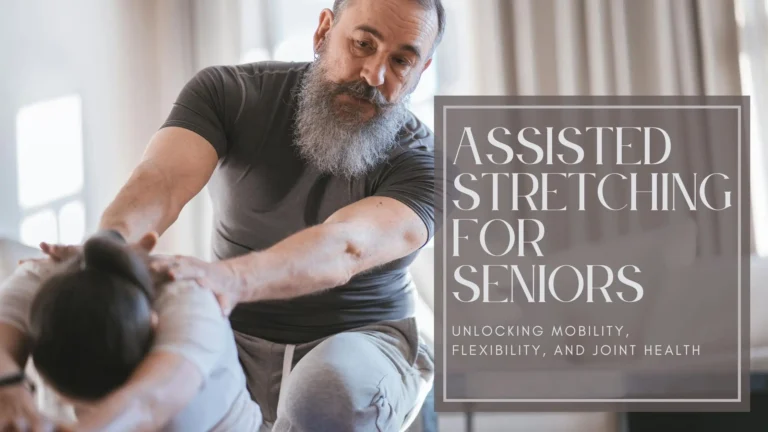
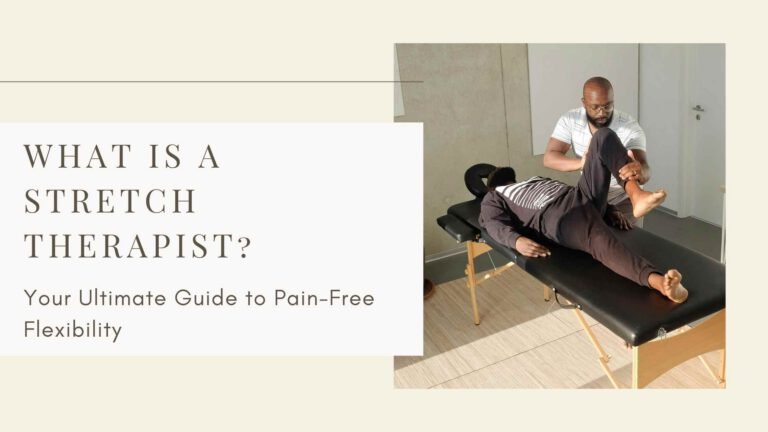
A Flexologist is StretchLab’s title for a practitioner who provides one-on-one assisted stretching sessions inside a StretchLab studio. Flexologists help clients work on flexibility, mobility, range of motion, and movement comfort using guided positioning, assisted stretches, communication, and individualized session planning.
The role sits within the wellness and movement industry rather than clinical healthcare. A Flexologist may have a background in personal training, exercise science, athletic training, massage therapy, physical therapy, yoga, Pilates, or another health and fitness discipline, but working as a Flexologist does not itself make someone a medical provider.
There is also an important distinction around training: StretchLab’s Flexologist Training Program is an assessment-based certificate program. Completing it does not create an independent professional certification or medical credential.
For anyone considering the job—or trying to understand who is working with them during a StretchLab session—here is what the role actually involves.
What Is a Flexologist?
A Flexologist is a StretchLab practitioner trained to provide the company’s style of one-on-one assisted stretching.
StretchLab uses the Flexologist name specifically for practitioners working within its studio system. The practitioner guides a client through stretches rather than having the client perform an independent workout.
A typical session may involve:
- Discussing mobility goals and areas that feel restricted
- Observing basic movement or range of motion
- Positioning the client for specific stretches
- Adjusting intensity based on client feedback
- Using passive, active-assisted, or contract-relax techniques
- Tracking how mobility changes over time
- Giving general mobility or stretching guidance between sessions
The purpose is to support movement and flexibility—not to diagnose an injury or replace medical treatment.
For a broader explanation of StretchLab itself, see our guide to StretchLab and how its assisted stretching model works.
What Does a Flexologist Do During a Session?
Although sessions vary by client and studio, Flexologists generally follow a structured process.
1. Discuss the Client’s Goals
A session normally begins with communication.
The Flexologist may ask about:
- Areas that feel tight or restricted
- Sports or activities the client performs
- Sitting or standing demands at work
- Previous stretching experience
- Mobility goals
- Changes since the previous session
- Injuries or health concerns that may affect the session
This conversation helps determine what should—and should not—be emphasized.
2. Assess Movement and Mobility
StretchLab’s training includes movement-analysis concepts that help practitioners observe how a client moves.
This is not the same as a medical diagnosis.
The goal is to gather practical information that can help guide the stretch session, such as whether certain movements appear restricted or whether one area may deserve additional attention.
3. Guide the Client Through Assisted Stretches
The Flexologist then positions and supports the client while moving different joints and muscle groups through controlled ranges.
A session may address areas such as:
- Hips
- Hamstrings
- Quadriceps
- Calves
- Glutes
- Chest
- Shoulders
- Upper back
- Neck
- Ankles
The exact sequence depends on the person, their goals, session length, and how they feel that day.
4. Adjust Intensity Through Communication
Good assisted stretching should be interactive.
The practitioner should regularly ask how a position feels and adjust leverage, range, or intensity when necessary.
More force is not automatically better.
A productive stretch generally feels noticeable but controllable. Sharp pain, numbness, tingling, or other unusual symptoms are reasons to stop and reassess.
5. Track Progress Over Time
Regular clients may work toward longer-term mobility goals rather than treating every appointment as an isolated stretch.
Progress might involve:
- More comfortable range of motion
- Improved tolerance in previously restricted positions
- Greater consistency with mobility work
- Better awareness of movement limitations
- Easier performance of specific daily or athletic movements
These are mobility and wellness observations rather than medical outcomes.
What Techniques Do Flexologists Use?
Assisted stretching can include several different methods.
Passive Assisted Stretching
The client relaxes while the Flexologist moves a joint or muscle group into a controlled stretch.
This allows the practitioner to manage positioning and leverage while the client focuses on breathing and relaxing.
Active-Assisted Mobility
The client may actively participate in part of the movement while the practitioner provides guidance or assistance.
This can be useful when the goal involves both mobility and control.
Contract-Relax Techniques
Some assisted stretching incorporates brief muscle contractions followed by relaxation and additional movement into range.
These approaches are related to techniques commonly associated with proprioceptive neuromuscular facilitation.
You can learn more in our complete guide to PNF stretching.
The important point is that there is no reason for a client to chase maximum intensity. Technique, positioning, communication, and gradual progression matter more than simply stretching farther.
Is a Flexologist a Certified Professional?
This is where the terminology deserves clarification.
StretchLab’s Flexologist Training Program is an assessment-based certificate program. According to StretchLab’s program handbook, completing the program results in a certificate of completion in Applied Stretching Theory and Practice.
The handbook specifically distinguishes a certificate from a professional certification or credential.
That means a graduate should not represent the FTP certificate itself as a new professional license or independent healthcare certification.
Instead, there are two separate layers:
- The person’s existing professional education, license, certification, or qualifying degree.
- StretchLab’s proprietary Flexologist Training Program.
When the person is actively employed at a StretchLab location, they can work under the Flexologist role title.
This distinction is useful both for prospective employees and consumers evaluating practitioner qualifications.
For more background on how training credentials work throughout the industry, see Assisted Stretching Certifications.
What Are the Requirements to Become a Flexologist?
StretchLab’s published training handbook establishes prerequisites for participating in its Flexologist Training Program.
Candidates are expected to have a qualifying background in health, wellness, fitness, or a related discipline.
The handbook states that participants must have either:
- A current and valid certification or license in a health, wellness, or fitness discipline, or
- At least a bachelor’s degree in a health, wellness, or fitness discipline from the United States
That makes the Flexologist pathway different from an entry-level job where no movement-related education is expected.
Depending on the person’s background, qualifying credentials or education may come from areas such as:
- Personal training
- Exercise science
- Kinesiology
- Athletic training
- Massage therapy
- Physical therapy
- Occupational therapy
- Yoga
- Pilates
- Other qualifying health, wellness, or fitness disciplines
Individual franchise locations may also have their own hiring requirements.
Prospective applicants should therefore confirm both the current FTP prerequisites and the requirements of the specific StretchLab studio where they are applying.
How Long Is Flexologist Training?
StretchLab currently describes the Flexologist Training Program as a 50–70-hour comprehensive assisted stretching curriculum.
The program uses a blended format combining online education with in-person instruction.
StretchLab says training includes subjects such as:
- Stretching theory and application
- Flexibility and mobility
- Human movement
- Anatomy-related concepts
- Assisted stretching techniques
- Movement analysis
- Practical application
- Client interaction
- Safety considerations
The current program also includes knowledge and performance assessments.
Because the curriculum contains both self-paced and scheduled components, it is more accurate to describe FTP by its required training hours than to promise that every candidate will finish within a fixed number of weeks.
What Happens After Flexologist Training?
Completing initial FTP training is only the beginning of developing hands-on skill.
Assisted stretching requires the practitioner to apply what they have learned to many different body types, mobility levels, goals, and personalities.
Newer Flexologists typically continue developing skills such as:
- Body mechanics
- Positioning
- Communication
- Stretch intensity management
- Client comfort
- Session flow
- Time management
- Mobility observation
- Programming consistency
StretchLab also states that continuing education and learning resources are available through its training system.
Like many hands-on professions, practical competence develops through a combination of formal education, repetition, coaching, feedback, and experience.
What Is Outside a Flexologist’s Scope?
A Flexologist is not automatically a physical therapist, physician, chiropractor, or other licensed healthcare provider simply because they work at StretchLab.
The assisted stretching role should therefore be separated from medical diagnosis and treatment.
A Flexologist working within the normal wellness scope should not use the role itself to:
- Diagnose an injury
- Diagnose the source of someone’s pain
- Provide medical treatment
- Replace physical therapy
- Prescribe medication
- Claim to cure a disease or injury
- Promise that stretching will prevent an injury
- Present mobility observations as a clinical diagnosis
Some Flexologists may independently hold healthcare licenses or advanced professional credentials. Those credentials belong to the individual and should not be confused with the Flexologist title itself.
Clients dealing with significant pain, a recent injury, neurological symptoms, unexplained loss of function, or other medical concerns should seek an appropriately licensed healthcare professional.
Who Uses Flexologists?
StretchLab serves people with a wide range of mobility goals rather than one specific type of client.
Beginners
Someone who rarely stretches may benefit from having another person control positioning and explain what an appropriate stretch should feel like.
For beginners, communication and conservative intensity are especially important.
Desk Workers
People who spend long periods sitting may seek assisted stretching because areas such as the hips, chest, shoulders, hamstrings, or upper back feel restricted.
The goal should not be to “fix posture” in a single session. A more realistic objective is to support comfortable movement and establish a repeatable mobility routine.
Athletes and Active Adults
Athletes may use assisted stretching as one component of a broader training and recovery program.
The areas emphasized depend heavily on the sport.
A runner may prioritize ankles, calves, hamstrings, and hips, while a golfer or swimmer may place more emphasis on thoracic rotation and shoulder mobility.
Assisted stretching should complement—not replace—appropriate strength training, conditioning, sport practice, sleep, nutrition, and recovery.
Older Adults
Some older adults use assisted stretching to maintain comfortable movement and range of motion.
Sessions may require slower transitions, conservative intensity, stable positioning, and frequent communication.
Health history becomes especially important when osteoporosis, joint replacement, neurological disease, cardiovascular conditions, recent surgery, or other medical concerns are present.
Flexologist vs. Other Movement and Healthcare Roles
A Flexologist overlaps with several professions in the general movement and wellness industry, but the roles are not interchangeable.
| Role | Primary Focus | Typical Service |
|---|---|---|
| Flexologist | Assisted stretching and mobility | One-on-one practitioner-guided stretching at StretchLab |
| Personal Trainer | Fitness and exercise | Strength, conditioning, exercise programming and coaching |
| Massage Therapist | Soft-tissue work | Hands-on massage and related techniques within state scope |
| Physical Therapist | Clinical rehabilitation | Evaluation and treatment of injuries, movement disorders and medical conditions |
| Athletic Trainer | Sports medicine | Injury prevention, examination, treatment and rehabilitation within professional scope |
| Yoga Instructor | Movement practice | Yoga instruction, mobility, breathing and related practices |
| Pilates Instructor | Movement and exercise | Pilates-based strength, control, stability and mobility training |
Some Flexologists hold more than one of these qualifications.
For example, a licensed massage therapist or certified personal trainer may also work as a Flexologist. In that situation, it is still useful to distinguish which service the person is providing at any given time.
How Much Do Flexologists Make?
There is no single national Flexologist pay rate because most StretchLab studios are independently operated franchise locations.
Compensation can depend on:
- Geographic market
- Previous qualifications
- Experience
- Number of sessions performed
- Full-time versus part-time status
- Lead or management responsibilities
- Studio utilization
- Incentive structure
- Whether non-session work is paid at a different rate
Recent 2026 employer-provided job listings show many Flexologist-related positions in roughly the low-to-upper $20s per hour, although individual postings can fall below or above that range.
For example, recent listings have included positions around $23–$25 per hour, $24–$27 per hour, and $24–$30 per hour in different markets.
Those examples should not be treated as a national wage guarantee.
Some studios also use compensation systems in which the rate for performing stretches differs from the rate paid for administrative, sales, or studio-support hours.
Questions to Ask About Flexologist Pay
Before accepting a position, ask:
- Is compensation hourly, per session, or a combination?
- Is the quoted rate paid for every scheduled hour or only completed sessions?
- What happens financially if a client cancels?
- Is administrative or studio-support time paid?
- Are there bonuses or performance incentives?
- Are tips permitted?
- Is training paid?
- Are benefits offered?
- How many sessions does an established Flexologist typically perform each week?
- How long does it normally take to build a full schedule?
Those questions often provide a more useful picture of earnings than the advertised hourly rate alone.
Is Flexologist Training Paid For?
Training arrangements can vary because StretchLab locations are generally franchise operated.
Candidates should not assume that every studio handles FTP costs, training wages, travel, or onboarding in exactly the same way.
Before accepting a position, ask who pays for:
- FTP enrollment
- Training hours
- Required materials
- Travel
- Lodging, if applicable
- Additional onboarding
- Continuing education
Also ask whether any repayment agreement or minimum employment period applies when the studio pays training costs.
Is Being a Flexologist a Good Career?
The role can make sense for someone who already has a movement, fitness, or wellness background and wants to specialize more heavily in mobility and one-on-one client interaction.
Potential advantages include:
- Significant hands-on client interaction
- Specialized mobility experience
- A structured assisted stretching system
- Exposure to many different client populations
- Opportunities to strengthen communication and movement-coaching skills
- Potentially flexible scheduling at some locations
- A pathway into lead Flexologist, education, or studio leadership roles at some franchise groups
There are also practical tradeoffs.
The role can be physically demanding, client schedules can fluctuate, compensation structures vary widely between franchises, and some positions begin part-time while the practitioner builds a clientele.
Someone primarily looking for a salaried clinical career, medical rehabilitation role, or traditional strength-and-conditioning position may find another profession better aligned with those goals.
What Makes a Good Flexologist?
Technical stretching knowledge matters, but successful assisted stretching also depends heavily on interpersonal skill.
Communication
The practitioner needs to explain what they are doing and encourage honest feedback about intensity, discomfort, and positioning.
Body Mechanics
A Flexologist may perform multiple hands-on sessions in one day. Efficient practitioner positioning is important both for client control and for reducing unnecessary physical strain on the practitioner.
Professional Boundaries
A good practitioner understands where assisted stretching ends and medical care begins.
Adaptability
Two people with similar mobility goals may respond very differently to the same position.
The practitioner needs to adjust rather than force every client through an identical session.
Consistency
Long-term clients benefit from a structured process that allows the practitioner to recognize what has changed and what still needs attention.
Comfort With People
Assisted stretching is a close-contact, one-on-one service. Respectful communication, consent, professionalism, and the ability to make clients comfortable are central to the job.
Questions to Ask Before Accepting a Flexologist Position
Because individual StretchLab studios are franchise operated, interviewing the studio is just as important as being interviewed by it.
Useful questions include:
- How are new Flexologists mentored after FTP?
- How many sessions does a typical Flexologist perform in a shift?
- How is compensation calculated?
- What happens when a client cancels?
- Is non-session work paid?
- What percentage of the role involves sales or membership conversations?
- Who pays for FTP and associated training expenses?
- What does a normal first 30, 60, and 90 days look like?
- Are continuing-education opportunities available?
- How does someone progress into a lead Flexologist or management role?
- What qualifications does the current team have?
- How are client safety concerns escalated?
The answers can differ substantially between locations.
What Clients Should Know About Their Flexologist
Clients can also benefit from understanding the role.
You should feel comfortable asking your Flexologist:
- What is your professional background?
- What credentials did you have before FTP?
- How long have you been working as a Flexologist?
- What is the goal of this stretch?
- What should this position feel like?
- Can we decrease the intensity?
- Should I continue if something hurts?
- Is this concern something I should discuss with a healthcare professional?
A qualified practitioner should be comfortable with reasonable questions about training, scope, and session technique.
Flexologist vs. Assisted Stretching Practitioner
“Assisted stretching practitioner” is a broader description.
Professionals at many different businesses may provide assisted stretching, and their titles can include stretch practitioner, stretch therapist, mobility specialist, stretching coach, or other variations depending on the company and jurisdiction.
Flexologist, by contrast, is specifically associated with StretchLab.
This distinction matters when comparing providers because training systems, prerequisites, service models, and professional backgrounds can vary across the assisted stretching industry.
Frequently Asked Questions
What does a Flexologist do?
A Flexologist provides one-on-one assisted stretching at StretchLab. The practitioner helps position and guide clients through stretches intended to support flexibility, mobility, range of motion, and movement comfort.
Is a Flexologist a physical therapist?
No. The Flexologist title does not make someone a physical therapist or other healthcare provider. Individual Flexologists may separately hold professional healthcare licenses, but those credentials are independent of the StretchLab role.
Do you need a degree to become a Flexologist?
Not necessarily, but StretchLab’s published FTP prerequisites require a qualifying professional certification or license or at least a bachelor’s degree in a health, wellness, or fitness discipline. Applicants should verify the current requirements directly with StretchLab and the hiring studio.
How long is Flexologist training?
StretchLab currently describes the Flexologist Training Program as a 50–70-hour blended curriculum combining online and in-person education.
Does FTP make you a certified Flexologist?
StretchLab’s program handbook describes FTP as an assessment-based certificate program and states that completion does not grant an independent professional certification or credential. Graduates receive a certificate of completion in Applied Stretching Theory and Practice.
What is the difference between a Flexologist and a personal trainer?
A Flexologist primarily provides assisted stretching and mobility sessions. A personal trainer primarily designs and coaches exercise, strength, and conditioning programs. Some people hold both roles.
How much does a StretchLab Flexologist make?
Pay varies significantly between franchise locations. Current job listings commonly place many positions somewhere in the low-to-upper $20s per hour, but compensation structure, experience, location, client volume, and whether the employee is paid for non-session hours can materially change actual earnings.
Can Flexologists diagnose injuries?
The Flexologist role itself is a wellness and assisted stretching role, not a medical diagnosis credential. Clients with injuries, significant pain, unexplained symptoms, or medical concerns should consult an appropriately licensed healthcare professional.
Is Flexologist a StretchLab-specific title?
Yes. Flexologist is the proprietary role title used within the StretchLab system.
Can you become a Flexologist with a personal training certification?
Potentially. A valid qualifying fitness credential may satisfy FTP prerequisites, depending on the credential and current program requirements. The hiring StretchLab studio and current FTP rules ultimately determine eligibility.
Related Resources
Continue exploring assisted stretching and the StretchLab model:
- What Is Assisted Stretching?
- StretchLab: What It Is, How It Works, Benefits, Prices & What to Expect
- Assisted Stretching Certifications
- PNF Stretching
- StretchLab vs. Stretch Zone
- Find Assisted Stretching Studios by City
Conclusion
A Flexologist is StretchLab’s one-on-one assisted stretching practitioner—a role built around mobility, flexibility, communication, and hands-on stretch sessions rather than medical diagnosis or traditional workout programming.
The career pathway is more structured than the name alone may suggest. StretchLab’s current Flexologist Training Program requires an existing qualifying fitness, wellness, or health credential or degree and adds a 50–70-hour assessment-based training program focused specifically on assisted stretching.
For prospective Flexologists, the most important variables are the quality of the studio’s mentorship, the exact compensation model, schedule stability, physical demands of the work, and opportunities for continued development.
For clients, the most important distinction is equally simple: a Flexologist can provide structured mobility and assisted stretching support, but the role should not be confused with licensed medical care.
If you want to experience professional assisted stretching rather than pursue it as a career, use the FlexologyGuide assisted stretching directory to compare providers in your area.