

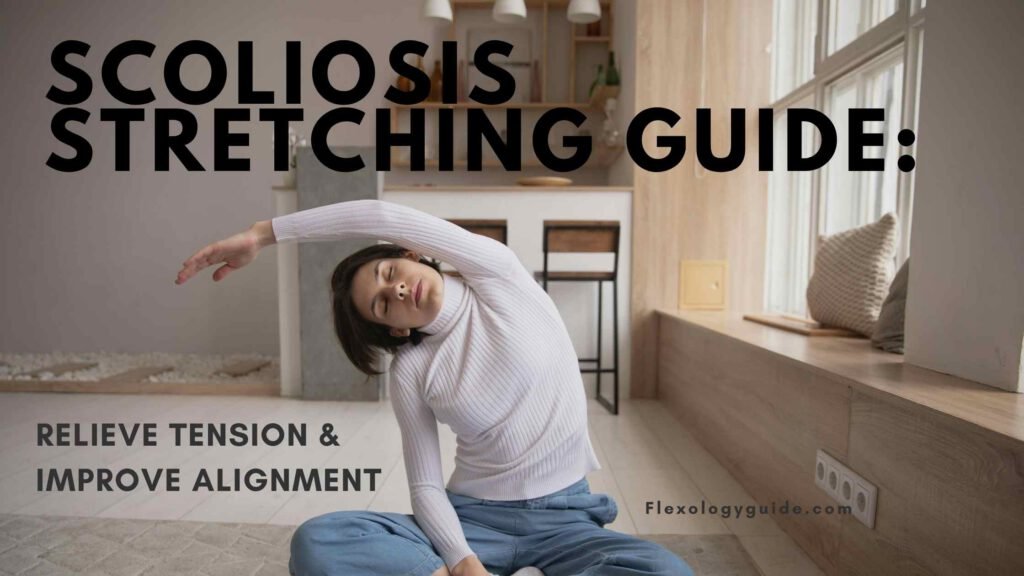
Stretching for scoliosis naturally eases muscle imbalances, supports spinal alignment, and enhances posture—without surgery or medication. When practiced consistently and correctly, these stretches can ease pain, boost mobility, and improve daily comfort—for everyone, from mild curves to more significant spinal deviations.
Why Stretching Matters for Scoliosis
- Relieves asymmetrical tension in muscles on either side of your spine
- Enhances spinal mobility and postural awareness
- Boosts flexibility in tight areas like hips, shoulders, and thoracic spine
- Reduces reliance on medications or invasive treatments
10 Best Stretches for Scoliosis Relief
These targeted stretches focus on key muscle groups affected by spinal curvature. Always start slowly, breathe deeply, and hold each pose for 30–60 seconds.
- Side‑Inclined Child’s Pose
Stretches: Lats, spinal extensors- From child’s pose, walk your hands to one side to deeply stretch the opposite side.
- Wall/Lateral Lat Stretch
Stretches: Lats, shoulder girdle- With palms on the wall, walk your feet back and lower your chest for a deep side stretch.
- Seated Oblique Side Bend
Stretches: Core side muscles- Sit upright, reach one arm overhead, and bend toward the opposite side.
- Cat–Cow Spinal Mobilizer
Targets: Entire spine, core activation- Alternate arching your back (cat) and lifting your heart forward (cow) for 1 minute.
- Doorway Chest & Shoulder Release
Stretches: Chest, front shoulder- Place arm at 90° in a doorframe and lean forward.
- Thread‑the‑Needle Thoracic Stretch
Stretches: Upper back, shoulder blade area- On all fours, slide one arm underneath the other and gently lower your shoulder to the floor.
- Gentle Supine Twist
Targets: Lower spine, oblique connection- Lay on your back with knees bent, gently lower knees to one side while keeping shoulders flat.
- Hip‑Opener Lunging Stretch
Stretches: Hip flexors, pelvis alignment- Step into a lunge, keeping the back leg straight and hips low.
- Standing Side Reach
Stretches: Lateral torso, obliques- Stand tall, reach one arm up, and lean to the opposite side.
- Thoracic Extension with Foam Roller
Targets: Mid‑back curvature- Lie horizontally over a foam roller under upper back. Support your head and gently arch over it.
How Often Should You Stretch?
- Aim for daily or every other day, 10–20 minutes per session.
- Consistency matters more than intensity—light, steady stretches win.
- If you have a high-degree curvature or pain, start with a physical therapist or trained stretch specialist familiar with scoliosis.
Assisted Stretching Options 👐
Professional, assisted stretch sessions, like those at StretchLab, offer:
- Guided posture correction
- Curve-specific customization
- Deeper, safer flexibility gains
- 👇 Use the link below to explore top-rated stretch studios by city:👉 Find Stretch Studios Near You by City »
Final Takeaway
Stretching for scoliosis is an accessible, effective tool to manage tension, improve posture, and enhance mobility. With a simple 10-minute daily routine, you’ll build strength, ease discomfort, and move with more confidence.
🔹 Progress is gradual—but every stretch counts.
FAQ: Stretching Safely with Scoliosis
Q: Can stretching reverse spinal curvature?
A: No. Stretching can improve muscle balance and posture, but it doesn’t change bone structure. Nonetheless, it helps manage symptoms and discomfort.
Q: Should both sides be stretched equally?
A: Not always. Target the tighter side more and pair stretching with strengthening of the weaker side—guided by your curve and therapist.
Q: Is yoga safe for scoliosis?
A: Yes—when choosing gentle, spinal-lengthening poses and avoiding extreme twists or backbends without professional guidance.
Q: How do I recognize harmful stretches?
A: Stop immediately if you feel sharp pain, tingling, or increased soreness, and seek medical advice.
Q: Can children with scoliosis stretch these?
A: Yes—under supervision by a healthcare provider or qualified therapist to ensure safety and correct form.