

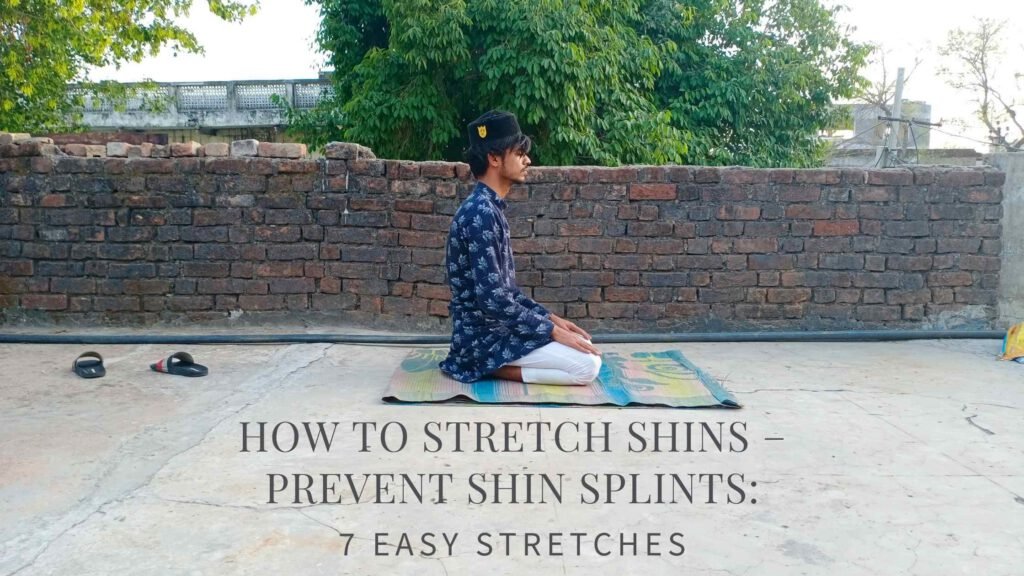
In this guide, you’ll learn how to stretch your shins effectively with seven targeted exercises that focus on the anterior tibialis, the primary muscle running down the front of your shin. These stretches are backed by both expert recommendations and practical applications, making them ideal for daily use, pre-workout routines, or recovery.
Why Stretching Shins Is Important
The anterior tibialis muscle helps lift your foot and stabilize your ankle. When it’s overworked—due to running on hard surfaces, poor footwear, or weak calf muscles—it can tighten or become inflamed, leading to shin splints or anterior leg pain. Stretching improves muscle flexibility, enhances performance, and prevents injuries.
7 Best Shin Stretches for Flexibility & Pain Prevention
1. Seated Toe Sit (Kneeling Shin Stretch)
Targets: Anterior tibialis, ankles
How to do it:
- Kneel with toes pointing back behind you.
- Sit on your heels with feet flat on the floor.
- Feel the stretch along the shins and ankles.
Tip: Place a towel under your hips if the stretch is too intense.
Duration: Hold for 20–30 seconds, 2–3 times per leg.
2. Standing Toe Drag Stretch
Targets: Shin and foot extensors
How to do it:
- Stand tall and gently drag one foot behind you.
- Point your toes downward so the top of your foot rests on the floor.
- Gently press the foot into the ground until you feel a stretch.
Tip: Use a wall or chair for balance.
Duration: 20–30 seconds, 2–3 repetitions.
3. Wall Shin Stretch (Toes-Up Against Wall)
Targets: Deep stretch for tibialis anterior
How to do it:
- Stand facing a wall.
- Place your toes up the wall while keeping the heel down.
- Slowly bend your knees forward to deepen the stretch.
Duration: 20–30 seconds, 2–3 times per leg.
4. Heel Walks (Dynamic Activation Stretch)
Targets: Strengthens and stretches the shin muscles
How to do it:
- Walk on your heels for 20–30 seconds, keeping your toes lifted.
- Focus on controlled, slow steps.
Tip: Great as a dynamic warm-up before exercise.
Frequency: 2–3 sets.
5. Resistance Band Dorsiflexion
Targets: Strengthens and mobilizes anterior tibialis
How to do it:
- Sit with legs extended and loop a resistance band around one foot.
- Pull the band toward you to flex the ankle, then point away slowly.
Reps: 10–15 reps, 2–3 sets per leg.
Bonus: Also improves ankle flexibility and coordination.
6. Wall Calf Stretch (Gastrocnemius & Soleus)
Targets: Calf muscles, which work in opposition to shin muscles
How to do it:
- Stand facing a wall with one leg behind.
- For the gastrocnemius, keep the back leg straight.
- For the soleus, slightly bend the back knee.
Duration: 30 seconds per variation, 2–3 rounds.
7. Seated Toe Drag (Static Version)
Targets: Front shin and foot extensors
How to do it:
- Sit on a mat with one leg extended, top of foot resting flat.
- Gently press the top of your foot against the ground to activate a stretch.
Duration: 20–30 seconds per side.
How Often Should You Stretch?
- Daily: If you’re active or prone to shin tightness
- Before workouts: Do dynamic moves like heel walks
- After workouts: Use static stretches like the toe sit and wall shin stretch
- Injury recovery: Include resistance band and calf stretches to correct imbalances
When to See a Specialist
Stretching can relieve tightness, but seek professional help if you experience:
- Sharp, localized pain
- Swelling or inflammation
- Numbness or tingling in the lower leg or foot
- Pain that persists after rest
These could indicate shin splints, a stress fracture, or other more serious conditions.
Frequently Asked Questions
Q: What causes tight shins?
A: Overuse, hard running surfaces, improper footwear, and muscle imbalances.
Q: Can stretching help shin splints?
A: Yes, especially when paired with rest and strengthening exercises.
Q: Should I stretch shins before or after running?
A: Do dynamic stretches like heel walks before and static stretches after.
Q: Are there tools that help stretch the shins?
A: Resistance bands, foam rollers, and massage sticks are all helpful.
Conclusion: Stretch Your Shins, Stay Pain-Free
Incorporating these shin stretches into your routine helps improve flexibility, prevent injuries, and relieve discomfort. Whether you’re preventing shin splints or recovering from a tough workout, these stretches are easy, effective, and accessible for all fitness levels.
Start today—because a flexible shin is a happy shin!