

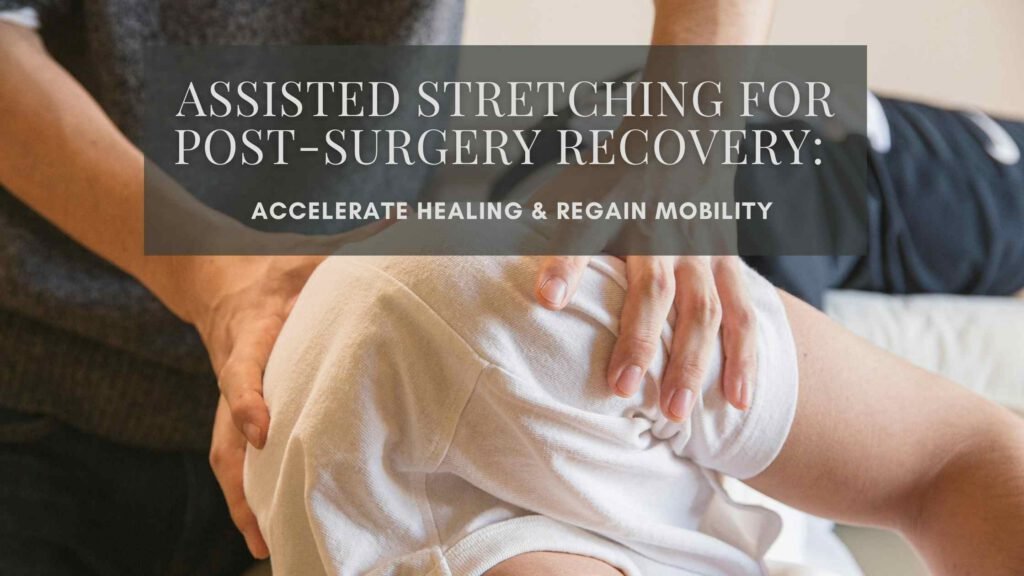
Recovering from surgery isn’t just about rest and physical therapy—it’s about regaining your freedom of movement, reducing pain, and reclaiming your quality of life. That’s where assisted stretching for post-surgery recovery comes in—a powerful, hands-on technique designed to accelerate healing, restore mobility, and prevent long-term complications like stiffness and scar tissue buildup.
What Is Assisted Stretching and Why It Matters for Post-Surgery Healing
Assisted stretching for post-surgery recovery is an increasingly popular, evidence-based method for accelerating healing and restoring mobility. Whether you’re recovering from a joint replacement, spinal fusion, or C-section, this hands-on therapy complements physical rehab by reducing stiffness, improving circulation, and preventing long-term compensation patterns.
Unlike self-stretching, assisted sessions are guided by trained professionals who use controlled, targeted techniques to safely mobilize muscles and connective tissues—especially important after surgery when tissues are fragile and imbalanced.
Key Benefits of Assisted Stretching After Surgery
| Benefit | How It Supports Surgical Recovery |
| Improves range of motion | Counters joint stiffness after procedures like knee or spinal surgery |
| Reduces scar tissue and adhesions | Gentle stretching breaks up internal scar formation |
| Enhances circulation | Delivers oxygen and nutrients to healing tissues |
| Relieves muscle guarding | Eases tension from pain-related compensation patterns |
| Promotes faster healing and balance | Helps retrain natural movement and posture |
| Customized per surgery type | Tailored to your recovery stage and specific operation |
Best Surgeries for Assisted Stretching Support
1. Knee Surgery (ACL, Meniscus, Total Knee Replacement)
- Keyword opportunity: “assisted stretching after knee surgery”
- Reduces quad/hamstring tightness
- Restores gait mechanics and range
- Minimizes limp-related overcompensation
2. Hip Replacement Surgery
- Supports pelvic realignment
- Targets glutes, piriformis, and IT band tightness
- Promotes a more even and pain-free walking pattern
3. Shoulder Surgery (Rotator Cuff, Labral Tear)
- Helps prevent frozen shoulder
- Gently increases mobility while maintaining joint stability
- Reduces capsule and fascia restrictions
4. Spinal Surgery (Fusion, Laminectomy, Discectomy)
- Decompresses postural structures
- Improves hip and hamstring mobility to relieve spine tension
- Restores spinal alignment safely over time
5. Abdominal Surgery (C-Section, Hernia, Hysterectomy)
- Restores flexibility of abdominal and core muscles
- Enhances diaphragmatic breathing
- Addresses low-back and hip compensations due to abdominal bracing
When Can You Start Assisted Stretching After Surgery?
Always get medical clearance first, but here are general timeframes for starting post-surgical assisted stretching:
| Surgery Type | Estimated Start Time |
| Minor arthroscopy | 2–4 weeks |
| Total joint replacement | 6–8 weeks |
| Spinal procedures | 8–12 weeks |
| Abdominal surgeries | 6–10 weeks |
What to Expect in a Post-Surgical Assisted Stretching Session
A session typically includes:
- Initial assessment of your mobility, tension, and pain points
- Practitioner-led stretches using active/passive techniques
- Communication to ensure comfort and avoid pain
- Stretching surrounding joints—not just the surgery site
- Gradual progression to deeper, functional movement
Unlike aggressive rehab, this is gentle, adaptive, and safe.
Assisted Stretching vs Physical Therapy: Why You Need Both
| Physical Therapy | Assisted Stretching |
| Focuses on strength-building and rehab protocols | Focuses on flexibility, fascia, and ROM |
| Often covered by insurance | Out-of-pocket but flexible in frequency |
| Includes home exercises and progressions | Passive and practitioner-led |
Keyword example: “assisted stretching vs physical therapy after spinal surgery”
Together, they deliver a more complete recovery—strength + mobility = success.
Where to Get Post-Surgical Assisted Stretching
Assisted stretching is offered by trained professionals at:
- Mobility studios (e.g., StretchLab, Stretch Zone)
- Integrated physical therapy clinics
- Chiropractors or sports recovery centers
- Licensed massage therapists with mobility certifications
Look for training in:
- PNF (Proprioceptive Neuromuscular Facilitation)
- Myofascial release techniques
- Post-surgical adaptation and body mechanics
Find Assisted Stretching Near You
After learning what assisted stretching is and how it works, the next question most people ask is simple: Where can I actually book a session near me?
To make that easy, we’ve built a dedicated Assisted Stretching City Directory Hub that organizes professional stretch studios by city and state across the U.S. Each city page is designed to help you compare real options in your area, understand what services are offered, and know what to expect before you book your first session.
Whether you’re looking for guided stretching to improve flexibility, reduce daily tension, support recovery, or move better overall, the directory helps you skip the guesswork and find studios that clearly offer assisted stretching or stretch therapy.
👉 Browse our assisted stretching studio directory by city:
https://flexologyguide.com/stretch-studios-by-city/
From major metro areas to smaller regional cities, the directory is the fastest way to find assisted stretching options near you and take the next step toward better mobility.
Frequently Asked Questions
1. Is assisted stretching safe after surgery?
Yes—with clearance from your surgeon or physical therapist. Certified stretch practitioners avoid pressure near healing tissues and focus on safe, functional mobility.
2. Will assisted stretching hurt during recovery?
Not at all. You may feel a gentle stretch or pressure, but never sharp pain. Safety and comfort are prioritized.
3. How often should I go for assisted stretching after surgery?
1–2 times per week is common early on. This can be reduced as mobility improves.
4. Does insurance cover assisted stretching?
Usually not unless it’s part of physical therapy. Many studios offer affordable memberships or packages.
5. Can my partner help me stretch at home post-surgery?
Some light stretches may be okay, but for safety and effectiveness, it’s best to work with a trained professional—especially in early recovery phases.
Final Takeaway: Stretching Your Way Back to Strength
Adding assisted stretching to your post-surgery recovery plan can make a transformative difference in how fast and fully you heal. It bridges the gap between rehab and real-life movement—helping you regain confidence, reduce stiffness, and avoid long-term compensation.
If you’ve recently undergone a surgery—whether joint, spinal, or abdominal—speak to your provider about integrating assisted stretching into your routine. Your body will thank you for it.